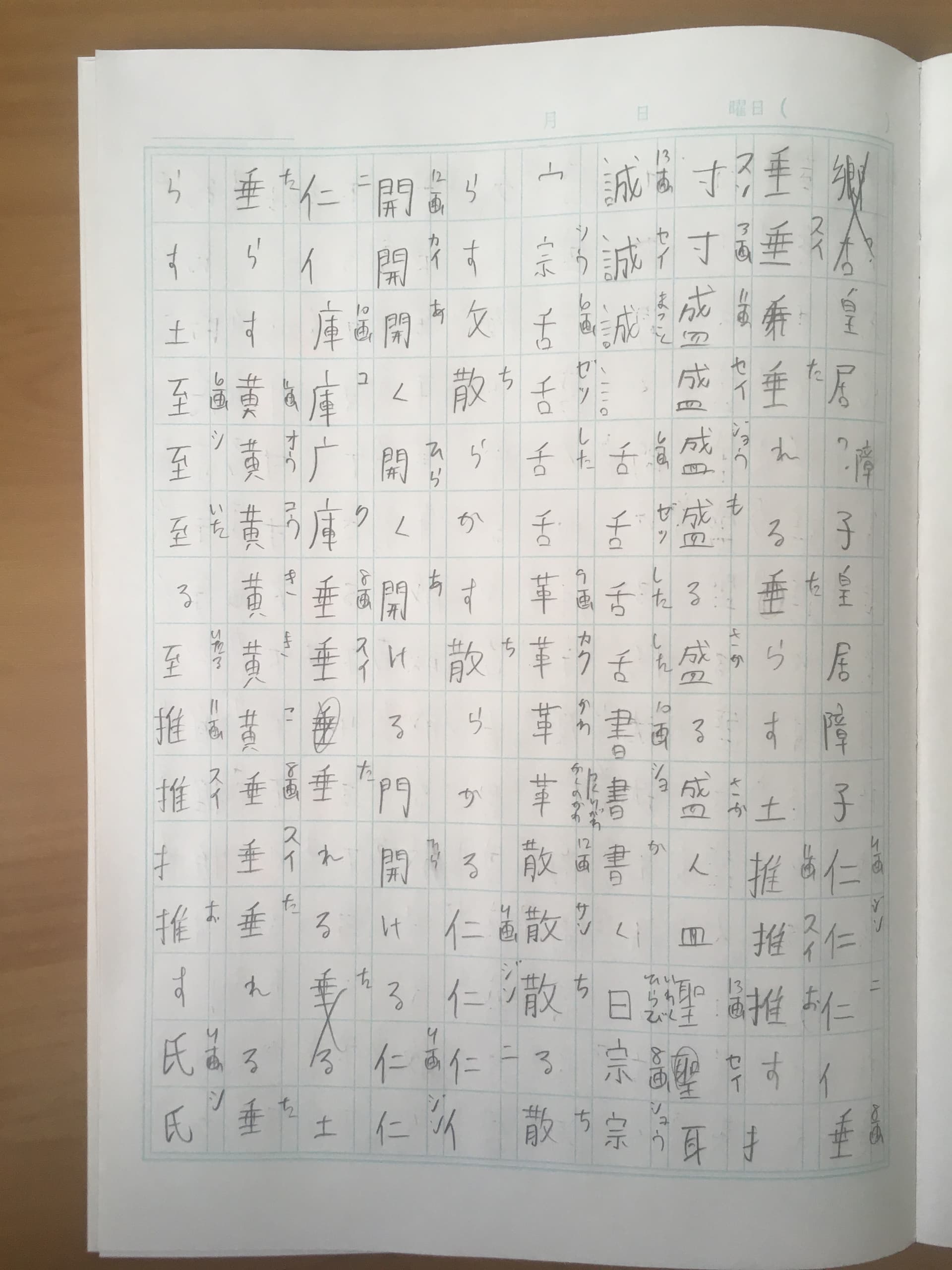
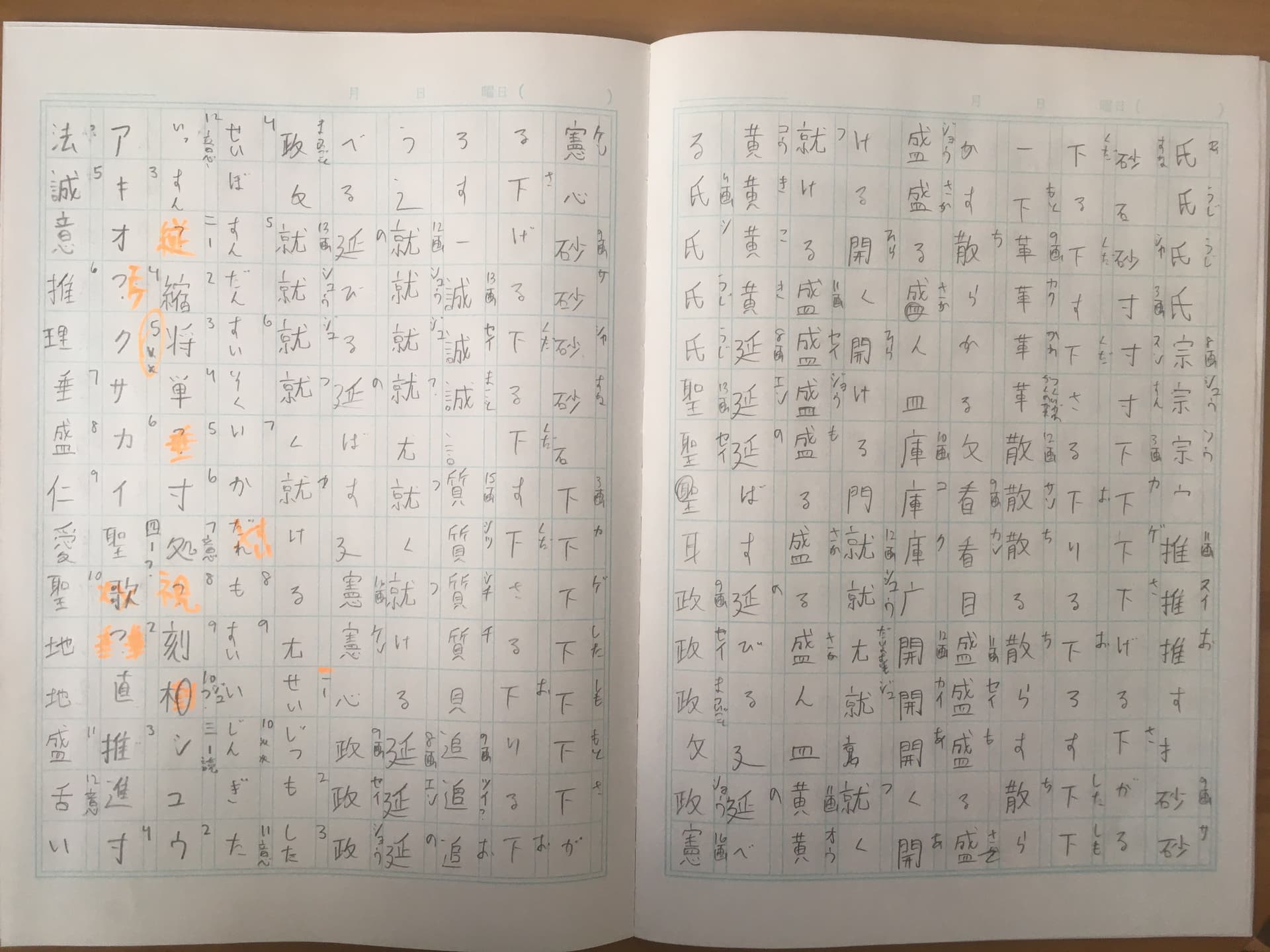
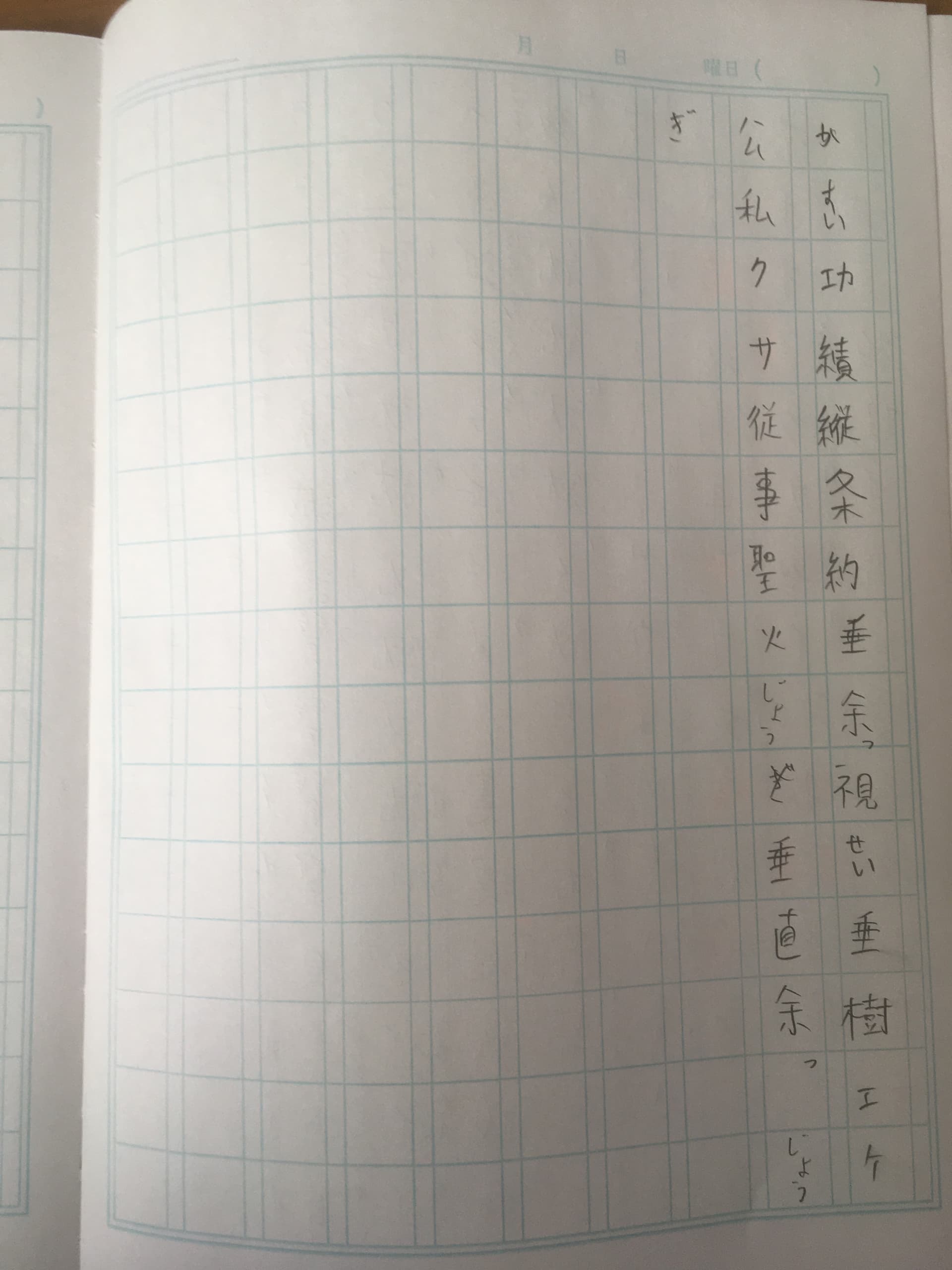
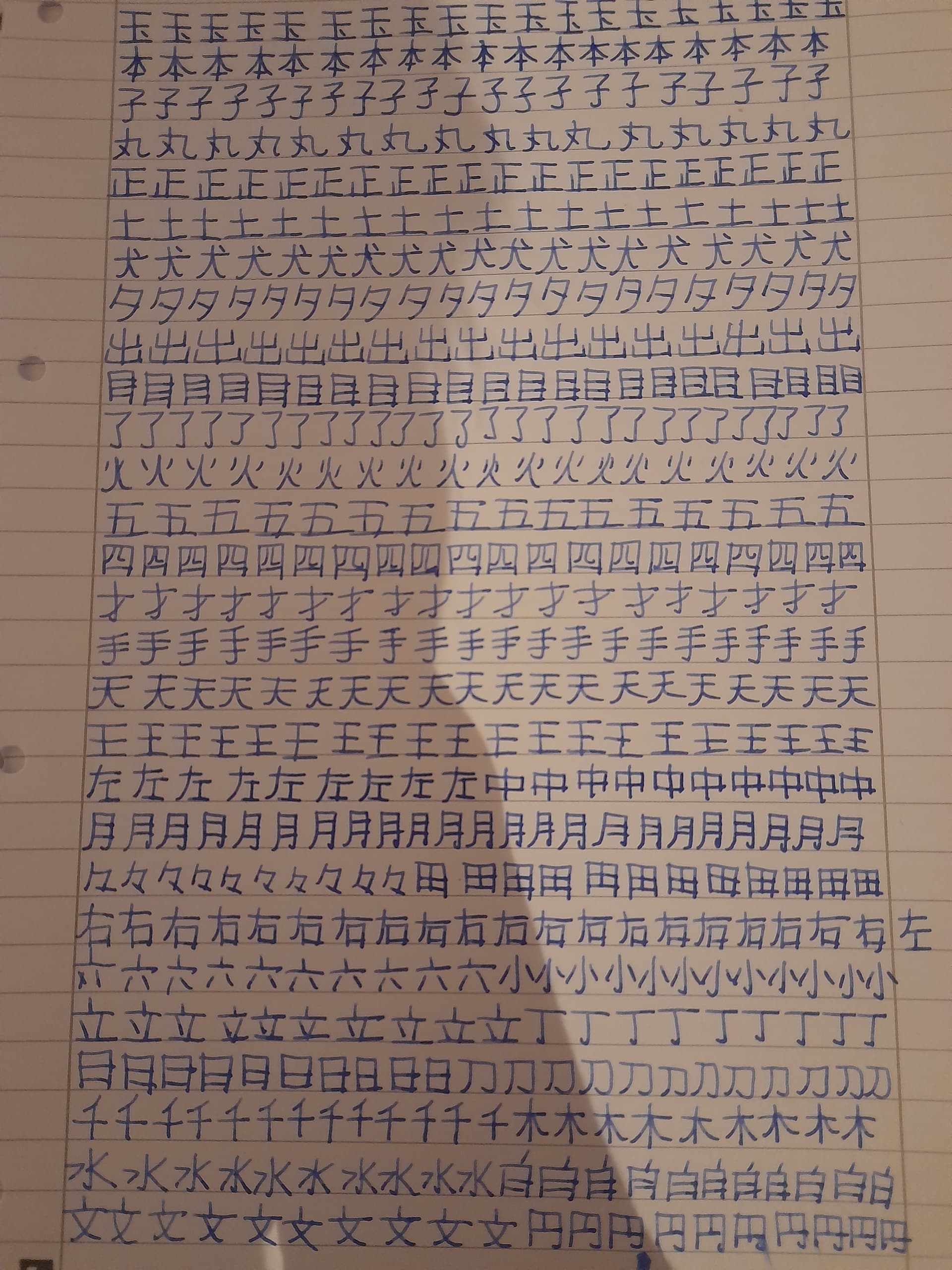
A man of character. Nothing but respect for that. I have no clue why common advice for learning kanji is any way other than the way the Japanese themselves learn it. Wish I had done this from the beginning.
Yeah stroke order is all good… But actually I’m surprised you can read my crap handwriting at all 
Hell yeah  If you’re up for it, try kanken level 10 and go for gold. If you’re into this study log thing, please post here and share pics!
About WK, yes I’m trying to find different places to post and get more involved with people (plus give myself more motivation). This is a long, long road.
I actually learned how to write kanji using RTK1, which in hindsight was kind of a waste of time and I really really don’t recommend, but this is how I currently learn kanji (which includes learning / practicing how to write them)
EDIT: First time studying a character, I practice writing it using the method below, confirming all details listed in its entry (in the step book). After the first few levels this includes the kanji’s meaning, but I don’t try to memorize the meaning – only confirm it and get it into my mind. That comes with practice. Depending on how well I think I know the character, I’ll glance over the 用例 (example words) listed if I’m confident or look all of them up if I have no clue. It’s a bit slow but they really help me to understand the meaning of the kanji and how it’s used / how it relates to other characters.
Anki card:
- Front: kanji
- Back: kanji dictionary entry + stroke order diagram (anki plugin)
I see the front and write out the character, the number of strokes, all common readings (including any okurigana), bushu and the bushu’s name (if it’s new or I’m fuzzy) from memory. On-yomi in katakana and kun-yomi in hiragana – exactly how most resources do it.
Pass if I got everything, fail if I missed even one thing (including one out of order stroke). Glance over the meaning or example words if I am fuzzy on it or want a refresher. It’s really important to learn the kanji as best and completely as you can the first time you study it.
Writing them becomes second nature after doing this!
ALSO, doing exercises is critical! The Step series provides basic exercises to practice after you study the kanji for that day, but anything that prompts you to think and produce the kanji will work and is necessary to actually make the kanji your own. So I do those every day, and then grind a bunch of drills when I’m done with the step book.
Yeah, I saw ひきいる as part of the definition for the character and had the same thought about 率. But step doesn’t list it as a reading to memorize. I think because I’m at a low level maybe they don’t expect 10 year olds to have that down yet. 
 As already mentioned, I currently don’t plan to take the exam soon, but I will definitely prepare for it, and when I do attempt the exam, I’ll definitely go for a perfect score!