Kanji actually makes Japanese easier. Change my mind

I don’t think many people on a Japanese forum are going to disagree with you on this.

The way to really start a discussion about it would be to post a similar post, but about hanja in a Korean forum. Sometimes when I read Korean I kind of wish they mixed hangul with hanja the way Japanese does with kana and kanji.

2 Likes

So, in terms of time required to learn vocab, I’m not sure I agree. I think that learning kanji shapes plus readings plus vocab is a net time extra. I’m not saying it’s not worthwhile lingual technology or enjoyable, just that I think just about everyone I’ve heard would agree that it takes extra time to do all of that for logographic versus alphabetic languages.

However, I do think there can be some time savings with respect to how mnemonic images can help learn vocab, though not enough to offset the extra time spent learning them, and I definitely think that using kanji can compress linguistic information in a way that alphabets can’t, but using one symbol, full of symbolic imagery, to hold the place of a series of random letters.

I’m not sure that anyone has tested the mnemonic capacity of logographic versus alphabetic language users to see if the former helps facilitate learning by “front loading” a lot of memory pegs on which to hang other information.

ははははながすき。

Who needs kanji :man_shrugging:

10 Likes

Can we get a kanji version?

My guess is
母は花が好き。

にわにはにわにわとりがいる

:chicken::chicken:

3 Likes

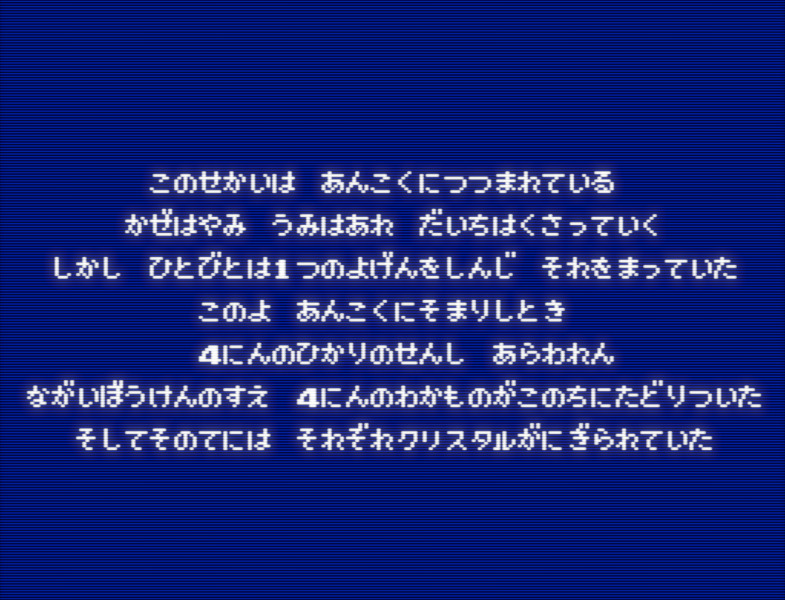
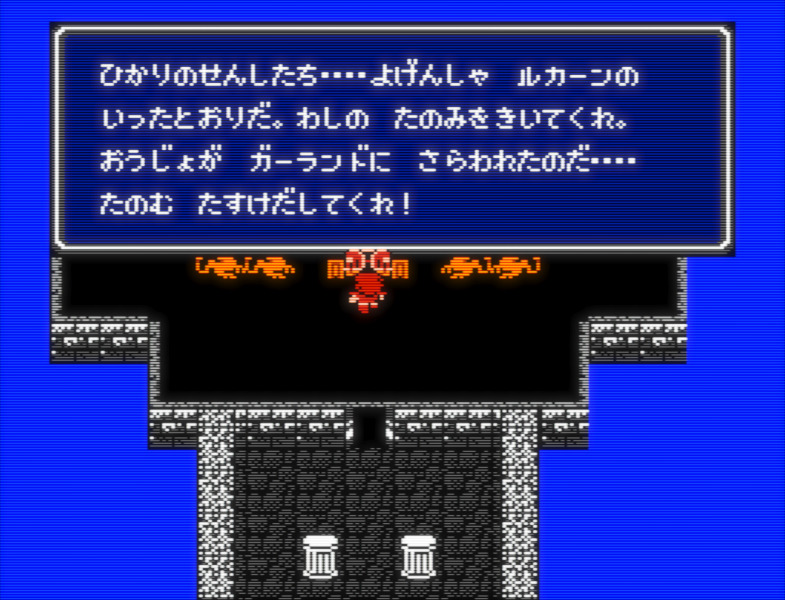
I love retro games but sometimes I hate them because a lot of older titles just outright didn’t have kanji at all and yeah I can read it and understand it but it’s so much faster and easier to read if it has kanji.

One game I played only had katakana. Thankfully there wasn’t much text in that one.

After I’ve got used to kanji, reading Japanese in romaji is pain.

3 Likes

Kanji is very helpful especially when learning new vocab (or going back to a vocab word you were struggling with after learning the kanji for it). However, it can be a pain when trying to look up an unfamiliar vocab word that doesn’t have any furigana.

3 Likes

Disagree in the case of proper nouns. 岐阜 and 綾乃 being my favorite examples of two kanji you learn just for place names. As of this year, 戸籍 must now contain pronunciation of names, which I think further emphasizes just how “out of control” proper nouns are now. Heck, in most news articles, the names have furigana - what’s the point of the kanji?

Ignoring cultural impact, from a utilitarian standpoint, hard to argue for keeping kanji for proper nouns. When you combine proper noun-only and synonyms like 会う 遭う and 逢う and a few other stragglers from the “usually kana” list, the list of 2000 commonly used kanji shrinks by ~500.

2 Likes

I think Hangul was invented precisely so they wouldn’t need to do that. :sweat_smile:

They used to mixed hangul with hanja. I’m saying I wish they still did that because it would improve my reading speed / comprehension, since I’m more used to reading Japanese (my Korean knowledge is currently much lower than my Japanese). But don’t get me wrong, I really like hangul. It’s probably my favorite writing system of any languages, it’s so well thought out design-wise. Once I’m more advanced in Korean I probably won’t miss the hanja anymore.

And the reasons for the switch to strictly hangul wasn’t just for practical reasons. If that was the case it wouldn’t have taken them almost 500 years to make to switch. There was some obvious political reasons behind it, but let’s not get into that in this thread (I feel I’ve already derail the discussion too far from the original topic).

I kind of agree subjectively because it is true that knowing kanji makes reading even relatively complex Japanese feel somewhat doable because you have all these familiar symbols to help you unravel the meaning. That being said that always feels like a bit weird to say because you’re effectively claiming: “once you have spent a thousand or more hours familiarizing yourself with thousands of symbols, it really helps the reading process!”

If you had spend all the time just memorizing more vocab, wouldn’t you be at least equally as advanced in your reading ability? Plus it would carry more easily into speaking and listening comprehension.

I really like studying kanji and it’s one of the things that drew me to Japanese in the first place, but I see a lot of people arguing that kanji are just superior to other writing systems and I’m massively doubtful of that claim. Japanese writing is insanely complex, even compared to Chinese.

4 Likes

In Chinese, compound words have largely taken over for what were previously small words. In Japanese it’d be like going from 田 to 田んぼ or 尾 to 尻尾. There are just too many words in the language for smaller words to work and not be confused, even in context.

In Japanese, they avoided this with how katakana has developed. Though this begs the question of whether or not adopting a Hangul or Vietnamese like system sooner would have been for the better.

The letter “E” makes English easier. Change my mind!

1 Like

I think I can change your mind on this…

Kanji came first! If anything, the standarized kana we have nowadays make Japanese easier.

To give an example… In the before times, this was the first thing children got when learning to read:

以呂波耳本へ止 千利奴流乎
和加餘多連曽津祢那良牟
有為能於久耶万 計不己衣天
阿佐伎喩女美之 恵比毛勢須

This is read as

いろはにほへと ちりぬるを
わかよたれそつねならむ
うゐのおくやま けふこえて
あさきゆめみし ゑひもせす

Or with kanji and dakuten

色は匂へど 散りぬるを
我が世誰ぞ 常ならむ
有為の奥山 今日越えて
浅き夢見し 酔ひもせず

The third one is the easiest and the first one is the hardest, right?

By the way, this is the いろは歌, a poem that functions kind of like the ABC song because it contains all kana exactly once (including the old ゐ and ゑ, excluding ん because it was still written む). I think Japanese elementary schools still teach it.

3 Likes

It bothers me that this is 7/5, 6/5, 7/5, 7/5

1 Like

As a Chinese speaker, I totally agree!

The problem with these comparisons is that you’re always going to be much more familiar with one spelling than an other. That biases any evaluation heavily.

For instance if you asked me which of these two Russian sentences are easier to read:

Все счастливые семьи похожи друг на друга, каждая несчастливая семья несчастлива по-своему.

Vse schastlivye sem’i pohozhi drug na druga, kazhdaja neschastlivaja sem’ja neschastliva po-svoemu.

I would tell you that the former is obviously much nicer, but that’s just because that’s just how I’m used to reading Russian and I have photographic memory for all these words.

Meanwhile other Slavic languages like Polish or Serbian show that you can in fact completely write this family of languages with the Latin script, it’s just a matter of preferences and historical happenstance.

That’s why I’m always skeptical of people doing things like writing a full sentence with kanji and then full kana to demonstrate that “Japanese needs kanji otherwise it’s super hard to read!”

For instance here’s a random example of this argument I found on the Tofugu blog:

今日、 寿司を 食べに 行きますか?

きょう、すしをたべにいきますか?

Do you notice the difference? The second sentence is very difficult to read.

This is true of course, but the underlying assumption is that there are only two possibilities for writing Japanese: with kanji or just as direct hiragana transcriptions. In reality if you just add spaces it already becomes a lot more approachable:

きょう、すしを たべに いきます か?

And maybe sometimes it would be helpful to note for instance pitch accent or other phonetic features missing from modern hiragana, but that could also be added with, for instance, diacritics (see how Vietnamese works for instance, or even Korean).

If you play old Japanese videogames, they often lack the memory to have kanji, so you have full-kana everything:

I do find this harder to read than with kanji but, again, how much of that is just familiarity?

That doesn’t mean that I’m arguing that Japanese should drop kanji entirely (again, I do enjoy studying them and find them fascinating) but I also want to push back against any unreasonable fetishization of the Japanese writing system which is, overall, rather overcomplicated and inefficient.

3 Likes

While I don’t hate kanji with a fiery passion it can be really, really, really annoying to know a word but not know the kanji. For example knowing that いく means to go but not knowing that the kanji is 行く. It can make reading things frustrating when you have to constantly search up kanji for words you already know when having a alphabet would remove this. However it does make the actual memorization process of learning new words easier.

I guess the main reason why Japan cannot get read of kanji and why it would be hell to learn vocabulary without kanji is too many homophones. When speaking you can guess the meaning from context and pitch accent. From writing, not so much. Since Korean has 10 vowels and I think is not constrained to a syllabary and chinese also has tones (I think Chinese was even close to switch to latin alphabet at some point) they have less homophones and so probably Japanese is the language in most need of kanji of the three.

But I wonder, if japanese had spaces plus katakana for nouns, plus pitch accent embedded on the syllabary, would it be feasible to get rid of kanji?

ハ’ハ は ハナ’ が すき’だ。

1 Like