Over 200 Ghosts for the first time

To share my experience :

I had Ghosts on at first.

Did 50 N5 Grammar points first week. 50 more next week. And the rest week three.
(I didn’t have any grammar tool before, but I knew most of the basic grammar, don’t do this if you’re actually learning)

Easily had a few cards reaching Ghost 4, and it was getting frustrating : なくちゃ ー てはいけない, etc in the last lessons.

I’ve decided to turn these reviews off, and to disable Ghosts. Gave myself time to have reviews spaced enough in time to have “brain juice”.

Then, I decided to actively look up the points I was confusing with youtube videos.
Once I had a good idea of what it meant, I put the cards in individual cram sessions (spam each point until you’re sure you understand them as standalone).
The new game Kaijugation is great for that now.
You can easily repeat examples you didn’t get.

After actively learning, the points were back in the reviews deck.

And this time, they didn’t get stuck. A few reviews to memorize them, and they progressed.

Bunpro is great to review, but you want to do active learning if you have Ghosts.
And to wait before taking too many new cards.

In your case, I suggest you stop learning, wait until the beginner cards are adept, before doing any form of active learning.
It’ll take time, probably be boring. But trust the process. Once you defeated every Ghosts, ensure you have no beginner cards.

The idea is that if you were to trace a curve, you’re stuck in a log function. You don’t want that (it means the majority of cards you see are in a very short interval at the start, like the first week).
You can either aim for daily amount of new cards, in a perfect world where you understand everything and your progress is constant (Linear function).

Or you can play Flappy bird :

You have days where you place learning (goes up in number of reviews)
The rest are reviewing days (goes down)

This way, you’re on a decrease constantly (Decreasing Linear Function).

Put a minimum review, which is basically when you will add new cards, and a maximum number of cards to add in one go.

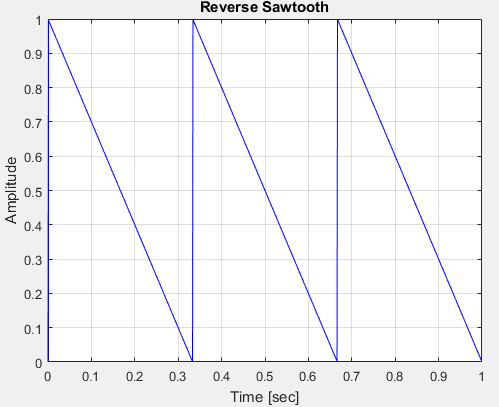
If you do it well, by drawing your review number, it should look like an Absolute Sine (approx, if you add in one go : Reverse Sawtooth wave)

1000019215
1000019216

3 Likes

Why would you try to memorise everything?
Just try to learn the logic behind the grammar and you will be fine.
Once you got the core 5-10 concepts down, all other grammar points will be obvious and like second nature to you. I’ve used this approach and never had a single Ghost in my life.

2 Likes

This might seem counter productive but I force ghosts on words I don’t know when I first read them and I cut down my daily numbers of new items. It forces me to embed the info quicker and then I memorise it more easily as time goes on. Same if I get something wrong, I manually add ghosts for things.

For what it’s worth I set the default SRS stage to start at Adept 1/2. I expect to use the app once or twice daily, if anything is wrong it sinks to the bottom, everything else goes up.

Bunpro has a weird SRS system in that it only docks one point at default if you get it wrong. Most apps have more severe penalties.

TL DR;

  • The more efforts you make to memorize it and the more you think about the grammar items deeply, the easier it will be
  • Make notes, make own sentences, it helps
  • If it piles up - slow down, having 5-10 Ghosts is healthy, but don’t hesitate to slow down

As a person with a terrible memory skills, at first, I was doing 3 grammar points per day, but when stuff was starting to feel hard to go through or when it was simply rought, I was skipping grammar point learning for a day or two.

It also helps to write some notes by hand as it enfornces the recalling. Same works with writing simple sentences that allow using the grammar (or adding your own example sentences).

During reviews, if you answer something wrong or with mistake, check the information section on item, check your notes, give it 5-10 seconds before trying to recall this item and perhaps give it a try to explain this item to yourself outloud.

You can also try to group grammar points if those are similar to help yourself navigate over similar concepts in your notes. I’ve rewritten mine notes a couple of times already. A good example would be nominalization, or the way conjugation works for た and て form of う verbs.

I want to see one person who is able to learn Japanese in a year or two. N1 Kanji + N1 Grammer + N1 Vocab + N1 recognition.
There is a difference between finishing Wanikani or Bunpro in a year and actually being able to understand/use the stuff that you learned.
I did speedrun through Wanikani(i had days with 10+ hours). Till everything actually set in, some time and immersion had to pass. There is no shortcut

1 Like

People absolutely do this (because they are required to learn the language full-time for their job lol)

1 Like

There are some people who can speed through a language, but they are very rare and far between. It generally takes two years to become conversationally fluent, and it’s generally considered 5-10 to become truly fluent (as in you could, say, do your taxes in that language).

That said, my thought is if you are struggling this much with the grammar, it’s not clicking and you need to do something else. A couple of things I would recommend would be to do the little grammar readings you can do as practice on Bunpro. Those do a good job of showing the grammar in action.

The second thing I would recommend is to write sentences for the grammar points. You need to use it in context to help it get in your brain. I would also not do this one time. I would do something like write three sentences for each point (I’d probably do 3 to 5) and then see if you can write a sentence with it correctly the next day as well.

You need two things for language learning: context with comprehension, and repetition. If you don’t understand it and comprehend it when you come across it, it won’t matter how much repetition you do, so working on ways to improve the comprehension will help.

I think grammar should be handled more slowly than something like vocabulary because it is often very different from English and is harder to make a connection to how and why it’s being used.

1 Like

Estimates for N1 vary around 2000-4000 hours of some form of studying. Assuming 8 hours daily for 250 days (which is pretty average working hours) you reach 2000 hours of studying in a year. Yes you can speedrun apps/textbooks, but it’s the immersion that puts the meat on the bones of learning. There’s a compounding effect when you spend that much time immersed in a language.

Can I be that dedicated? Absolutely not. Even if I had the time, my discipline would be spent at 00:25am talking to lovely people on the Bunpro forums. (Genuinely I’m not a “fast” learner, I would not have spent 7 years on this language if it weren’t for my wonderful teacher and brilliant friends.)

Also sorry to OP for derailing the thread about language speedrunning. :sweat_smile:

You won’t like this idea if you want reviews repeated to oblivion but I’ve completely disabled ghosts on bunpro because they took too long and only lead to getting frustrated.

Bunpro and Anki are amazing apps. I can say they’ve helped me a lot. At the same time I try to spend the least time possible on them to be effective. Every hour I spend on apps is an hour I don’t spend reading or watching native material and having “real” input, or talking to someone and having real output, which is to me a lot more valuable than anything any app can offer.

If you want the equivalent of drilling a grammar point until it sticks, I think the closest you can do is reducing the pace in which you learn “new” items from your deck and keep doing your reviews last and ghosts. That will basically allow you to repeat your weak points over and over until you remember the m.

4 Likes