TL;DR:
I’m been wondering how advisable it is (long term) to learn vocab without examples/context. This is a pretty much a listening issue, i.e. not a reading issue.
Context:
I’m increasingly doubting how much of a good idea it is - or indeed, if it is even really feasible at all - to learn vocab without example sentences. I only know about 4.5k words (9k cards according to Anki, at least) and already I’m have cases where homophones are starting to stack up. Fun stuff like 「艦上«carrier borne/aboard ship»・勘定«bill»・感情«emotion»」 or 「描く«to draw»・書く«to write»・かく«to scratch»・各«each»」. I cannot really know what is being said with these words without an example to provide context.
However, homophones are the least problematic example. What’s actually giving me heartburn is words that I don’t have a good excuse to fail on, but I do anyway. Ironically (or maybe not??), this tends to be shorter words. I’m not sure I’ve ever failed the words 津波避難進路«tsunami evacuation route» or 攻撃型潜水艦«attack submarine»※.
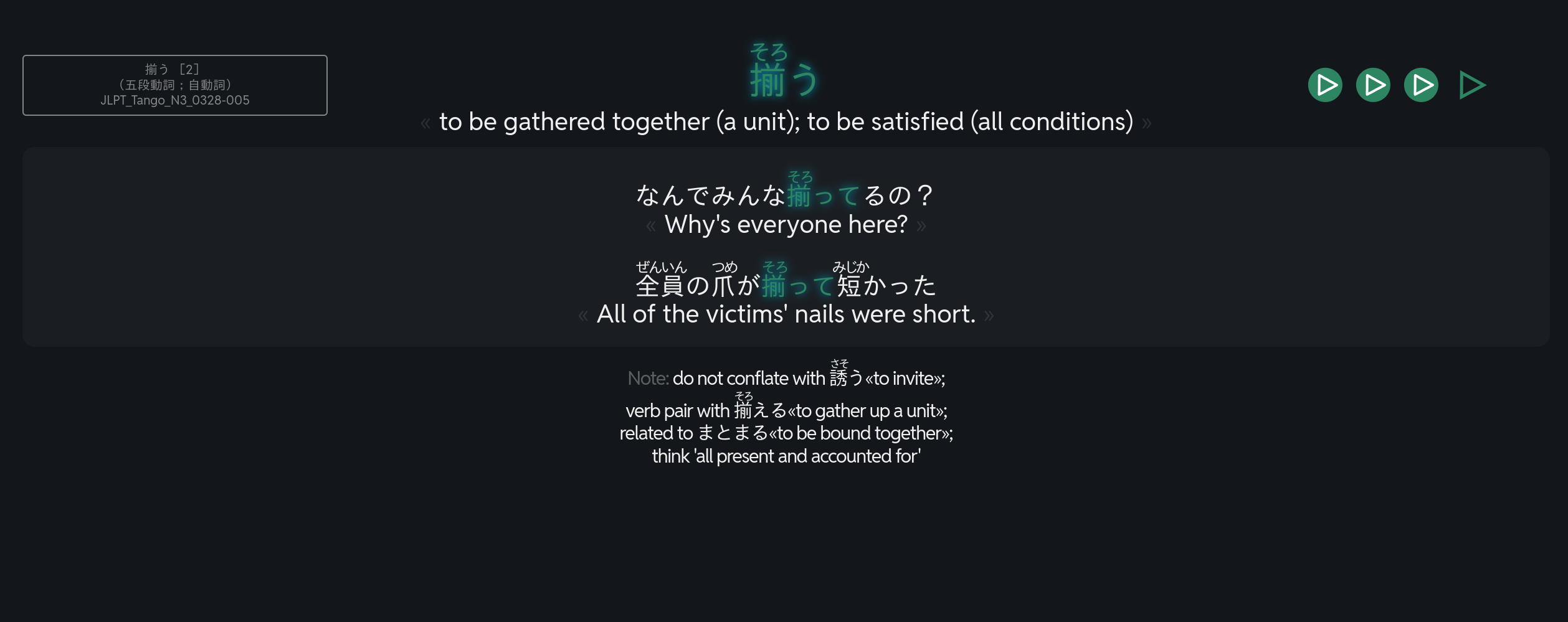
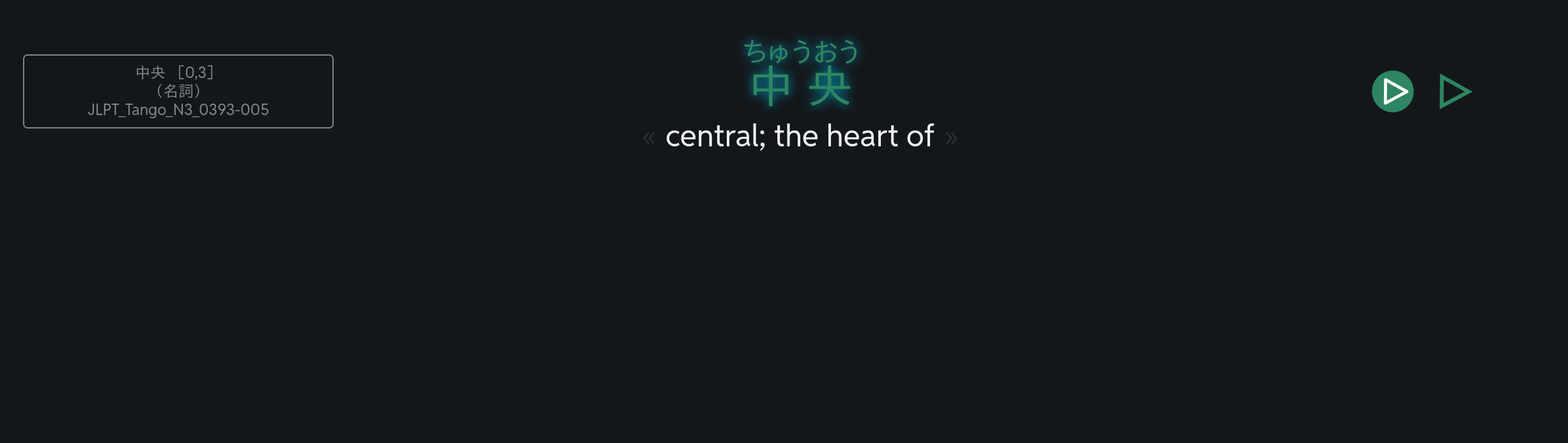
By contrast, I’ve been struggling with words like 流行«en vogue» or 溜まる«to be saved» for an embarrassingly long time. I usually pause my audio before it gets to any example sentence to really test how well I know a word, actually. I then on words like these I stall out. I only let the sentence play if I can’t recall the word within a reasonable time frame (5-7 seconds-ish, usually based on vibes). I often snap to the definition after hearing the example sentence, so it seems as if I’m learning to identify the sentence, instead the word. A common reply here is ‘just change out the sentence then’. This is only a band aid, though. As it’s usually only a matter of time before the new sentence ends up in the same spot.
I am of two minds on this problem, and my core confliction is I cannot bias towards any solution despite having ruminated on this for quite awhile. Those two minds are as such:
-
Git good. If you need an example to know the word, then you do not know the word. Things like homophones or single mora words (胃) are obviously exceptions to this kind of thing. But a word like “sheet” gives me no problems in English, and thusly something like 溜まる should similarly be child’s play. If there is a data recall failure, there are many ways to try to improve recall.
-
Just listen to the sentences, stupid. “Japanese is a contextual language” is so commonly repeated as to almost be dogmatic, but it is not false. You may be able to get decently far, but you can only make so much progress by learning words in isolation (and un-inflected dictionary forms no less). There are many ways to try to improve recall, but (A=B) in a vacuum is a fundamentally doomed approach.
How doth the forum opine? 


 Accurate though.