
That sounds like a good idea to me. As long as it doesn’t take away from the quality of Bunpro itself, if AI can be helpful in the ways you’ve stated then I’d be all for it. Making language learning easier and more convenient is important, after all.
In the FSRS discussion they were referencing different ways to do spaced repetition, and it seems like if you implement AI correctly you can actually see really good results that beat just about anything else available. If that was possible on Anki then I wouldn’t mind them adding it at all. Imagine something like that for Bunpro where the review windows are more tailored to your learning.
What you are describing here is a heuristic. Deployed for the purpose of personalizing SRS spacing on a per item bases it is a pure application of math and statistics.
For this reason, the idea of using an LLM to set the spacing is equivalent to a Rube Goldberg machine. Every single LLM on the market right now when tasked to do this will start doing math and arriving at a statistical conclusion based on the provided usage information. Why pay money for a computer to do math to act out math when you could, for much less OpEx, do the math directly yourself?
6 Likes
 I guess by this definition all of our features are full of 愛
25 Likes
One of the things I love most about Bunpro is the meticulous care put into all the lessons and everything. I can count on it to be reliable and accurate without wondering and having to double check if there’s some hallucination somewhere 
I won’t contradict that a lot of people in this thread have gotten their own good use out of it, and that there aren’t any uses, but at the same time, I feel that having AI as a feature somewhere (regardless how little, even if it’s not in lessons and descriptions) would likely place doubt in many people’s mind as to the accuracy of content, and I don’t think that kind of “trust” is easy to win back
Anyways, thanks again for all the hard work and love all of you put in, and thanks for always keeping it accurate and reliable. I truly appreciate this 
12 Likes
tldr: I’m stuck on a Japanese ability plateau. My guess at a good way forward: Reduce mechanical SRS load, increase active learning strategies that are baked into the system.
Daily grind:
- some srs using FSRS or equvalent so you do fewer reviews but maintain the same retention levels
- targeted questions to address weaknesses from srs-> examples: user keeps mixing up synonym grammars (“even if”, “judging from”, “must”), wrong verb/adjective conjugation, conflates 2 similar sounding grammars/words, particle conjunction problems
- a couple of paragraphs of reading
- write sentences using grammar/words you got wrong
- some form of quick, correct feedback for what you write/speak yourself
Is there a way to test for grammar nuance understanding & word sense using native materials tailored to what the user knows?
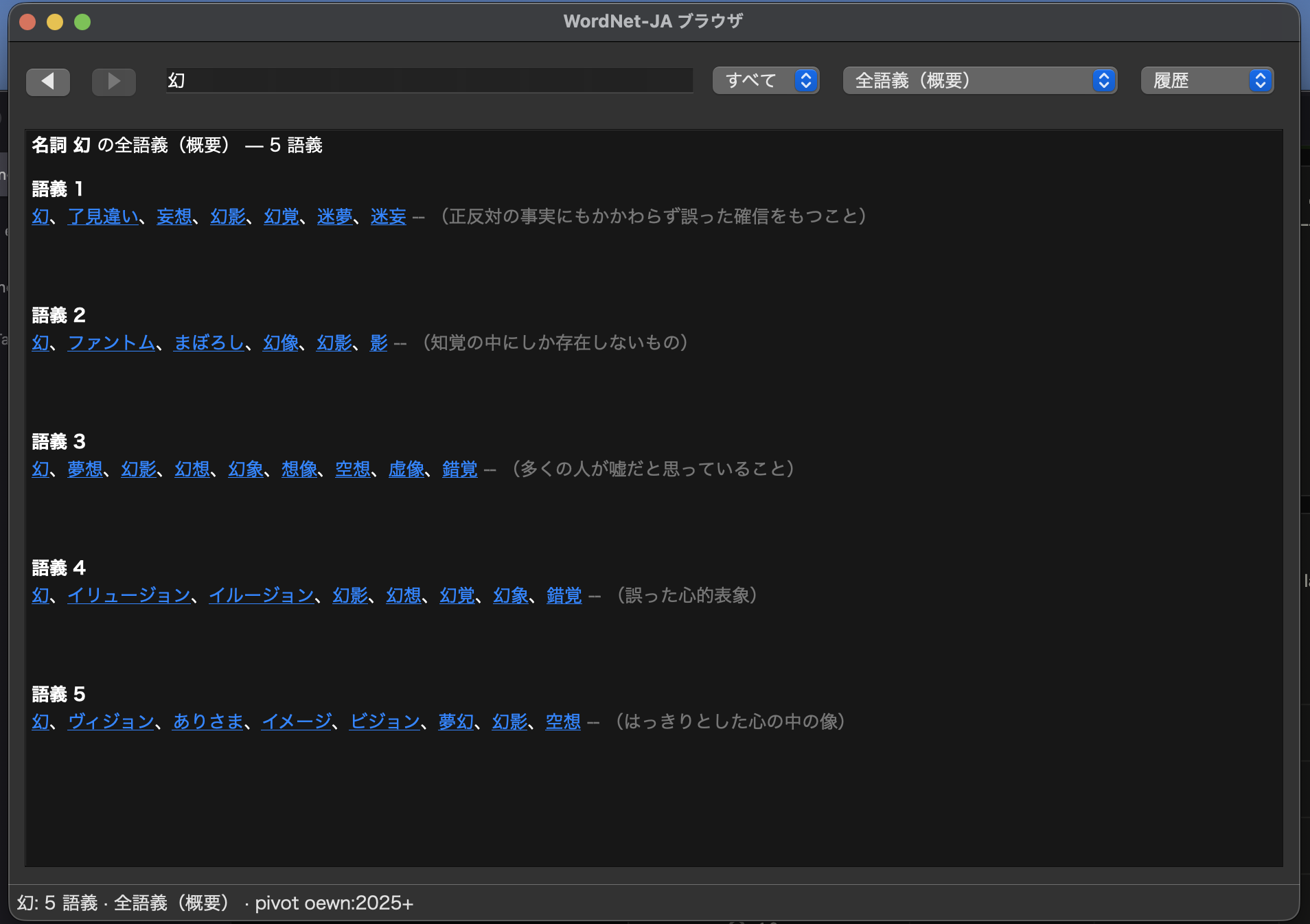
Maybe by pulling from Aozora Bunko, public domain Japanese readers, or pulling from Japanese Wordnet data?
===================================
apps with LLM flavored enhancements that I think work well:
migaku (allows you to generate parts of the flash cards if you need it to), migii (uses “AI” to track & create recommended learning paths). Hello Chinese (really nice way to practice speaking & pitch accent. uses short videos by native speakers): tried it for a month and decided I didn’t have time to learn Chinese, too, but I felt it was more effective than doing just cloze cards.
I feel like I’ve hit diminishing returns on SRS. It helps me recognize things I’ve studied when I try reading native material. SRS feels like about 1/4 of the battle toward fluency. Adding new cards piles up fast and squashes the remaining time I have left for deep study techniques. Making my own cards also takes up lots of extra time (like mining from Satori Reader user questions). I feel like most of the time I skip to reveal the English hint and scan for keywords so I can get done with my reviews for the day.
http://www.nihongoperapera.com/flashcards-insufficient.html
“Spaced repetition is a solid idea with real results. But, there is a reason why it was invented in the 1970s and still hasn’t changed the world- it is not a magic bullet. Spaced repetition alone will not make you smart. In fact, if you use badly created material to study, it will even be less effect than an old fashioned approach like cramming textbooks.”
[…]
“Flashcards do one thing: they help you remember. Before you can remember something, though, you have to know it. You have to understand it. If you try to memorize something without understanding it, you aren’t increasing your knowledge. You’re just memorizing, and it won’t help you speak or understand the language that you’re trying to learn.”
This is for computer science people, but I think it applies to language learning as well: use active learning techniques that build understanding rather than brute force memorization. This is one book mentioned from that site:
A selection of ABC geared toward language learning:
- Analogy => build & extend understanding from what you already know
- Contrasting Cases => nuance differences between grammar & vocab, for example: べく、ために、ように. Different “Must” grammars, grammars for “even if”
- Deliberate Practice => Ideally: try to read the sentence first, then the Japanese hint. Translate. Look up unknown words & grammar. Break down the sentence. Try to put it back together.
- Elaboration => use the cram tool to select, review, read the grammar explanation, trying to pinpoint weak understanding.
- Feedback => important. If you don’t understand why something is wrong, you make the same mistakes repeatedly. The grammar hint feedback system helps with this, but it’s not the same as being able to ask a skilled teacher.
- Generation => shadowing, speaking, writing sentences.
- Hands On => reading practice
- Observation => Video lessons. Japanese only grammar explanations like 出口, まるもり. Really good English explanations of Japanese grammar by the best teachers.
Great. But there’s a significant time cost in addition to having to manage all of the extra stuff yourself. In my ideal world, I would like the main learning loop on Bunpro include all of the above automatically. Otherwise, it feels like trying to keep track of this by hand. Anki style apps make things easier because you don’t have to carry a backpack of date sensitive flashcards you’ve indexed by hand.
Your Memory : How It Works and How to Improve It
Kenneth L. Higbee
Main point: mnemonics help you remember stuff. Used often on wanikani
Renshuu.org has been around a long time and has developed lots of useful features to support language learning. Lots of customization. For example you can study reading, listening, J->E, E-J, K->E, cards for the same word at once. You can look up any word in a sentence & add it to a word list from the quiz card. Community sourced mnemonics & visuals.
How do you you make Bunpro a more effective teacher? It doesn’t have to be backed by LLMs
Prof. Judy Fan: Cognitive Tools for Making the Invisible Visible
MIT Siegel Family Quest for Intelligence

1:02:04 – 1:02:47
“One of many kinds of expertise that really skilled teachers develop is the ability to diagnose […] misconceptions when they listen to learners describe how they’re thinking about a problem. So it may be that the final response or answer that a student gives to a math problem is wrong, but it’s not only that it’s wrong. The relevant question isn’t always that it’s wrong or right but rather: what is the nature of the misconception or misperception, or what is the gap between the normatively correct way of representing the problem and proceeding through the different steps and whatever the student did.”
On the other hand there are some cool use cases. Using an LLM to help you understand a prolog interpreter. This is explorative, using a Socratic dialogue to gain insight into how something complicated works. I think this sort of think could work well for language learning.

I could see an opt in only feature like this where the LLM pulls text from Aozora Bunko, rewrites a paragraph using what you know, maybe sprinkles in a few unknown words that you will be studying soon, highlights things you recently studied or got wrong. Then you answer questions in Japanese to see if you understood the paragraph.
Each time the LLM answers, it would verify the result (Generative Adversarial Network style) against dictionary entries, grammar sources, and hand curated resources like Japanese word net.
The only way to see if this would actually work to improve language learning is to do randomly controlled trials with well engineered constraints. The next best thing is to have an opt in feature.
But it looks like users are 80/20 against any sort of LLM usage in Bunpro whatsoever. 松明と熊手を構えてやがるぞって感じ, but for defensible reasons. It’s a dual use technology, like nuclear physics.
3 Likes
“Can you try saying it another way?” makes me question the 愛 from the team
10 Likes
ಠ_ಠ
10 Likes
Wait, hang on, maybe I missed something. What would be improved by “implementing AI” in Bunpro? Doesn’t the site work completely fine already?
14 Likes
Please keep AI out of Bunpro. Content created by humans is always superior.
17 Likes
Mainly the OP want LLM to be integrated in the SRS algorithm to it create tailor made review for you seeing what you struggle with, maybe even add a chatbot for recommandation of material or explain point you struggle with (might remembering it wrong there is a lot of reply it this thread!)
SRS clearly could be improve but adding gen Ai to it is not the solution, other people mention better algorithm that would not use gen AI.
Most people here are anti genAI but want a better SRS and the team reassure than no genAI will be implemented.
I don’t want it, and I don’t need it.
messing around with AI just cuts down on time spent immersing with native content
7 Likes
Yeah, but I’ve actually started writing/drawing this on exams when my students do something and I know they know better.
5 Likes
One of the selling points of any learning programme is correctness, and having people check and veto what you add is needed to guarantee it. If they need people anyway to check/fix the output of a LLM, there’s not much point in paying for its usage in addition to them.
On another note, I find very weird how gen AI proponents are often offering a solution without a problem to solve. This post did not start with something like “hey guys, I think this is an issue/neat feature, and using gen AI would solve it”, it started with “hey guys, let’s use gen AI” and then offered some use-cases after the fact when people asked “why?”.
12 Likes
I’m all for it. I use AI daily (and have for years starting with Pāli and Sanskrit). Relying on it blindly is one thing. Using it to organize my many hundreds of lists of many thousands of words and grammar points has been a massive help. Having it explain things in finer detail where Genki or other texts just think “oh, they’re a dumb american, a simple ‘translation’ is good enough” has been immense. Personally I don’t care if they’re 100% accurate. I know they’re not. I know however, they’re more accurate on nuance and real usage than the textbooks I’ve purchased.
And really, how would you trust any other resource on the internet more? I’ve been coding going on 30 years. That includes with other people. I’ve seen just how swiftly someone will toss together junk sites in the hopes for a few bucks or little popularity. Honestly, AI is currently more reliable than most humans simply due to it’s design and massive amount of data.
Especially when you’re after nuance. Or, books like Pali Primer or Genki are teaching you “american friendly” translations that don’t actually apply. Sorry but searching search engines or asking on forums just doesn’t cut it. I don’t have days for an answer then I’m already studying 4-5 hours a day on top of running my business.
I think most people that are against AI haven’t actually given it a shot and are going with the herd to be blunt. A few years ago it was worse but still speed up my learning in pali and sanskrit. It’s much better now and with japanese, I couldn’t imagine doing these cheap books like Genki without it. Sorry but most learning material is worse than something AI would generate in minutes. Tae Kim is a little better. I’m aware there’s others. I’ll finish these first and see if I can just learn naturally from there - with AI helping me along the way.
More AI integration into sites like this would mean less time of their users using other resources. It may be SRS focused but there’s many ways it could be improved. That includes some of it’s own definitions/tasks.
5 Likes
I still havent seen anything ‘pro AI’ that’s made me think I need this anywhere, much less Bunpro. “It organizes my hundreds of lists!” All my lists are already organized
9 Likes
AI is already integrated in many parts of our daily lives. Even if you do not support AI, any time you used siri or alexa or any other virtual assistant, that is AI. Anytime you open spotify, youtube, instagram, or any other social media app, it is using AI to generate an algorithm that best suites your interests (like not liking AI). Even google uses AI when you search something up.
Now, it is impossible to avoid AI so you have to embrace it. AI doesn’t get rid of jobs like how you might think it does, it can boost productivity in certain fields like data analytics and even programming.
Yes, AI does take some jobs, but it creates way more jobs. But most of the jobs replaced by AI are repetitive and don’t have the most priority such as bank tellers, telemarketers, customer service representatives, etc. While the jobs AI create are software developers, healthcare like nurses, cybersecurity, etc. You can look at the list here
Saying “i dont like ai, it gets rid of human jobs, its bad” without any evidence is illogical and unreasonable. yes i also hate generative ai because human art will always be better. i do support the other types like traditional AI and predictive AI.
sources:
https://www.microsoft.com/en-us/ai/ai-101/generative-ai-vs-other-types-of-ai https://www.nu.edu/blog/ai-job-statistics/
https://www.ibm.com/think/topics/artificial-intelligence
€40 costed me one 
1 Like
honestly at ai’s current state, i still dont trust it. maybe in the future when it improves, but currently i dont think it is trustworthy enough to use in language learning, especially as learning things wrong can lead to many issues in the future.
2 Likes
Aside from the fact that I litterally don’t know anyone that uses Siri or Alexa, I’m gonna assume we’re still going with the assumption that “AI” refers to gen AI in this thread since that’s what people tend to be against. Recommandation engines don’t use gen AI. The OG Netflix algorithm doesn’t “generate an algorithm that best suits your interest”, it /is/ an algorithm. It ranks what might interest you the most based on the content you and other users consume and the ratings you have given it. It’s just one big matrix with blank spaces in it and it’s doing its best to fill them up properly. It doesn’t use LLMs at all, that’s plain old statistics. I feel like going “you’re against gen AI and yet you use AI everyday” doesn’t make much sense, most of the arguments against gen AI / LLMs don’t apply to AI / machine learning for a start.
10 Likes
I feel like this “AI has been around” and “I want an AI so I can talk to bunpro and make it do things” commentary has already been discussed in this thread, but
“Now, it is impossible to avoid AI so you have to embrace it. AI doesn’t get rid of jobs like how you might think it does, it can boost productivity in certain fields like data analytics and even programming.”
Nothing makes me want to embrace something less than someone telling me I have to do it. But also, its not like we NEED AI in bunpro. Bunpro is not doing software development or finding cancer or cybersecurity, its just a resource for grammar and vocab and reading. I truly cant imagine struggling so much with Bunpro that AI would make it that much more efficient?
9 Likes