漢検満点! Going for Gold! Perfect score on all levels of the Kanji Kentei Tests (Study Log)

In case you aren’t aware the test also tests your knowledge of readings, differentiating kanji with the same readings, antomyns, kanji compounds, old forms of kanji, classical Japanese phrases, etc. The grade one level is only taken by the most extreme kanji otaku and and has a pass rate of only around 10%, supposedly in that 10% are many of the same people retaking the test to keep their skills fresh. You have to learn a large amount of redundant words and basically live inside a kanji dictionary for a few years to pass the test. As far as I know only two foreigners whose native language doesn’t use Chinese characters have passed grade one.

Grade two, on the other hand, is routinely taken by high school students (and many still fail) but the knowledge is within what is reasonably expected of an educated adult. Many people forget how to write some of those kanji as they get older though, especially as the prep system used by most students for the kanken is just to cram and rote memorise the less common kanji.

Pre-1 seems reasonable as well, although within the remit of someone who particularly likes kanji already.

3 Likes

As someone who took 準一級 and 一級 last year when I was in Japan (153点 and 100点 respectively; I was really hoping I could pass 1.5 but oh well, I’m happy I was able to get exactly 50% on level 1 given 1.5 months of rigorous study haha), I have to say that once you get to higher levels, knowing how to write the kanji becomes a matter of course (once you understand that most kanji are just building blocks of one another). Currently I am in university so while I am still studying some parts of the kanken (notably 四字熟語 writing, general reading, 熟字訓, and 諺), my time available to put into kanken study is reduced; after all, Japanese isn’t just about the hard to read kanji!

The difficulty in those tests rather becomes, as another replier has mentioned, the ability to recall, accurately read, and write extremely esoteric kanji and kanji compounds.

Personally, the most difficult part of 1.5 was a section where you have to come up with a given kanji within the joyo set given an example sentence and a hiragana bank. I was able to get I believe full marks for the reading and I believe 29/30 (don’t quote me on that though haha) on the standard writing sections. 四字熟語 is also a good source of points.

For level 1, aside from simply not knowing some words, I got absolutely annihilated with a section where you are given the meaning of a 熟語 and a hiragana word bank and you have to write out the word. From what I have been told that section leads to 0/10 for many new test takers.

Also, while the difficulty curve is relatively linear for levels 10 to 2.5-2 ish, I need to warn you that the jump from 1.5 to 1 is about an order of magnitude, as the amount of kanji and words related to said kanji one needs to know essentially doubles from all other levels. At this point, you should be able to write all joyo kanji with no issues, including the infamous ones like 鬱.

Some of the more “common” level 1 compounds/kanji can be seen in literature, and if you go back to older works (think around the Meiji era), you’d be surprised to find quite a large amount of these kanji being used (my guess being that the education system put more focus on Classical Chinese at that time).

Hope this helps.

6 Likes

On the topic, I would like to take grade 2 in the future. I’m focusing on expanding my vocabulary currently but probably I’ll take the test next year if all goes well. I work in a high school in Japan so would quite like to set a little competition with some of my students.

3 Likes

Yeah I’m in a similar situation. Finished N2 a while ago, and I finished all of N1’s grammar and stuff over a year ago now. N1 reading exposed my strategy for kanji, so I decided to grind kanken for a bit and go again. My thing with a test like JLPT that is multiple-choice and only tests basic comprehension is that it should feel easy and I should get a perfect score without thinking much. If I’m not at that level, I’m not done. And I didn’t feel like that when doing N1 reading. I could get through it and answer the questions, but it was… not a good feeling. I realized that my approach to “vocab” was completely wrong and I was missing kanji fundamentals.

Yeah it’s a long ass road, that much is clear. It’s just… once I’m done I probably won’t ever want to study like this again. There are so many other things to do in life. Might as well go all the way and finish it.

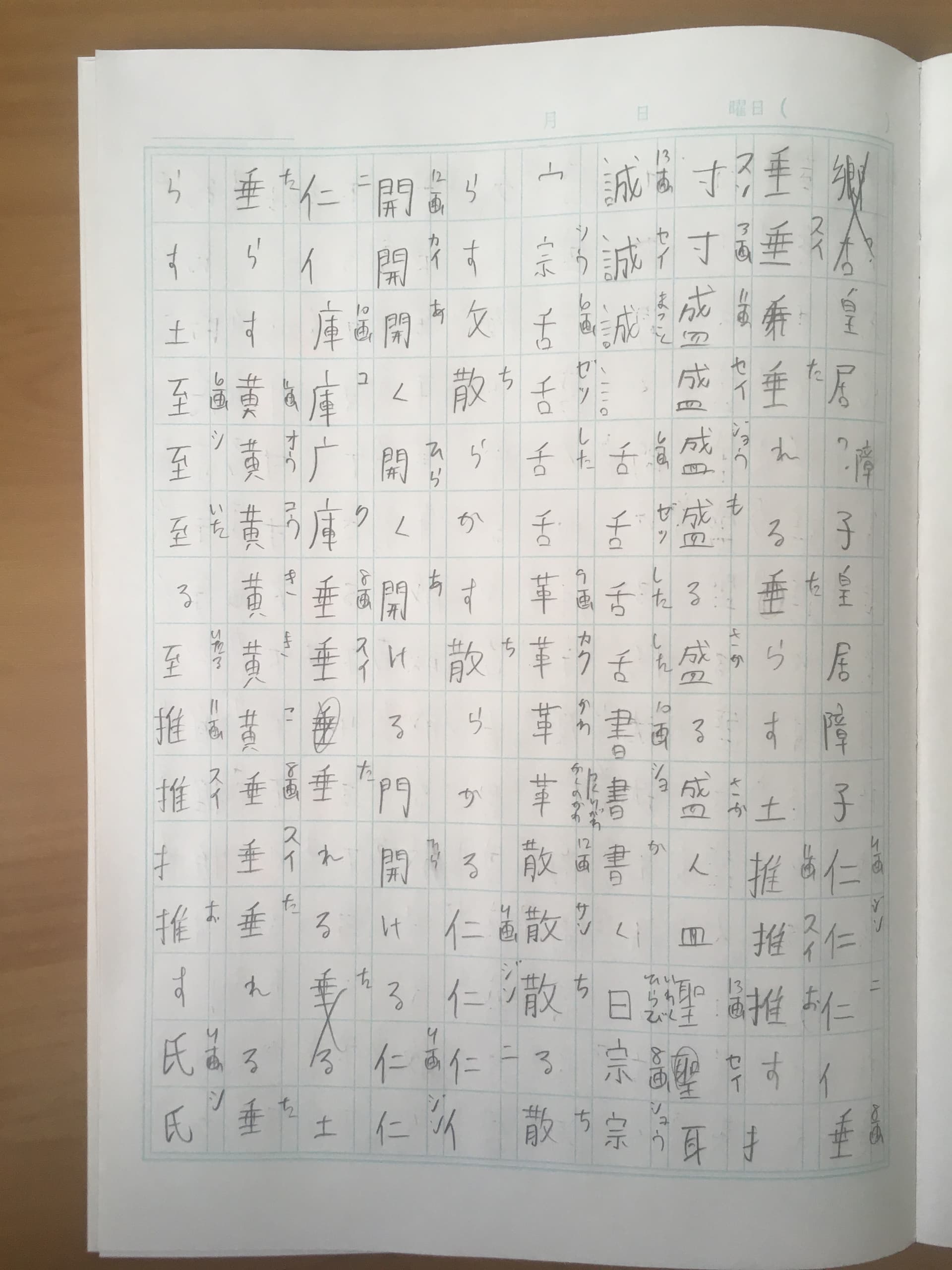
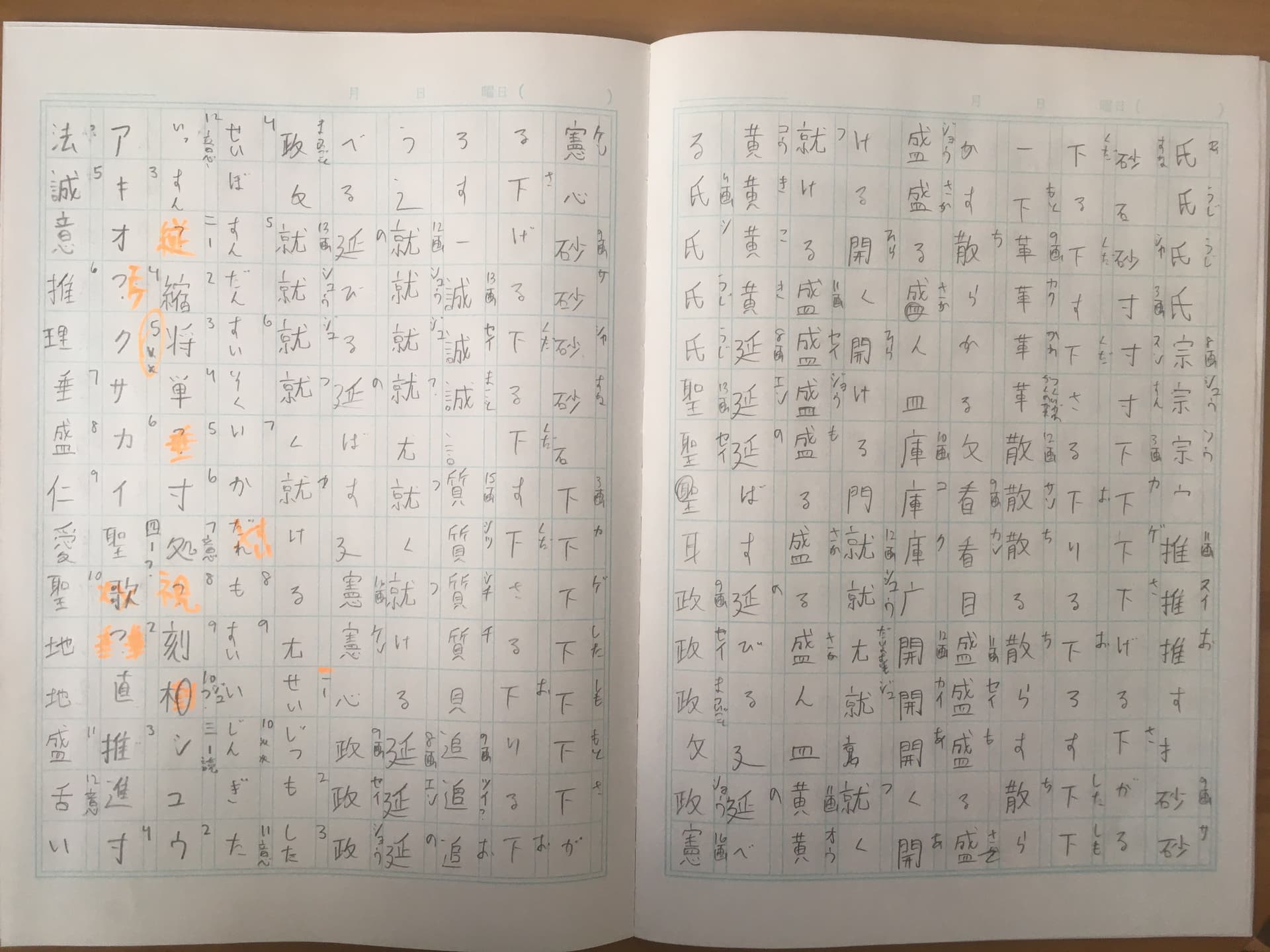
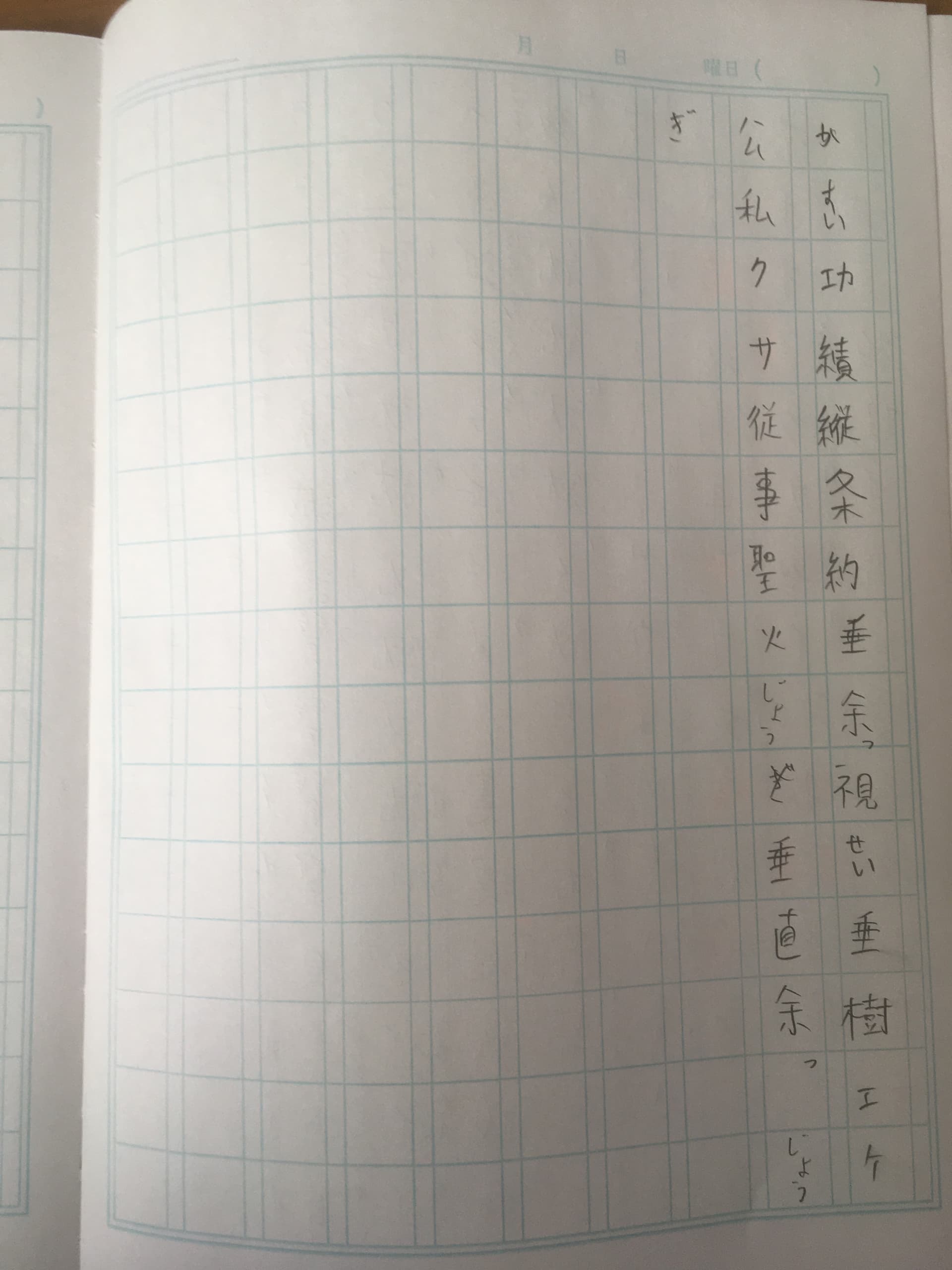
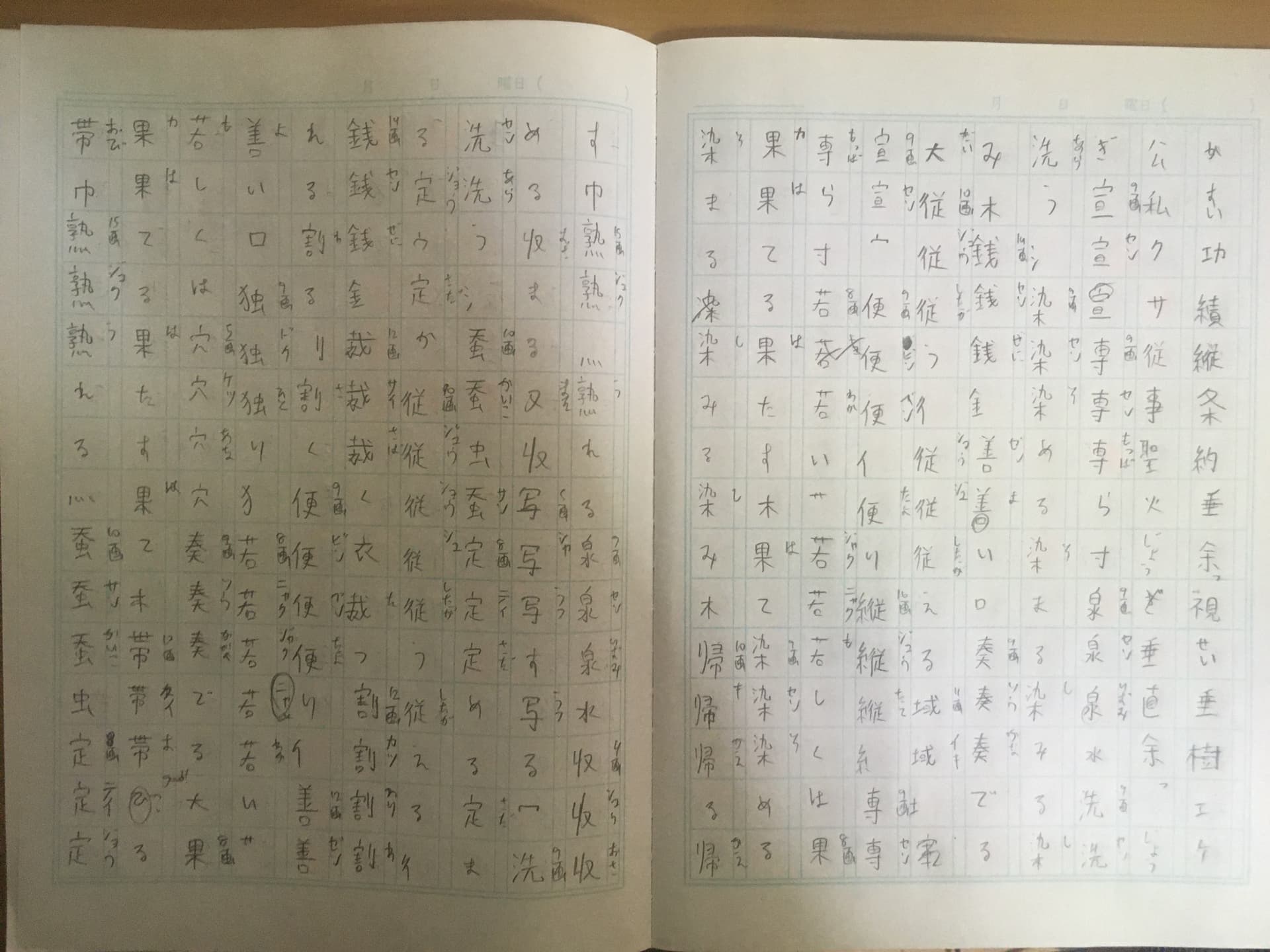
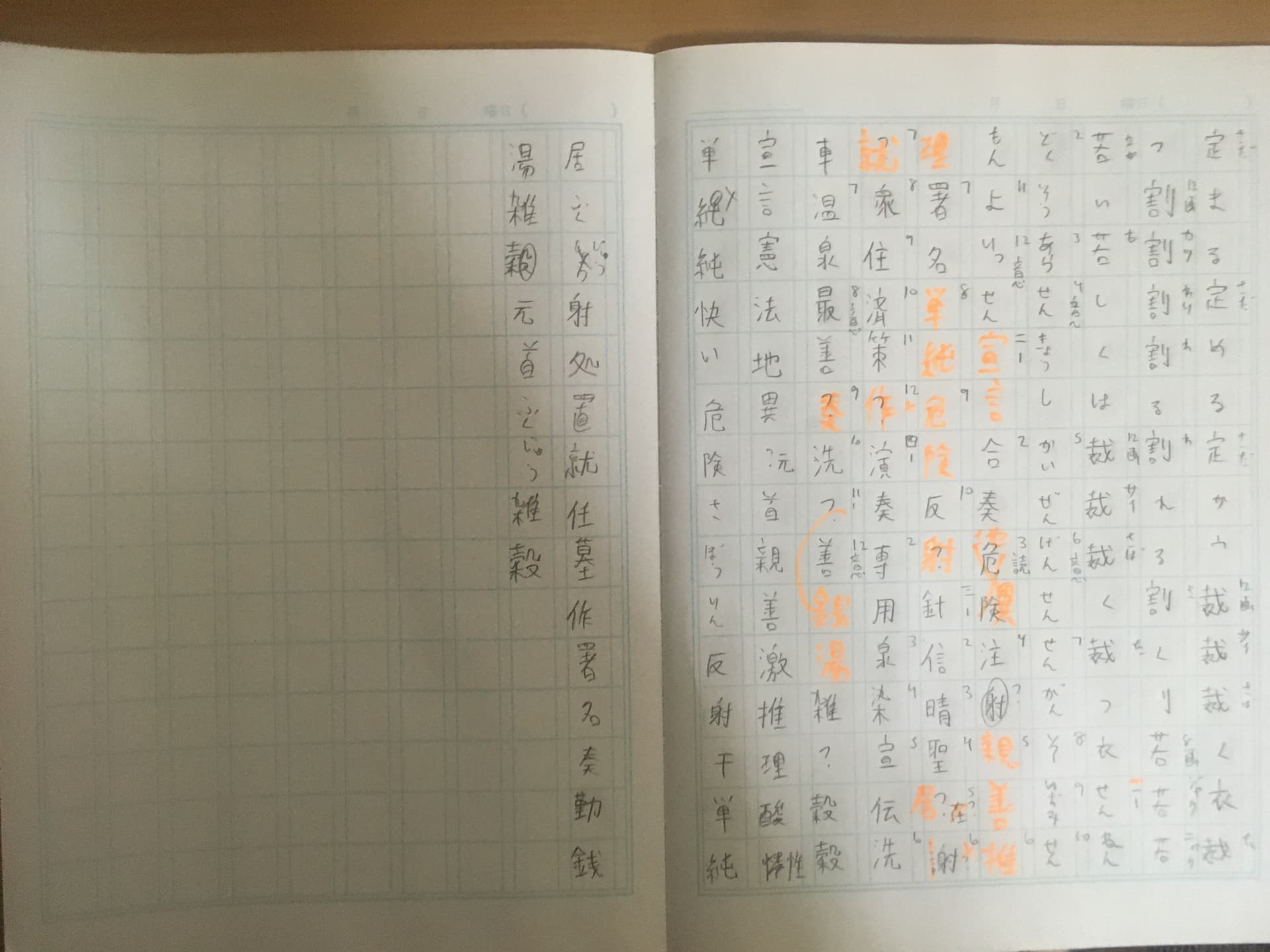
If you look closely at my crappy pictures, you can see the readings written next to each kanji (I don’t do it when drilling, just when I’m practicing the kanji itself). And I try to produce them from memory.

I go with the step series, which goes in grade school order and seems to show readings appropriate to the level / what could be considered basic knowledge for each kanji. So I just trust that to give me the readings I should be studying and make sure I try to master those.

This is fascinating and really helpful. Again – nothing but respect for anyone who has the fortitude to do something like this! Thanks a lot for sharing your experience… are you going to try again anytime soon???

Put those little punks in their place LOL. Go for gold and show them what’s up. :muscle:t5:

2 Likes

2024-02-27T15:00:00Z

Currently Studying: 漢検漢字学習ステップ5級

New Kanji: 仁,垂,推,寸,盛,聖,誠,舌

Today was surprisingly hard! I’ve got a lot going on so I try to keep study time within an hour… it took me way longer than one hour. :man_facepalming:t5:

Does anyone know about putting images in a slideshow? Or does this forum software accept embeds?


3 Likes

I have also been having a lot of the same thoughts recently and flirted with kanji writing a bit recently myself because of this - I always end up getting between 500-1000 in the SRS before I stop and it is like the third time I’ve done it. Seems like I never learn. Since I live here raising my active vocabulary is still more important for me currently but I only now realise how “airy” my grasp of kanji is sometimes, despite being able to read them in the context of words (and obviously sentences) my knowledge is just nowhere as deep as it could be. Sounds mad since a year ago I would have been thrilled to be able to read as easily as I can do now but I guess the goalposts constantly change.

As you say, there is something about wanting to get it “done” and then move onto just living. It is probably the only intensive real “study” activity left at a certain level.

4 Likes

I just picked up the switch version yesterday. It is pretty tough. My wife tried the pre 1 and scored 3/5 on a warm-up test. (native japanese) It is really fun though, I wish it went a bit more into detals of the kanji meaning.
just wanted to add, I don’t know if this is in the DS version, but you can put the kanji on “timed” to where you must write the kanji quickly and accurately. really good for practicing how fast you can write 一.

3 Likes

Yeah, what you call “airy” I call “borrowing”. No idea why writing is shrugged off as an unimportant part of kanji study. It’s vital and makes everything easier anyway. If you can’t produce it, it’s not yours – you’re just borrowing it.

Absolutely… if I went back in time and told myself how far I’d gotten I probably wouldn’t even believe it. And yet right now I feel like my Japanese ability is still basically 0. It’s crazy.

I totally feel everything you wrote here lol.

4 Likes

Yeah, it’s really bad to tell people to ignore the writing aspect of japanese “just because you never do it” is not a good or valid reason. I can’t tell you how many times I’ve personally had to look up kanji to write a word for a note or for my co-workers. You cannot print out sticky notes.

5 Likes

I think probably the advice to hold off is reasonable given that the normal methods for learning to write as a beginner mostly involve rote memorising how to write based off of English keywords which sounds painful and less useful that other activities. I never did that kind of thing and whenever I have turned my hand to writing it is always using monolingual or native sources which feels far more like I am reinforcing my knowledge. There is something to be said for connecting writing with something you already know well (the same way natives learn to write). Sometimes online you see people who are like “I learnt to write 2000 kanji in [time]” but that knowledge is just a party trick if they can’t actually understand and use Japanese, which normally they can’t.

I don’t have a good solution but I would guess the best way for L2s to learn would be to have a careful system where they lagged their kanji writing a few months or even half a year behind their kanji reading ability and only used words they know as reference for their writing but setting that kind of thing up and doing it properly would be a headache and probably put people off. I think you could replicate it by being careful and using some anki addons or something but as it stands it is just easier to learn a bunch of words and learn to read and then go back and intensively learn to write. At least for me personally it turns out I don’t have the patience to spread that kind of learning out over a long period of time anyway…

3 Likes

I made an anki deck initially based on Wanikani (that I’m now extending with my own content ince I’ve finished the course) that prompts for the kanji by meaning alongside the vocabulary containing it, so I can work on remembering the kanji itself but also the words containing it and their readings.

So the front of the card looks like this:

https://i.imgur.com/C0QHiuP.jpeg

And the back like this:

https://i.imgur.com/KecPoVg.jpeg

I think think it makes sense to learn the onyomi with the kanji and the kunyomi with the vocabulary, generally.

2 Likes

https://ankiweb.net/shared/info/759825185

Writing practice deck for Anki if interested.

4 Likes

I was aware that it tests more than just writing the kanji, yes, but I love extremely hard challenges :slight_smile:

2 Likes

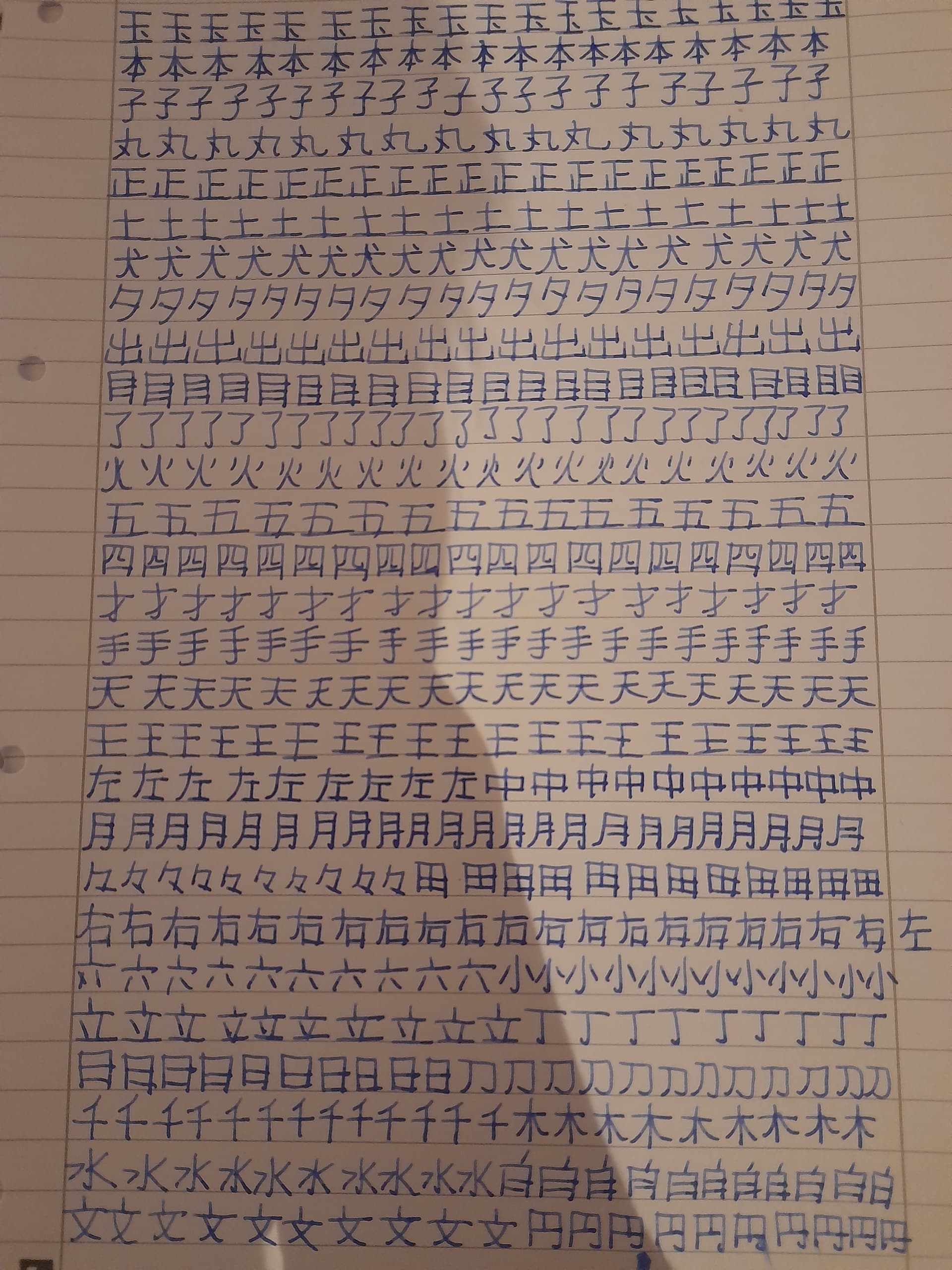
Well, I didn’t do that much yesterday, but I finished the level 2 kanji on WaniKani (yes, for now, I’m just going with the WK kanji, since I already pay for it)

My handwriting and camera quality is pretty much trash :see_no_evil:

One thing that stood out for me is that the stroke order for the ナ itself in 右 and 左 is different, which is kinda counterintuitive to me, I had to check twice if I’m not reading the stroke order chart wrong haha

5 Likes

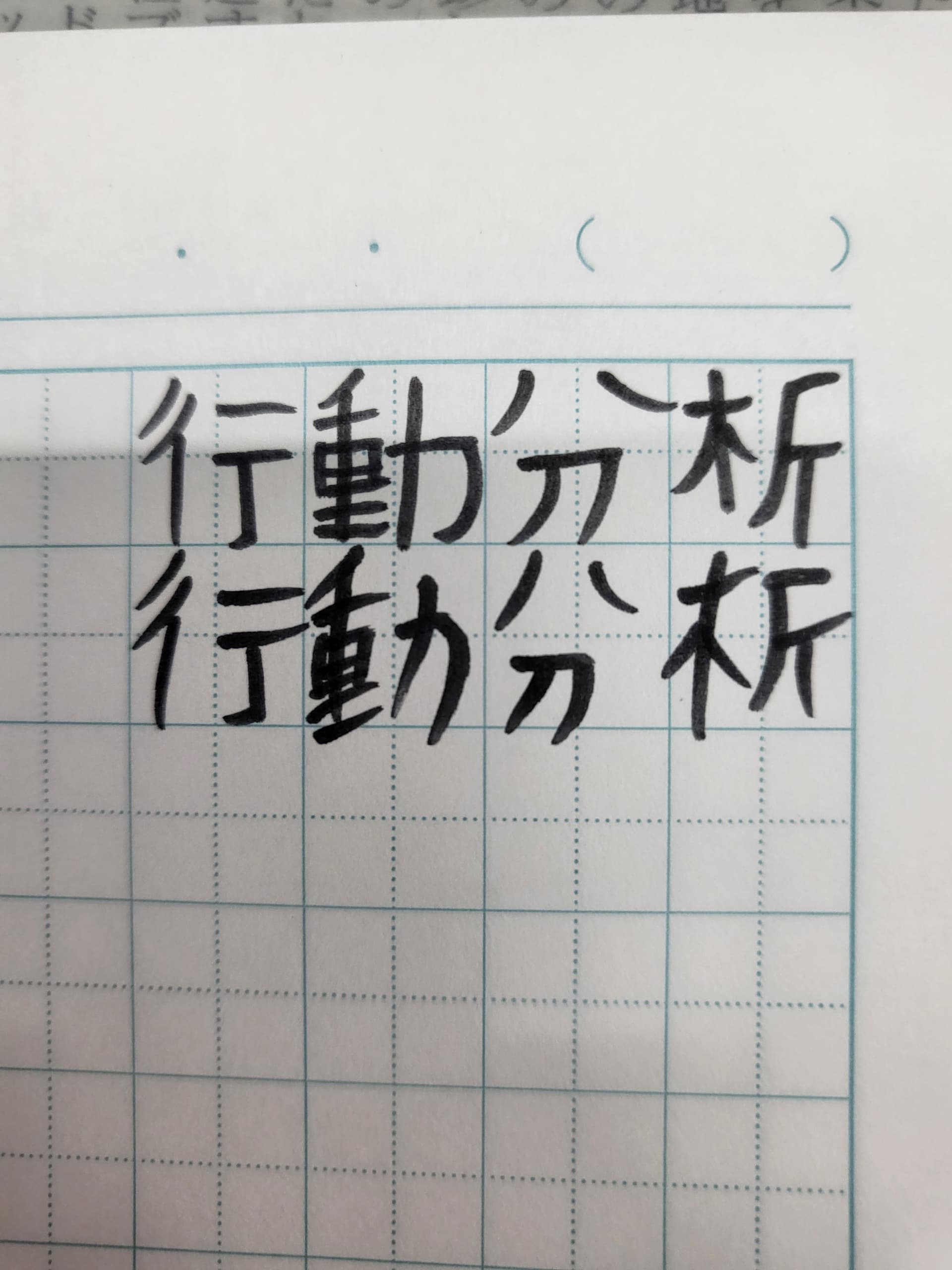
You should invest in a felt pen. It really changes how it feels to write the kanji. After using one for my own practice, I can’t go back. lol

4 Likes

In the 3DS you can tell how fast should recognize the Kanji. So if you set it to fast and write it too slow, it will result in an incomplete kanji or something else because of it.

Also while sometimes it recognizes Kanjis when you write it in the wrong stroke order, doing the wrong stroke order usually results in getting the Kanji recognized as something else.

2 Likes

I know how you feel so badly it hurts haha. N2 is many people’s first milestone, but once you achieve it you realize just how much more there truly is to learn and improve on. Considering the language as a whole, Japanese grammar really isn’t all that extensive. A lot of it after N3 is just phrases using certain words. And that’s where the real challenge comes in, the vocabulary and kanji. I probably have over 15000+ words that I’m familiar with and thousands more that I’ve seen at least a couple of times, but I find that I’m still having to look up new ones constantly.

I’m curious how you approached vocab? Hopefully you weren’t like me and just tried to brute force yourself to remember all of them without learning kanji haha. I got familiar with common vocab, but it wasn’t until after 2 1/2 years into learning Japanese I finally learned the common 2300 kanji and it made everything 10x more efficient. I finally have a decent intuition of the reading of words I don’t know yet and even if I don’t, searching them up is a lot easier now. In the beginning it was like pulling teeth trying to look up unknown vocab.

3 Likes

2024-02-28T15:00:00Z

Studied: 漢検漢字学習ステップ5級

New Kanji: 宣,專,泉,洗,染,銭,善,奏

Got wrecked in the 四字熟語 section in today’s drills :rofl:


4 Likes

Nice practice :sunglasses: So you basically wrote out the characters as they came up in WK? Thanks for sharing! Keep them coming :heart:

(about 右/左) Omg tell me about it. I still have to pause and think about it. Stroke order makes sense for 左 because we have to connect to the 工 part, but I feel like 右 was arbitrary. But they are definitely different, and 右’s ノ is shorter because of it.

I don’t have the precision for that. :rofl: Felt pen is endgame, I bet your kanji looks dope. Any pics you can share??

You’ve outlined my exact progression. I hit the kanji wall smack in the face and realized I would get no further if I couldn’t nut up and do it properly.

:sob: I was exactly like you and tried to brute force my way to study it like I was studying English or some Romance language. I did RTK1 (Jalup’s Kanji Kingdom) then used ASK’s Try series – the whole series – as a dictation anki deck. Over my time studying through the JLPT levels, I turned literally all of the sentences from N5-N1 into dictation cards. Front: audio, back: sentence. I wrote sentences out using kanji and everything when prompted by the audio.
As I started trying to read books, and especially when I got to N1 reading, I realized I didn’t have that intuition for readings or even the meaning, really. Like you said, pulling teeth. I realized that was because I didn’t actually know the kanji. Go figure :man_shrugging:t5:

3 Likes

Here you go.


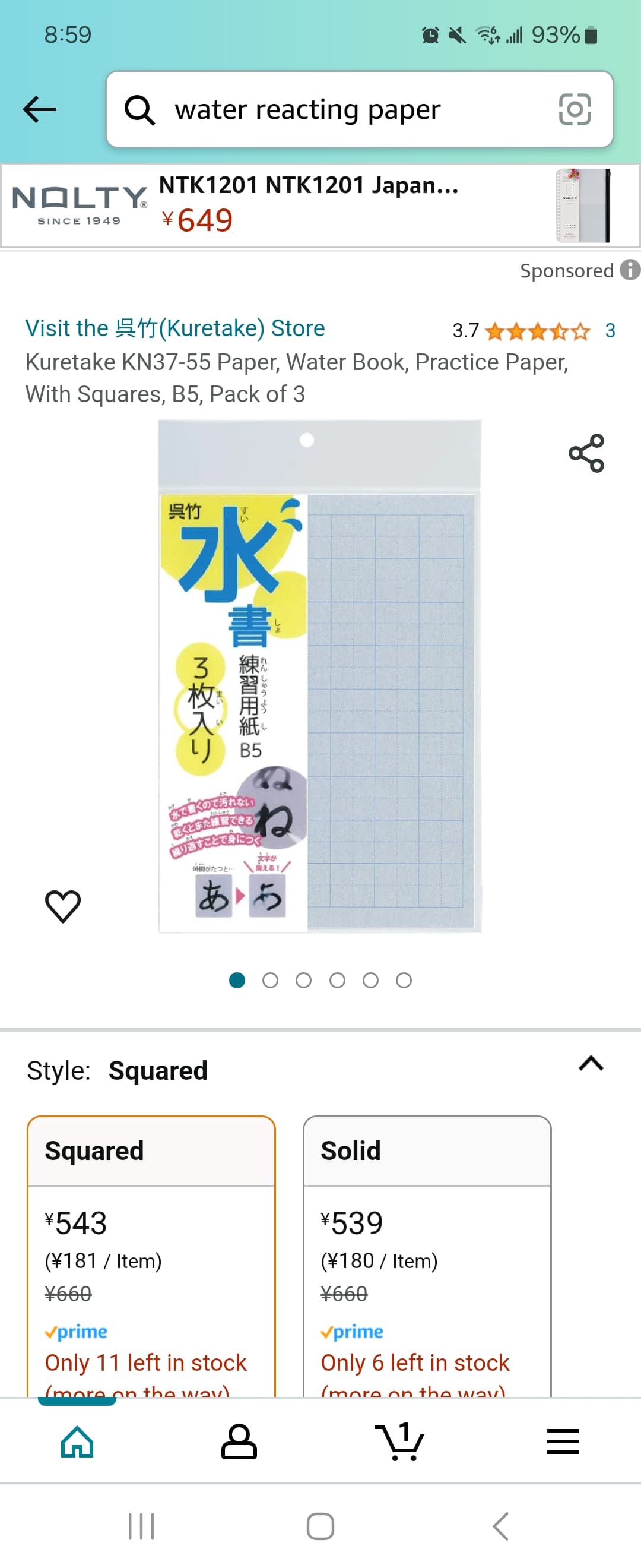
You can also buy and practice on these.


My wife bought them for me and it helps a lot.

4 Likes