
Hard uncommon Kanji

Hey! Sorry if this has already been asked before, but is there a way to turn off kanji but just for some words?

Like I want to be able to recognize these words for example when reading because they’re quite common words (I’m like N3 level),

胡瓜 きゅうり

玉蜀黍 とうもろこし

抑 そもそも

蚯蚓 みみず

But Bunpro just shows me them in kanji form in reviews, but they are apparently extremely rare kanji and I don’t want to waste my precious brain space learning these kanji right now that most Japanese people don’t even know (maybe one day when I’m a kanji-god)

This happens to me all the time on Bunpro! I definitely don’t want to turn off ALL kanji cuz obviously 木 and 今日 are crazy useful, just these wacky kanji! Anyone else had this problem and found a solution?

2 Likes

I know on mine, if I hover over a word it gives the reading, so if I see something I don’t remember I can still get the reading on it easily. I’m not sure if I had to do anything to settings for that, though. I actually like it this way because I make the association between the kanji and the reading if I don’t recognize it.

3 Likes

I think this is a fair point but they do come up more than you think, and its very tedious trying to look up kanji individually when you’re reading a book that doesn’t do furigana, so I recommend getting comfortable with seeing them at least! Still use furigana, but if you see the kanji with the furigana your brain will still slowly make the association and you’ll be happy down the line that it did. (I think). No need to learn the kanji independently, but I think its worth getting comfortable with them.

2 Likes

Yeah me too! Again it just feels like wasted brain space though for some kanji! 95% of kanji on Bunpro are fine though! Like I want to know the kanji for 参加 instead of just learning さんか because that’s a kanji you see ALL over the place!

But learning 蚯蚓 is just so completely unnecessary in my opinion when I could just learn みみず instead and save the time trying to figure out if this kanji I actually should know or not! Maybe if I become a professional bug scientist one day I can learn it, but for now, I just want to be able to talk with normal people, and read what normal people can read!

I showed my Japanese girlfriend the word 蚯蚓 and she said she had absolutely no idea what it said :joy:

I feel you! I personally just don’t think it’s worth it for some kanji and would rather spend that time learning other Japanese words, or more common kanji!

Like my Japanese girlfriend said she’d never seen the kanji 蚯蚓 in her life before, and she guessed that 玉蜀黍 meant like egg or something :joy:

Just not worth it to me learning those kanji, and I don’t know of a way to study those words on Bunpro just in hiragana because EVERYONE knows them in hiragana!

Bunpro has an unhealthy obsession with kanji in general. Even grammar points that are never written in kanji will use them, like using 筈だ instead of はずだ. Even a dictionary will give 筈 only as a relic of the past and then proceed to give examples of the word using はず in hiragana, but Bunpro is like 筈w筈

1 Like

Soooo true!

Rather than have bunpro change, why not write a browser extension that replaces certain kanji with kana? Then no matter where you go on the internet, you could avoid difficult kanji like these.

1 Like

Rather than write a browser extension that makes Japanese text look like actual Japanese, why not have Bunpro change? Then nobody gets exposed to or discouraged by random historical trivia. Unless they write a browser extension for it.

1 Like

I have no idea how to make a browser extension :sweat_smile: And yeah, I’ve asked Bunpro about it a few times already with the feedback button, but no response! I guess there’s just no way to fix it yet! All good!
I like the historical kanji. They’re neat! Don’t take them away from me :sob:

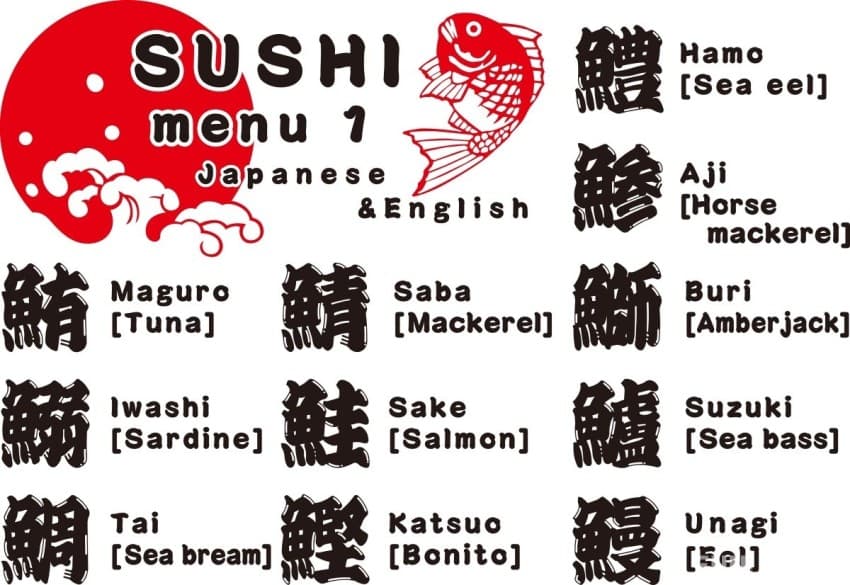
Those sushi menus are going to get a lot harder to read. 鱧 is usually kana, but…

3 Likes

If you read novels by 江戸川乱歩, which are not really “historic”, and actually not so difficult, 筈
shows up all the time…

1 Like

For every kanji one can probably find a scenario where it’s useful, the argument is more what order of learning is productive for a mere human with limited resources.

Is it really really necessary to learn Kanken pre-1 kanji 筈 just to learn very common N4 grammar はず, or can it be postponed for a year or two?

Is it really necessary to learn two Kanken pre-1 kanji 胡瓜 just to learn きゅうり that in supermarkets is most likely written in big friendly hiragana?

I don’t like to harp about Bunpro’s shortcomings on Bunpro’s forums, but IMHO this area could use some improvement. For example on JPDB you can select which spelling of a word you want added to your deck, different spellings have a % of how common they are, and they all share the pool of example sentences. So I can e.g. choose to learn けいれん today and postpone 痙攣 into indefinite future.

2 Likes

wait people don’t know the fish kanji?

I see it all the time, and quite useful.

Came across 痙攣 in the book I’m reading yday (admittedly with furigana)! Had never learned it in kana or kanji form before.

We’re eventually gonna switch to a word-based “known reading” system, as opposed to individual kanji based (as it is currently).
A word-based system would solve this issue.
Hopefully we can take a stab at sometime this year

But Bunpro just shows me them in kanji form in reviews

My guess is that it’s only sometimes?
AFAIR we purposely use rare kanji on the odd occasion, but somewhat rarely (slightly more often than you’d see them in real life).

6 Likes

Thanks for the reply Sean! Happy that the issue will eventually be solved! (100% my favorite part about Bunpro is how fast it’s growing and becoming the ultimate Japanese learning website, soooo much has improved since I joined way back in 2022)

Yes for grammar, the rare kanji only appear sometimes, but for vocab it essentially is always stuck in kanji form, so whether I like it or not, I have learned 蚯蚓 and 玉蜀黍 :joy:

1 Like

This is true. I posted this a while ago. Short version, it’s higher mental load early on to learn 此れ and it may even make learning これ as kana more difficult, which makes for a poor experience for beginners.

Unfortunately, bunpro as it is today is not designed to automatically scaffold これ into 此れ or furigana 雨 into non-furigana form. It has to be done manually.

Funny enough, in February, Wanikani is adding this kind of scaffolding for 鞄 at level 38. They originally introduced かばん at level 6. The question becomes - is it worth it to have 2 or more flashcards for the same word depending on the circumstances? For example:

First learn うたう as it appears in children’s books
Then learn 歌う as it’s most common
Then 唄う and 謳う for their slight change in nuance… or are these their own thing!?
And at some point, get quizzed on entire paragraphs in robot or “accent” speeches with ウタウ ~ what even are the most common words for this!?

But at some point, you may need to learn 筈. I did, and it’s come in handy a few times. Of course, I had accidental scaffolding from grammar はず into vocab 筈 so it’s a bad example :sweat_smile:

1 Like