
But do they say this in Japan?
1 Like
“Well, there’s your answer, salt-butt”.
Watch this video all the way to the very end to understand the reference. Incidentally, I just showed this scene to my Japanese partner (who is barely even aware of the existence of the Simpsons) after she told me “Japanese TV commercials are more fun than US ones” and unlocked a memory I’d forgotten about for decades.
3 Likes
I have a really dumb hobby of saying stuff wrong on purpose in English, probably because I’m a grammar nerd and a perfectionist and it lets me blow off steam. Like I will intentionally say “deers” and “shrimps” and “sheeps” as one example. There are many others. I’ve realized when I do this in front of my Japanese partner, I need to follow it up with a disclaimer that it’s wrong.  I’ve also already started doing the same thing with some Japanese phrases to her, and she’s smart enough to know when I’m doing it on purpose vs being actually wrong since I still barely know anything.
1 Like

This colleague was Japanese or English? Not sure which one makes it worse. Although sometimes people just don’t realize that one paradigm in one language is the same thing in the other because naming and pattern matching is hard.
I tried to talk to a native (living in USA with great English) about my experiences with rendaku, and at first he thought I was saying 連絡.
Probably my own pronunciation to blame there. But once he figured it, he did know what I was talking about.
None of the Japanese I talked to in Japan knew what 不可説不可説転 is. I doubt anyone in this thread will. Given it is such an obscure buddhist term, I only learned it because it appeared in Honkai Impact 3rd.
1 Like
A very common one I have is teaching native speakers the kun-yomi reading of words that they probably only ever use the on-yomi for. Could just be a generational thing, but a lot of people 30 and under don’t seem to know the kun-yomi for words that are somewhat common in books and games. I guess because that kind of media is getting a bit less popular these days.
A recent example is 歓 (かん) from 歓迎 also being read as 歓び (よろこび). Which isn’t too uncommon to see.
@JamesBunpro @homa Never really thought about the difference in meaning between 芸 and 美  . Without researching it at all, I have always thought of 芸 as the physical actions or work involved in a craft, whereas 美 more refers to the end product, or how someone external to the creation of the art views it.
5 Likes
Apparently 一石二鳥 was introduced into Japanese from English during the Bakumatsu/Meiji period. Seemingly it also originally had some other somewhat less efficient translations like “一石を以て二鳥を殺す”, " 一石にして二鳥を墜す" and “一つの石で二羽の鳥をしとめる” before being reduced during the Taishou era into 四字熟語 form.
4 Likes
I taught a Japanese friend the reason why 良い(いい) conjugates to 良くない (よくない) or 良くなかった (よくなかった) because it stemmed from the ancient or more traditional Japanese reading of 良い (よい) for good
2 Likes
One time during a discord call, I went all in and taught a few Japanese people that at first the 心 kanji looked like another important organ
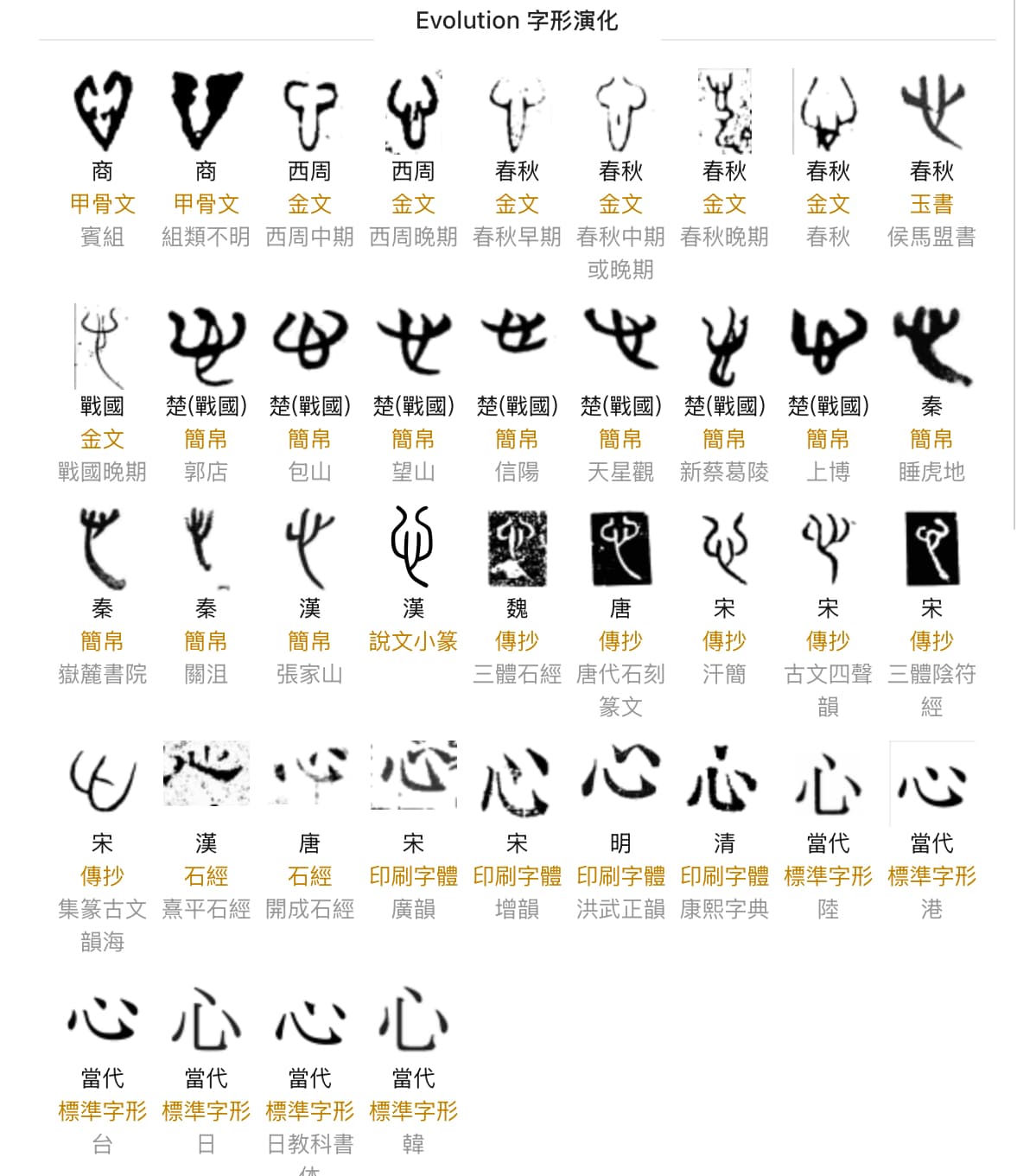
The one person who was laughing the most after that was actually an American guy who also was in that call
1 Like
Interesting! In that case, it seems like it might be argued that いい is actually the exception rather than the norm. I guess that’s true both historically (as you point out, since よい has been around for longer) and statistically (since いい only exists for one specific form, the unconjugated one). But since unconjugated feels like “the main official thing”, I always assumed よい was the exception.
Thank you, I had a really hard time believing that it was just a case of convergent evolution (not accusing anybody here of implying that).
Convergent evolution is neat though. I recently got 心底 on wanikani, and I find it interesting that both languages consider the “bottom” of the heart to be the core part. Why not the top? Or the inside? Or the back? My LLM companion assured me that (a) it is convergent evolution (b) it exists in many languages from independent families. Most surprisingly, the LLM even asserted that it would be surprising if a language didn’t evolve that way (I am not sure I agree with that part).
2 Likes
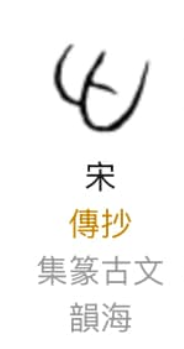
You’re right, it does look like a … big toe!
2 Likes