whats your go-to-method during your inevitable holidays/trips/etc. in regards to Japanese learning? Everyone goes onto to do a holiday sometimes, right? Or meet with family, etc.
Are you just continuing to study as usual? Are you stopping completly? Are you perchance doing less?
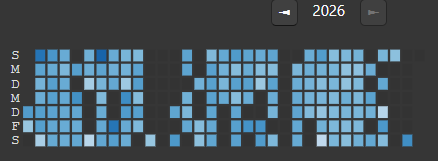
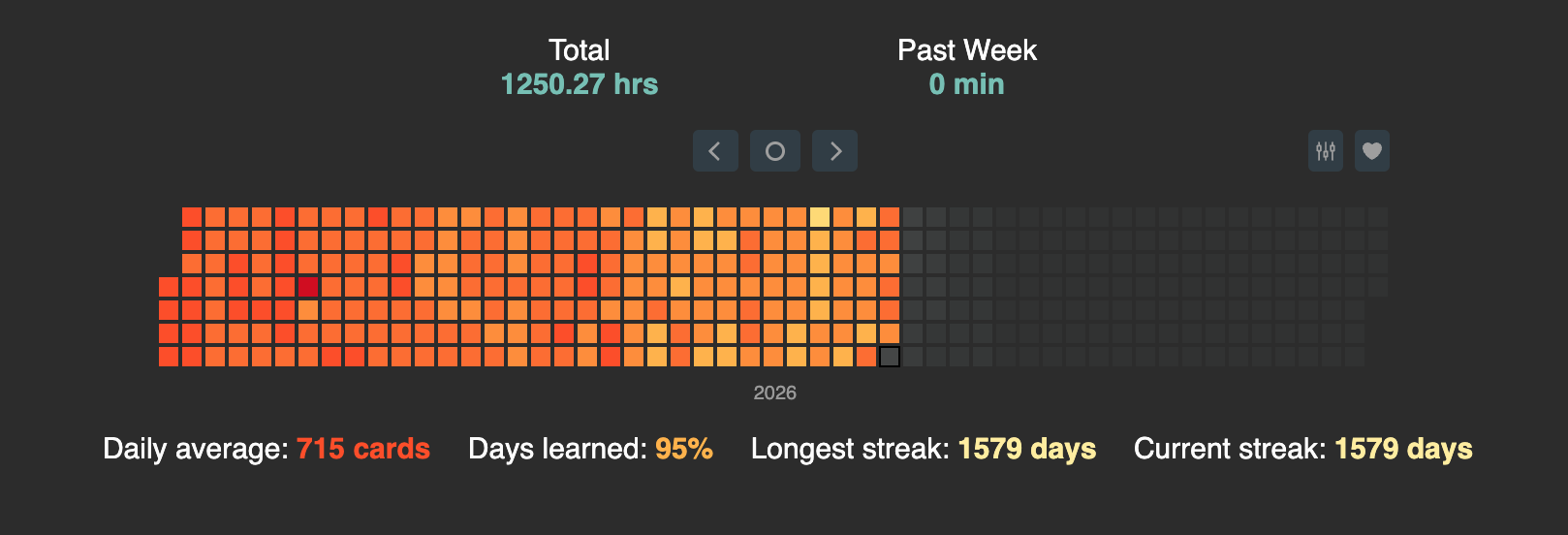
I’ve recently rewarded myself with holidays after completing and passing a stressful exam in university. I’ve added a screenshot from my Anki stats. There are three big gaps that you can see: When I was moving, then Holiday 1 and Holiday 2 afterwards. Also you can see that I wasn’t studying every day before as university sadly had to be my priority (wonder if I can tie those two together in the future? Japanology-ish interdisciplinary Masters Programme…yeah sounds nice…).
Its such a hussle to get back into it honestly. Anki reviews piling up to 1500+ cards (looking at you, core 2K deck). Kanji not staying with me, for no reason at all.
Thankfully, Bunpro isn’t as bad in this regard. However to be honest, studying during holidays isn’t easy, either; distractions are prone to happen, even more so during things like moving apartments or family stuff.
I study every morning “without exception” and have done so for 2,5 years or so. It is far worse for me to not do my reviews than get a ton of reviews later. I do take small 1-2 day breaks from reading/watching every now and then though so I can get errands and such done and just clear my head a bit which does help, but week+ long breaks are not good for retention. Much less harmful when you are already somewhat used to the language though.
There is one exception though and that is when I go on trips with someone. Went on a day trip hiking last week from morning to night, I did not do reviews that morning and did the double next day instead since I was too exhausted to do them before bed.
I legitimately cannot stand when I get 2-3 days worth of reviews stacking up so I do everything I can to avoid it. When I got home from the hotel after my brothers wedding I think I had 900 reviews stacked up and did them in one go. Sometimes it just happens and I usually stop doing new cards and divide it into a more manageable pile by saying I will do only 1/2 or 2/3rd today and the rest tomorrow. Those two days are a bit rough, but it is what it is.
I recommend people never use any holiday/vacation pause features and just let the piles build up instead, it is better for retention and you can manage yourself how much you do per day anyways so if a big pile is demotivating just guesstimate how much you need to do per day to clear it in x days and it becomes manageable again.
One thing I have as a current objective marker for too many reviews is how much am I going to hate myself if I miss a day? Sure maybe I could do x reviews per day if I really really wanted to, but how bad will the double be? I make sure my double is still manageable, even if it means my normal is a bit lower than I know I could handle.
One thing I forgot to mention, I usually stop adding new items a few days in advance if there’s an upcoming event. Makes the returning pile less difficult.
I’m on holiday at the moment. While I’m doing reviews, I’m not learning new items. I started this a few days before my trip. This makes reviews more manageable in number but keeps me practicing a bit. It will also be easier when I get home and need to do laundry, re-acclimating to work, etc.
I have a mental threshold of how many reviews I can tolerate. For bunpro it’s around 100 (grammar only) and for wanikani it’s around 300. No matter what is going on I tend to find a way to keep review count below this value. Sometimes I go over but not by much. Even on vacations I would still manage my reviews. There are times when I only do reviews and no new lessons or favor one pile of reviews over another (I value bunpro over wanikani cuz bunpro forces me to read sentences).
For something like core 2k deck, my personal approach was to speed run it (finished in about 3.5 months) and then coast on the reviews (don’t start a new deck, just review). If you plan on going on vacation, perhaps go into review mode early (don’t do new lessons) so you want have a huge pile waiting for you. I can go several days without doing bunpro and my review count is still low because most lessons are mature. I was also particularly busy with work last month so I only did wanikani reviews and barely any new lessons. The main thing you want to avoid as far as I’m concerned is going cold turkey and stopping cuz you’ll end up pausing for a long time. Any review is better than no review.
stop learning new things 2 weeks before life events and travel, but do your best to keep up a once-a-day routine, resuming afterward ~ you’d be surprised how much lighter things get when you cut out the new stuff
I also think a 1 week new-item break once every 2-3 months is super helpful too if you aren’t doing any vacations or something. Give yourself time for things to sink in.
I dont know how much vocabulary you know and how long you have been doing Japanese for, but at some point you’ll get to where even if you press the hard option on all your cards for a few days it won’t really have a major impact on. Not any impact that I’ve observed. You can stop doing new cards all together and simply grind down reviews until they are at a more manageable level, which is what I do to avoid my reviews from every piling up to being over 1000.
It’s kind of funny–this made me realize that I have done morning study every single day since maybe 2004 or so, when I began learning math. Some kind of SRS is usually part of that routine.
I go through phases where it is a little short, but I can’t think that I have ever taken a day off, even during life disasters. Subjects shift a bit over time, but mostly mathematics and Japanese language. Also other topics, sterile processing, infection control, music.
Morning study has been a constant for me for over twenty years.
stopping adding new words if you know you don’t have the time or mindset to learn them, but always continue with your reviews.
split your decks so you can do them each in a few minutes at a time: while cooking, on the toilet, taking a step outside for some fresh air, just before and after sleep, etc.
It might sound like a hustle, but even when I was busy with stuff I still found 15-30 minutes before bed or after I wake up to do some reviews from the phone. Obviously, that doesn’t work for learning new items and grinding, but still, you can have some progress by reviewing stuff.
Alternatively, you can always turn on vacation mode and have some proper rest before getting back to reviews.
Hi, I’ve done both ! First year with Wanikani and bunpro, I tried my best to stay on top of the review and the learning queue on holiday, and it ended up causing me a lot of stress, especially since holidays mean unpredictable schedule, plus I couldn’t really free my mind and take a proper mental break from japanese.
This year, I gave myself a proper break (aka not doing any learning on holiday and doing reviews only when i had genuine time to kill), and it worked out great ! Did i had trouble getting back into it too ? Had I a mountain of reviews ? Sure, but that kind of struggle did not last long, and more important, it allowed me to be fully present and sharing great moments with my partner, friends and family, and for me, that is irreplacable, especially since I really value quality time with people.
But, as other pointed out, it really depends on who you are, your goals, how you plan your workload the rest of the year, of tired you are, etc.
All in all, life doesn’t always go in the way you want, but the important thing with learning japanese is to play the long game, even if it means skipping a day or two sometimes.
My breaks mainly come from long periods of overtime at work. I used to drop language, but as you’ve seen, it really sets you back. Now I just stop doing lessons when I know it’s coming like many of the others have said. I also don’t go crazy adding new items even when I am not super busy at work since I know life just keeps happening. A period of no new items steadily brings down the number of reviews and you can do stuff like read or watch stuff on days in which you do have a good chunk of time. Granted, that last part isn’t that plausible until you’re mid N4 at least, especially since if you’re dealing with life stuff, you’ll also be super tired.
Also, like others have said. On vacations, I do the reviews either in the morning or at night in bed at the hotel.
Thanks for your replies, everyone. I wouldn’t have expected that amount of engagement, so I am very happy about all the experiences you shared from which I learned a lot, really. Let’s keep this thread ongoing! May it help others aswell in their learning journey.
I think so too. This is especially true for Kanji in my opinion. I will not take them anymore.
This one is really helpful I think. Many others mentioned it aswell, so I will do that if anything big is about to happen; then it would also be easier to continue during the holiday.
How many new cards were that for you every day? Like 150-ish?
Honestly I think like doing less is more sometimes, yet I dont like missing out on studying Japanese or in regards to university. Let me tell a story. I was super stressed about a spoken finals (we have them here, they take about 20 minutes). It got to the point that I was studying 2-3 hours daily and was so unconfident and uncomfortable, yet having the knowledge, which however would not do any good if I was not confident. So about a week before the exam, I stopped studying. Tried to do non-action (無為), basically what Lao Tsu was describing. Guess which grade I got…the absolute top one. The irony here is, if I would have studied more I would have not gotten that grade.
Moral of the story, I will stop studying before my first JLPT aswell. I won’t stress about it. I recommend to try this approach to those willing to do so (no guarantee that it works, though). Maybe do some immersion in geniuenly fun topics. However, for usual, every day studying this is not useful, I think.
I’ll try to break it down. I’ve been on and off with Japanese for years. However, I am seriously and continously studying since October 2024 - always with a teacher, either online classes or for the 6 months that I was on exchange to a japanese University, that was regular practice three times a week. I wouldn’t start using Anki like September last year, though. Instead I went with paper flashcards. I now see this wasn’t the optimal course, but it is what it is, right?
I’ve now did my calculations and perchance I know between 1,800 to 2,000 words.
When it comes to immersion, I can comfortably understand N4 content. In Ken’s N4 Immersion videos, I learn like 1-2 new words at max per video, and usually there is no new grammar.
When it comes to Bunpro, I did like 2/3 of the N4 grammar (N5 completed).
Thats geniuenly amazing. Congratulations on this achievement! You are doign this almost as long as I am existing on this beautiful earth.
Sometimes, we have to simply prioritise. When its a solo holiday, it usually works out great, right? But if one is with others, I totally get your sentiment.
I think I can manage that. Comprehensive Input exists within a reason. I would really love to be able to read something again (did like 50+ comprehensive readers during my stay in japanese University; this way I also got to learn about many japanese folk tales like Momotaro, the Monkey and the Crab (is that japanese even?), and so on). Sadly, I would finish all the ones on my level after a while.
Any recommendations based on my level? I know Bunpro has readers, but I really dislike reading through any devices. Books are simply great.
I’d recommend using https://learnnatively.com/ to find actual books at this point. Great that you found so many comprehensive readers, but so long as you have a tolerance for not needing to know every bit of what you are reading, you can probably start reading native material. Thankfully it’s a lot more fun than the stuff intended for language learners, so even though you’re not going to understand everything, it’s still easier on a tired mind. Right now I’m only looking stuff up if it’s really coming up a lot or I just feel like it, but most sessions, I don’t bother to look up anything. If I get the gist that’s totally fine, and so long as it’s not a lot, I am ok even if there’s a bit I don’t really get at all. Manga and children’s books are great cause so much of the story is told in the pictures so it’s a lot easier to guess what certain words must be from context.
Something worth noting when reading samples to evaluate whether a manga or show is around your level, is that a lot of times the most dense, descriptive, ect part is right at the beginning (during the exposition establishing characters, setting, story, and author’s writing style). Unfortunately, pretty much every sample won’t get past that part to show what the majority of the experience is like, but on the plus side, that means that it’s usually going to be easier than the sample.
I’m back from holiday and basically after coming back paused adding new content for around 10 days. You’ll catch up. Just set a milestone of reducing your total card count by X amount (I do -50 a day) and it’ll be fine. Don’t go hard on yourself if you can’t build motivation up again quickly.
I’m actually on vacation right now, visiting family in another state. I knew before the vacation that I wasn’t going to be able to keep up with any new lessons, and similarly that I there was no way I was going to keep up with all of my reviews. So I just accepted a growing review queue, and I’ve just been working on doing whatever I can.
Some days are busier than others, and on the busy days I’ve just been accepting that the review queue is going to grow. But I always try to get a batch in when I wake up, and when I go to bed I try to do another batch and 5-10 minutes of listening practice. It doesn’t stop the queue from growing, but it at least slows the growth a little more. On the less busy days, I work on getting more reviews done throughout the day.
We’re a quiet family though, so it’s not like we always have something going on. If it we were busier people, or if it was a proper vacation with more going on, then I probably would have worked harder to prep for the holiday by not doing any new lessons the week before and just working on reviews so that fewer came back during the week…
20? That’s so strange, I’m doing 30 per day and it takes a full month to do 1000ish of one so called “step”…they have example sentences aswell, so I really don’t understand how much I am really doing.
My current goal is to finish it until the year ends (same as the first 300 Kanji of ストリーで覚える in which I have 5 lessions left and the whole of BunPro N4 Grammar, currently at 124/185). Right now, I completed Steps 1,2, 6-9 and half of ten, meaning 3,5 are left. Maybe I should increase the pace a little bit to 40-ish cards a day, then.
After this, I want to do the core 6k deck. Does anybody know where to get it without the core 2k cards included? Thanks.