
How strict should I be on my reviews? If I make a mistake should I always mark it incorrect?

Hi all, mostly title. I’m wondering how strict I should be when doing my reviews? Aside from the obvious typo, I find myself hitting the space bar to redo my answer once or twice until I get the result that Bunpro is asking for. Usually this is because I’m not necessarily understanding what it is Bunpro is asking for. I think there are common language learning terms that get used that a typical English speaker wouldn’t necessarily know. For example, the terms “volitional” or “emphatic” to express choice or intent.
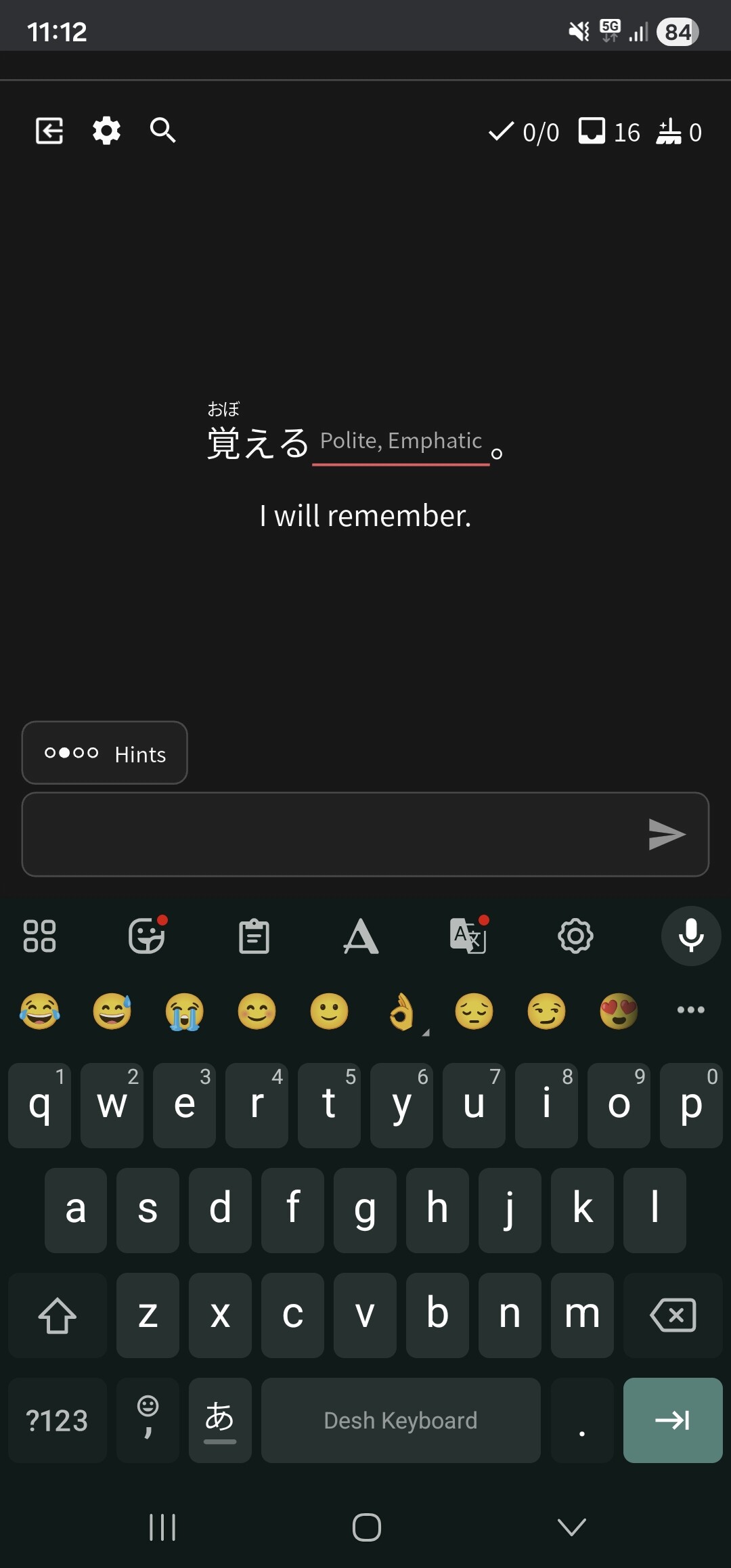
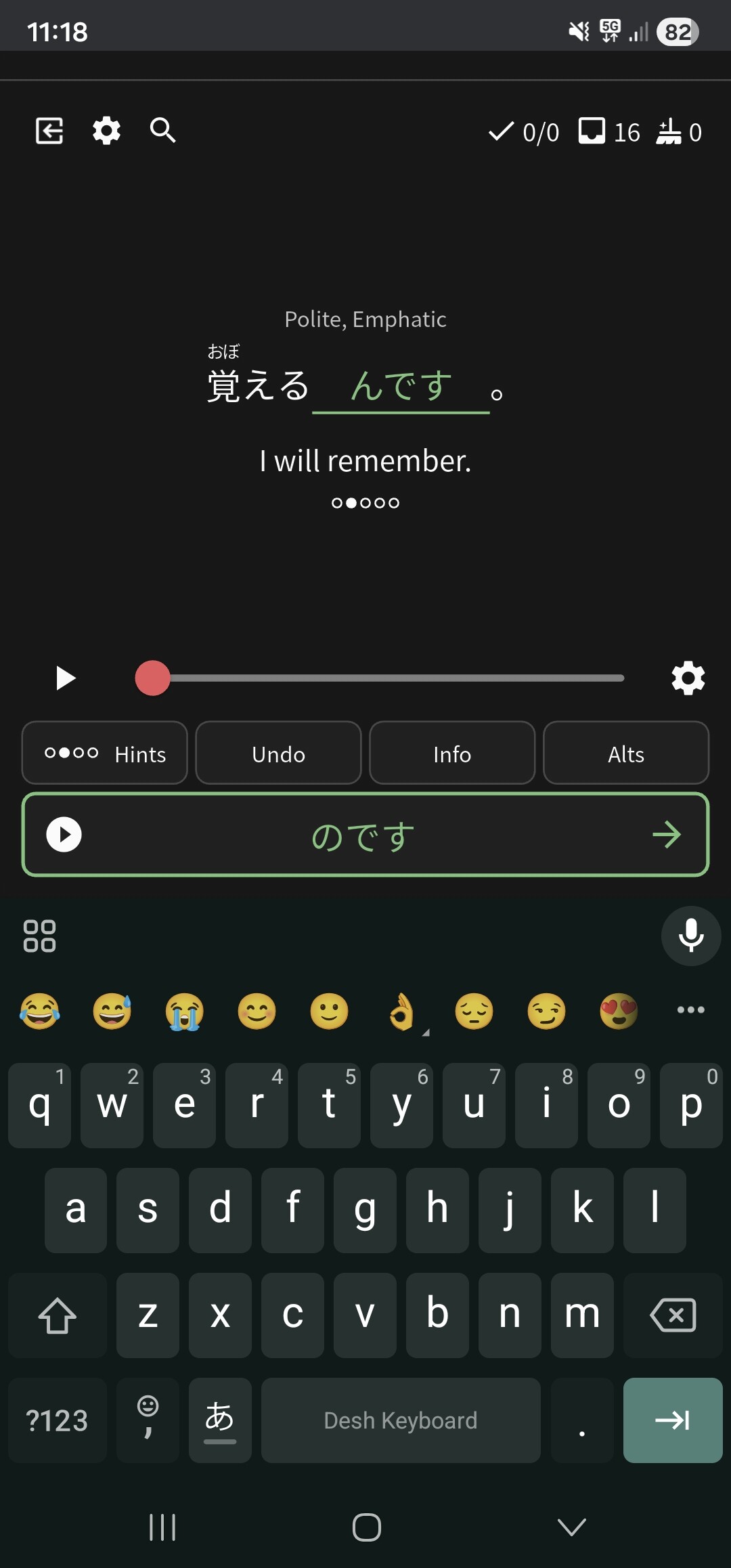
Here is one example of many. Is the phrase

“覚えるです”

“覚えるのです”

Is the difference here “to remember” and “I will remember” ? If i put です first as the answer and it’s marked as wrong, do I correct it or do i accept that I got it wrong and move on? I think sometimes my mistskes are mostly not quite understanding what’s being asked.
2 Likes

In general you should be as honest to yourself as possible. But if typing the answer is too confusing for now, you can switch to reading & grading as a review style. That way you only have to grade if you understood the grammar point or not.

2 Likes

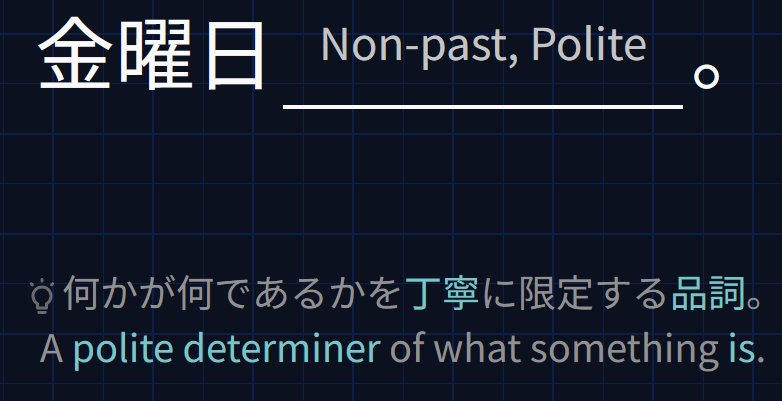
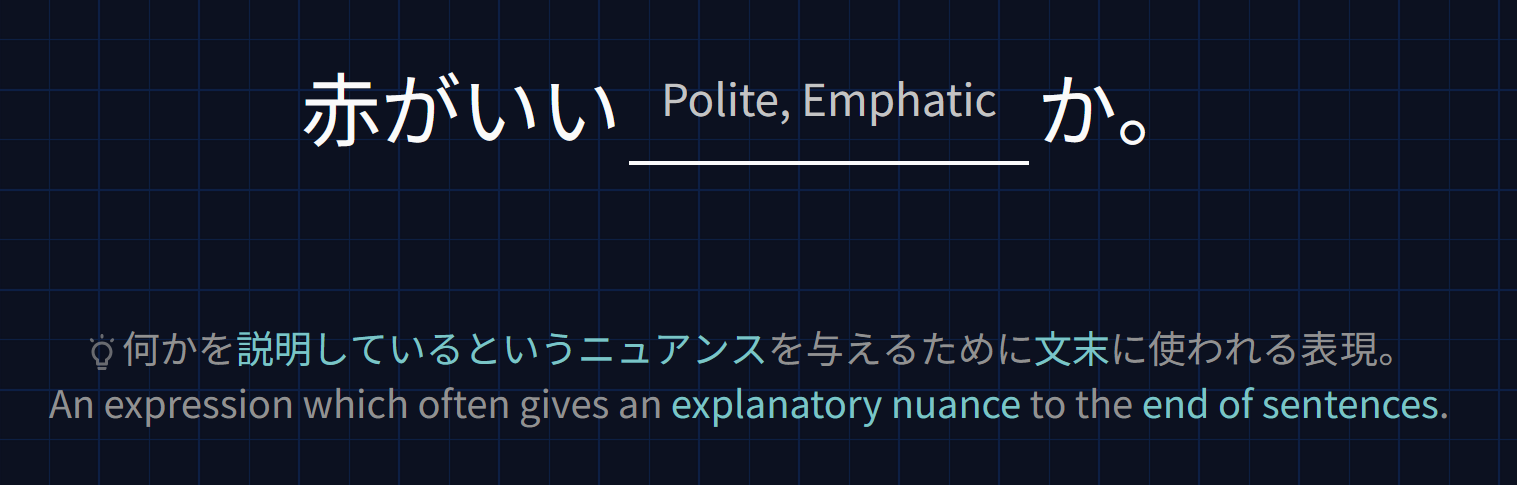
You’re studying grammar, right? You should try using the longer context hints, otherwise there are too many similar points to guess it right on the first try with so little context:


versus

is hopefully clearer for you?

I agree, I think there’s a lot of value in reading and understanding before practicing output. Being very familiar with the grammar makes learning the output much more manageable.

1 Like

the potentially bad side effect of doing this (not saying it’s bound to happen but it can) is that one starts memorizing hint to grammar rather than actually thinking about the grammar

2 Likes

To answer your question about this particular grammar point: the difference is that です on its own can’t go after verbs. The polite form of 覚える is 覚えます. Then you can put the のです after that as like “I’m telling you!” (I.e. for emphasis/emphatically)

The の makes it grammatical, and the ん is just a contracted の.