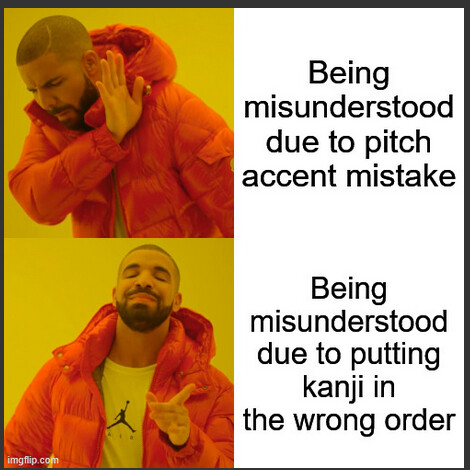
I dont care about pitch accent

Basically, title (somewhat inflammatory perhaps)

I was already well into Japanese learning when I heard about the concept of pitch accent, and to be honest, for the life of me I CANNOT hear the difference between 雨 and 飴 or 橋 and 箸. I’m not tone-deaf but when it comes to Japanese I feel that I basically am.

However, pitch accent has gotten very popular in recent years, especially with YouTubers like Dogen selling pitch accent courses (or at least this what I understand that he does?)

I think if you care about having a native accent that’s fine but it now feels like (and this seems to happen with EVERY aspect of Japanese learning) that people go feral about it- you’re either pitch accent or die.

For me, I think its okay to speak with an accent. God knows there’s enough of Japanese to learn without having to learn a musical instrument or something just so I can figure out how to differentiate pitches.

That being said, if you can hear and pronounce the difference- massive kudos!

Anyway, feel free to share your opinions about pitch accent (and pitch accent discourse), cause I’m curious- how many of you are actually learning it?

9 Likes

hahaha. yeah, I don’t care about pitch accent either ^^ Inbetween immersion as my only goal (i dont care about speaking at all) and being quite tone deaf (i cant even hear if pitch goes up or down, just that it changes? like its going just sideways for me :sweat_smile:)

pitch accent has always been this weird thing for me, where I don’t even understand why people are fighting over it. Sure, learn it if you want, or don’t if it’s not important for you. But some people are very intense on the “learn pitch accent right after hiragana or you will never learn or understand japanese” front and thats just… huh?

personally i think pitch accent is rather optional for most learners. but some people like obsessing over it, and they should if that’s what brings them joy ^^

1 Like

Yep, it has just been revealled to me that there is a thing called pitch accent in Japanese two three weeks ago, and now I have to look up all those words again for its correct pronunciation. It’s super tedious…, so I can totally understand why people don’t need pitch accent.

Sometimes, thats what learning all about, you chose what you like to learn and forgo the part you don’t like. Nobody learning Japanese HAS to learn all its things.

And yeah, every clickbaity Japanese learning videos in Youtube ever.

1 Like

To be honest, I feel like pitch accent is just the most comfortable way to say a given word in its usual context :woman_shrugging:t2: it’s not as important as tones in Chinese I’ve found. It’s basically just an accent.

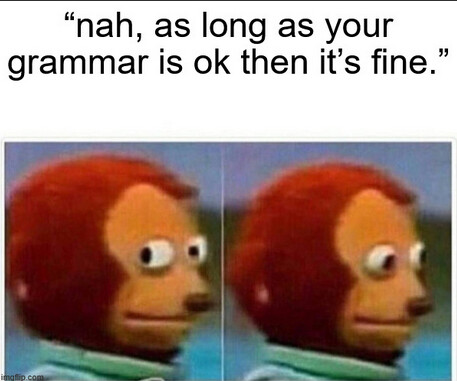
I actually asked on HiNative whether it matters and they basically said “nah, as long as your grammar is ok then it’s fine.”

I always have to tell myself that language is just being able to understand and be understood, and if you’re understood who cares? I’m an American living in England, and theres quite a few people that struggle with my accent or find it a bit grating- bc of that I don’t care if I sound off in Japanese so long as people know what I’m saying :laughing:

Edit: @Chimmsen , If you ever start speaking you’ll probably have the pitch accent down with an immersion heavy study style. I recon your brain will be more wired to know what sounds natural/ comfortable :face_with_monocle:

2 Likes

To keep in the inflammatory spirit of the topic, you don’t HAVE to try to match a song’s pitch when singing, but your friends’ ears might bleed if you don’t even try.

2 Likes

Thanks! i keep saying this to my friends, too :sweat_smile:

1 Like

After understanding how it works I just added pitch accent dictionary to my decks, and was still just trying to perfectly replicate sound of a native who reads the audio.
The pitch graph gave me the idea of what I actually pronounce, basically giving some sort of confirmation, it’s like a visual help for what I hear, was quite useful at first.

My goal is learning Japanese, and pronunciation is a part of Japanese, so I think learning about it makes sense for me. But I think as long as learning includes audio and a Lerner can reproduce it, it doesn’t matter too much.

On the other hand when I was staring learning French I wanted to get a perfect accent, which came to taking a nice deck with a bunch of audio and trying to guess and reproduce words perfectly, where IPA came in handy, helping me make sure I hear what’s actually there.

Another thing is, I feel like trying to identify and reproduce pitch can help with reproducing it much better then just listening to Japanese. Why I think so is because of my recent experience with music.
I really like listening to music, and decided to create a vocaloid song, jumped straight into daw, and then understood that I need to learn a bunch of staff, started learning music theory, and understood that I don’t know how to listen to music.

I started learning a relative pitch, a thing that allows hearing relationships between notes, and I started using a few apps (SET and FET ear trainers) to get going. After 3 weeks of dedicated study, I was able to identify a degree based on the tonic when it’s outside the melody (I was basically just listening and trying to identify what I hear).

I still can not transcribe even simple melodies as I want to, but there were 2 other large benefits I’ve caught.
First one was when I tried listening to my Japanese voice, and I liked it, next I’ve tried listening to my native audio and liked it as well! Something that never happened before. I think I just developed my ear well enough to start hearing myself and got accustomed to my voice.

Another one, is that I finally can sing with songs and hear if I’m in tune or not, and adjust accordingly! Not only that but I started just singing better, and my sister finally isn’t cursing me when we are trying to sing something together for fun!

After that I just came up with the idea that listening to details of pronunciation the way I did it for music, can help hearings them really well, and help hearing my own mistakes, so I notice them and fix without hesitation.

I guess that’s what people mean by saying musicians have an advantage in music. Musicians can hear what they say, and if they know how it actually should sound they can fix it as they do while practicing.

1 Like