I’ll go ahead and explain my interpretation of this usage, but I’m hardly an expert so please take it with a grain of salt.
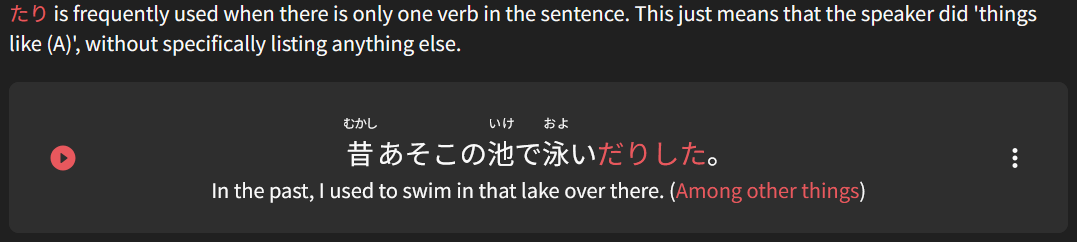
Although たりする is used for listing non-exhaustive series of actions, it’s not at all uncommon to see it with a single verb. In these cases, its function is to signify that the preceding verb or verb phrase is merely one among many. Here is the how Bunpro describes it:
The challenge with your particular example is that たりする is being used in a far more abstract way. No one is really doing anything in this sentence. Nonetheless, it still takes on the same role in that it signifies that the preceding statement is non-exhaustive.
In its current form, the second sentence is essentially saying “it’s not something like that.” If the sentence omitted たりする and was instead written as “なんてことじゃないわよね。” it would be similar to saying “it’s not that.” I.e. more specifically stating that it’s not about the recently-discovered aliens. Instead, the sentence is presumably trying to say that “it’s not something along those lines” or “it’s not something absurd like that”
In essence, I see it as the difference between directly refuting the first sentence vs. refuting the idea of the first sentence (not something crazy like aliens!). This is a pretty subtle nuance, and there is a bit of overlap with なんて. Anyways, I hope I was able to explain my thoughts in a somewhat comprehensible manner. If someone else has a better way of explaining it, or if I completely missed the mark, please let me know!