JLPT N2 study advice

To everyone who is studying for or has taken the JLPT N2 in the past: I‘d really appreciate your thoughts on how much vocab you think is necessary to learn for a good score! Of course in the ideal world, it would be best to study the entire Bunpro N2 vocab deck before the exam. However, lately I had to realize I‘m not gonna be able to finish it before my exam on July 5th, since I‘m also a full time student and my master‘s thesis is due in summer as well.

My goal is passing the N2 above the 112 points mark where it equals a CEFR B2 level. I‘d say that my kanji, reading and grammar skills are fine for the exam, but I also need to work on listening. Therefore, I‘m struggling to decide how much time to dedicate to studying vocabulary.

Right now I am aiming to learn 80% of the Bunpro N2 vocab before the exam. I have about half of it finished as for now. Even though I reduced my daily new lessons to 9, I‘m still somewhat overwhelmed by doing 100+ Bunpro reviews every day and after finishing them, I often don‘t have time and energy left for working with materials like 新完全マスター, even though I think that would be really helpful as well.

What do you think would be an appropriate goal for studying vocabulary? Would you recommend studying less vocabulay and putting more time into studying with resources like 新完全マスター聴解 and 読解? Any advice or tips are really appreciated!
1 Like

So, I I have taken and get N2 certificate in Dec 2025 and and currently learning for N1 so I think I can get you some insights on this.

First of all it would be clear that 80% of the vocabulary from Bunpro it’s not really enough, so it would be inadequate to just do that.

Secondly, and more importantly, I think it would be better to learn from structured textbooks like Shinkanzen as you will learn new words from their context as well.

Thirdly, N2 reading and listening is quite significantly harder than N3 equivalences. So getting accustomed to them as soon as you can is better. N2 readings can catch you offguard when it comes to reading time.

To sum up, if you are somewhat time restricted, then leaning over to doing more textbook is better for your score.

That being said, the choice belongs to you. 頑張ろう!

1 Like

I passed N2 with 3000 items studied on Bunpro, but it was JUST over the pass threshold. I have currently studied 702/1998 of the items on the n2 list, and I feel like now I’d get much more comfortably over the pass rate.
The thing is, vocab lists are trying to cast the widest net possible to cover everything that COULD be on the exam. So I, personally, do think 80 percent is enough. The big thing is to have 60 or 80 percent coverage IN ADDITION to other skills.

I would say the most important skills are

  • reading speed (the readings on N2 are quite long)
  • the ability to be comfortable with ambiguity (not getting stuck on words you dont know, being able to infer a rough gist from the whole without getting slowed down - this is important for both reading and listening)
  • comfort with exam conditions

If you can work on those skills I think it’s very possible to pass N2 with a fair chunk less than the recommended known vocab. Part of this is because to get 2/3 of the above skills I mentioned, the best method is doing lots of reading and listening. Those will naturally reinforce vocabulary items you didn’t add to your review queue.

I think it’s a good idea to mix textbook reading and listening with some native materials (1 page a day of a kids novel perhaps, and 5 minutes of a learners or native-level podcast) to help as well, but this is to kind of smooth out the effects of only doing exam studying, with the assumption that your goal in doing N2 is to live in Japan. If you just want the certificate, then it’s fine to just focus on exam prep books.

One last thing I would recommend is rather than learning from the “learn” menu, add words to your queue that come up in your reading/listening material that make you go “I want to know what this means”. Then when you study them, you’re more likely to think “I remember this came up in ABC reading” and that will help it stick in your brain better than just learning a list.

3 Likes

Thanks for your insights, and good luck with studying for N1!

2 Likes

That‘s really helpful to know, thank you! I‘m currently also reading lighter books like the 天気の子 novel, but oftentimes just felt too burnt out after doing all my Bunpro and WaniKani reviews to continue reading – with your hints I‘ll tone down doing reviews a bit and focus more on actual reading and listening. Thank you!

2 Likes

If you can read the example sentences on the N2 with 85-90% accuracy on the meaning reasonable quickly (considering a lot of words above N2 are used, you’ll probably be okay for vocab, grammar and reading. This will also help with the listening too, but you could use the listening mode to test that too.

From all the people who I’ve seen excel at the N2 they were all comfortable with reading native content effectively.

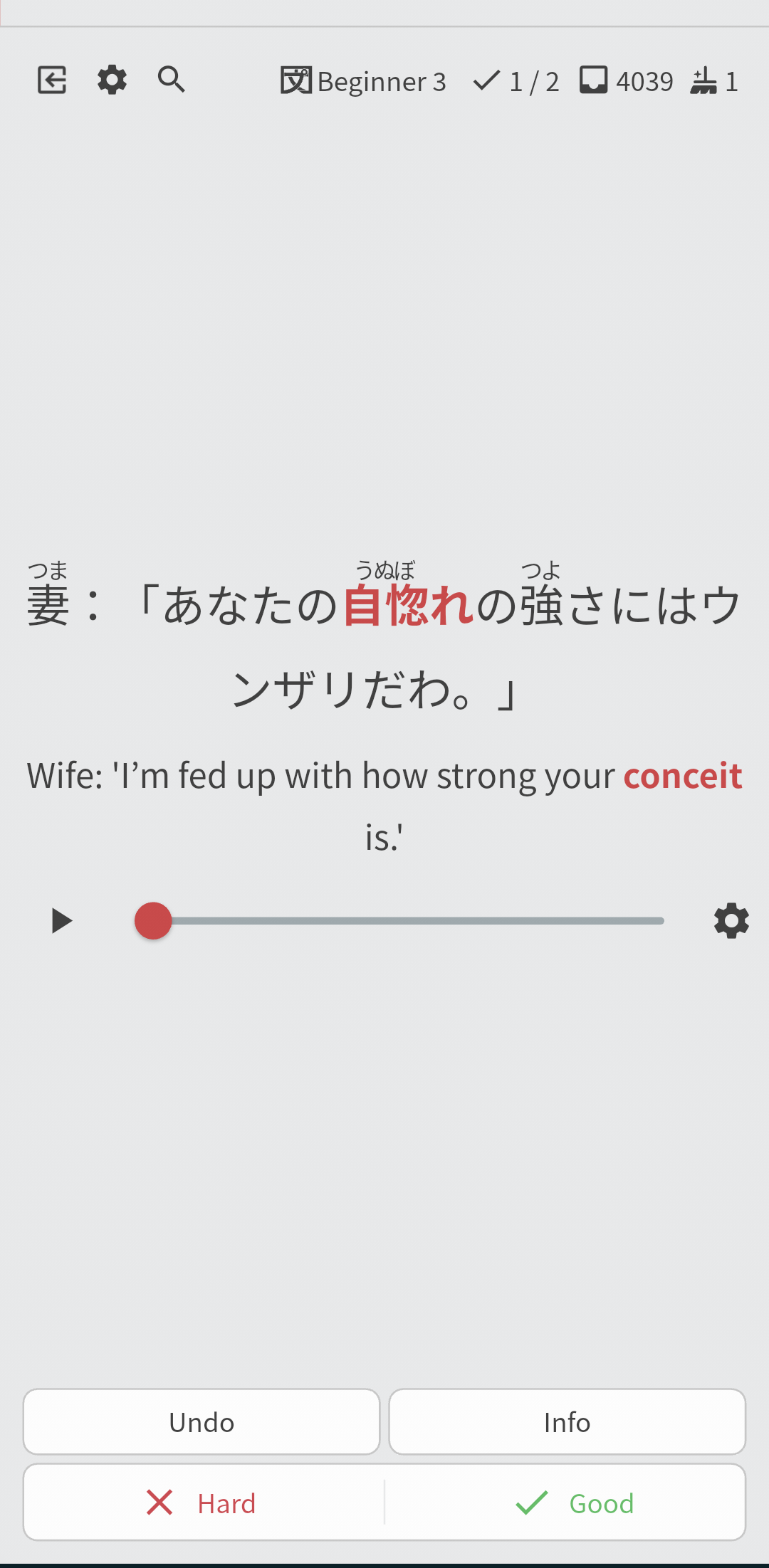
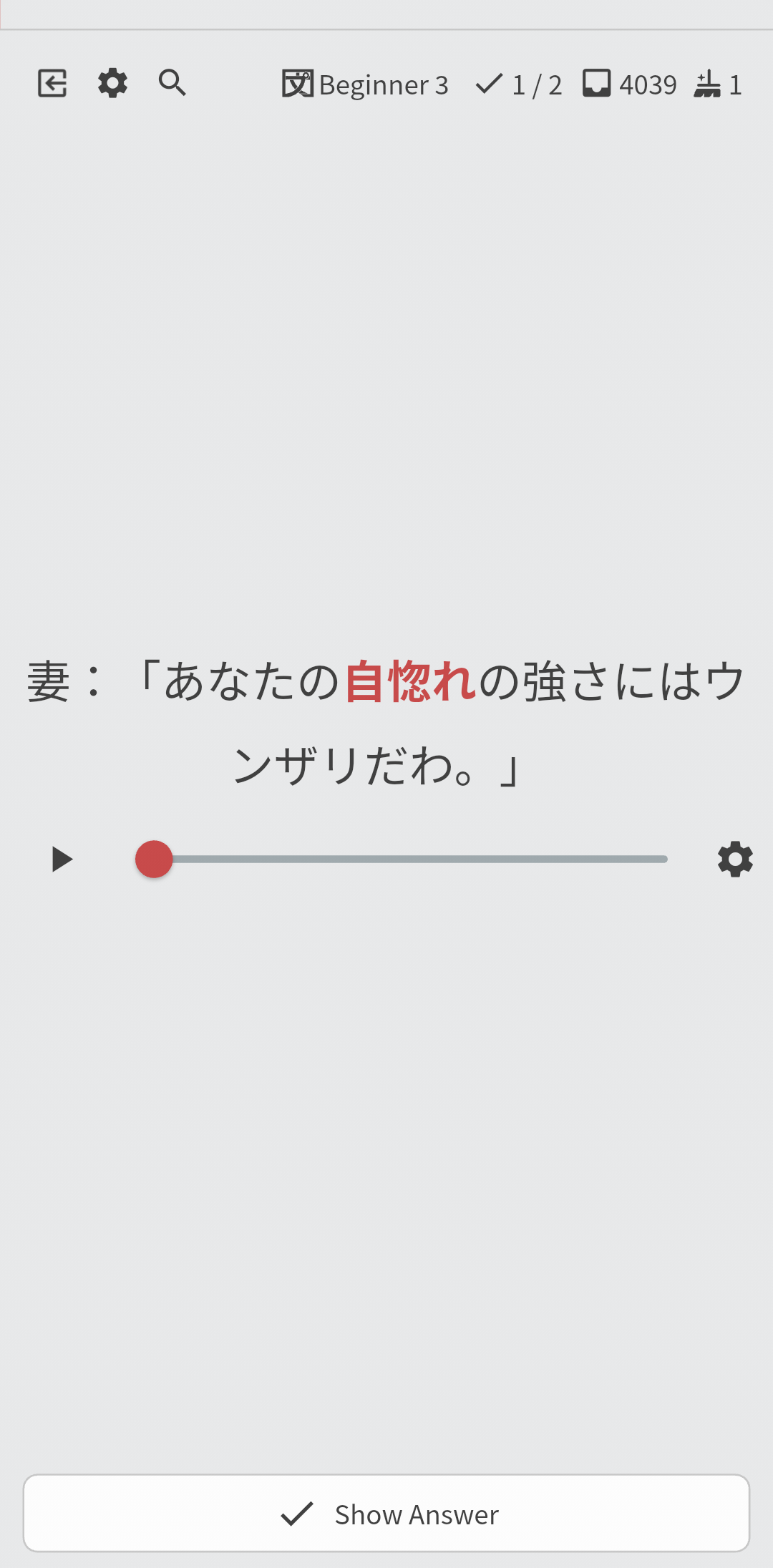
I really love the reading mode and it’s a way to immerse yourself in a diverse range of topics, relevant to the vocab you’re using, with immediate feedback on whether you understood or read the sentence correctly. It’s good for getting an understanding of how good you are.

I’ve heard anywhere from 4,000 words, 6,000 words or even 8,000 words as the number of words needed for N2. I had around 8,000, but didn’t have a lot of reading experience. Seeing vocab in context is very important.

1 Like

You also don’t need to learn the word 尉.

1 Like

you’ve got to be 尉king

1 Like

I completely agree that the reading is the hardest part of N2. I’m going to be doing a lot of work on that before I try N1.

I found Bunji * Goi * Bunpou matomedoriru 500 mon N2 very helpful the month before the exam. It helps to disambiguate grammar and vocab as well as pointing out common errors. The listening tests on YouTube are also a good way to get ready for that part of the exam.