We didn’t get the word ‘ask’ from german. We got it from English. English is Germanic. We also didn’t get ‘inquire’ from latin (directly). It came from French, just like pretty much all of our latin words.
There are some parallels between english and japanese with the different roots, particularly in how scholars tried to re-latin-ify our french words in the 15th century, but fundamentally these are different things.
English was a synthetic (note: this does not mean fake or constructed) heavily declined (note: does not mean diminished) SOV germanic language until the Norman invasion. What happens when two peoples who speak very different languages start to live next to eachother is that the dominant language changes to become more learnable for the newcomers. It stops being synthetic and becomes more analytic (this means that grammatical case is marked by word order rather than case-marking particles or declensions, which is easier to learn than a bunch of declensions, and in general the language becomes much more reliant on word order to confer meaning) and it adopts many of the words and grammatical features of the newcomer’s language (like SVO word order).
This is all to say, the acquisition of latinate words into english was accompanied by the fundamental altering of our grammar at the most basic level.
This did not happen in Japan.
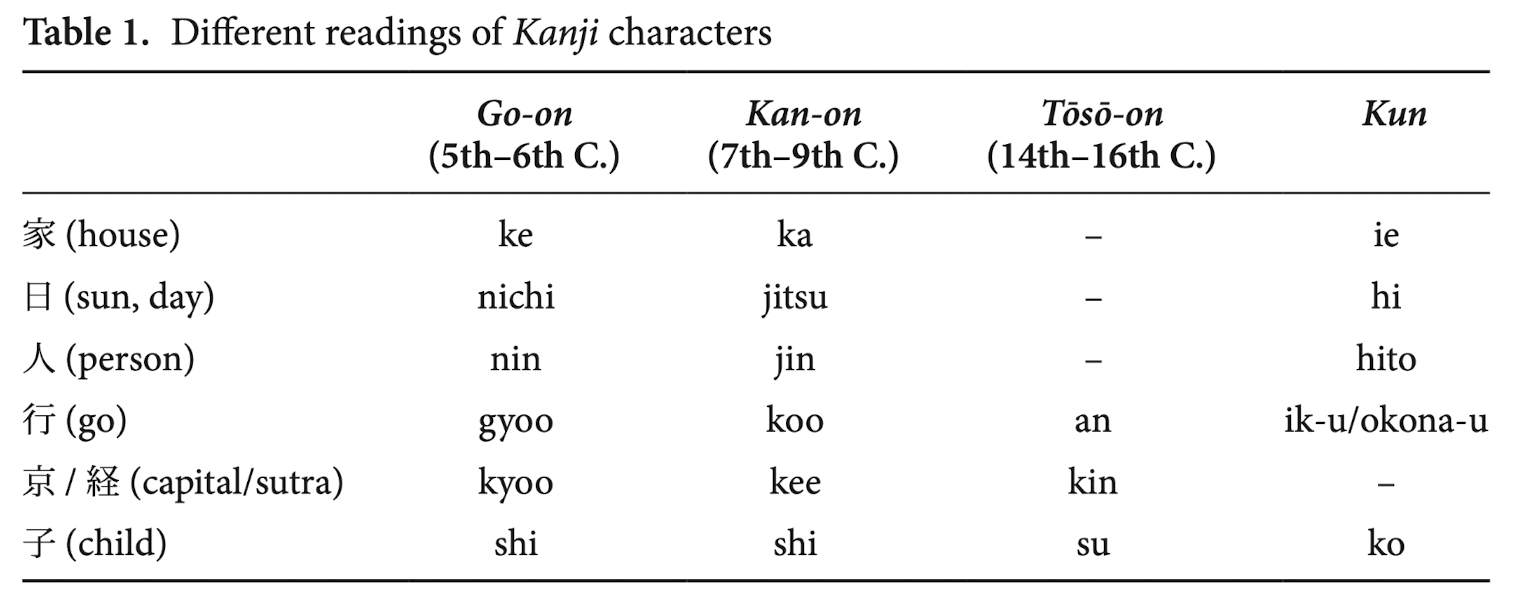
Bungo proceeded on its own track as the language of the court and samurai, while spoken japanese proceeded in a much different direction (multiple directions, really). Spoken Japanese among regular folks didn’t really use kango words at all, aside from fully lexicalized, primarily religious words. And while the spoken language developed and evolved as all languages do, and にて became で, なり became である and its contraction だ, the endings to all the verbs changed, etc etc etc, Bungo was locked in with Heian-period classical grammar. It was not until Edo and really Meiji where the wall between these two forms fell. Bungo borrowed heavily from Chinese but these words were primarily full-on loan words. Then they opened the country up, and had to come up a bunch of new words for all the different stuff they were learning about. This is when the wasei-kango word was born. That is, japanese-created on-yomi compounds. Those are pretty new. Relatively speaking.
In english, french derived words are fully lexicalized. IE, the language treats them as it does any other word. Kango words are generally not fully lexicalized. This is why so few on-yomi compounds are affected by rendaku. There are special grammar rules for them (ご instead of お in keigo, する instead of 一段 or 五段 verb endings).
So, yes there are some parallels. But that comparison is extremely limited and potentially misleading. Japanese never adopted chinese grammar because they didn’t adopt chinese words to speak with chinese people, but to speak with eachother.
(Anyway, apologies for going on a tear here, I admittedly was kind of just looking for an excuse to post a bit more in depth about this, and your post was it)