Passed in N2 in just over a year: My experience and advice.
This isn’t a post about the specific methods or tools, rather my shift of mindset (with some specific tools as examples). If anyone would like some resources, I think I have gathered a good list of tools, podcasts, novels and sites I can post.
TLDR / Keystone points
Perfectionism slows you down; but zero foundation makes input unenjoyable, which also slows you down. The skill is knowing how much foundation is “enough” and letting go of the idea of ‘mastery’.
Analysis-paralysis and the burden of being perfect
The outline of my progress so far, I will split into three periods but focus on the foundation as this is the hump I believe a lot may struggle with:
- 1: Foundation (Pre enjoyable input)
- 2: Input aligned learning
- 3: Input, input, input
Foundation:
The first few months before you can do any ‘enjoyable’ input is the hardest, once you get that foundational knowledge down and each new session of consuming input comes with new discoveries about things you have just learned, it is much smoother sailing. Getting over this initial hump is the hardest and why I believe some methods surrounding input and Anki are flawed.
I think with all endeavours it is easy to over-analyse and spend a lot of time ensuring we are ‘learning the right way’ before starting learning at all. That isn’t to say you should go in blindly, there is a lot of literature about second-language acquisition which look at the efficacy of different learning techniques. However there is also a lot of s**t out there, especially on social media; different dogmas and camps which are easy to get sucked into. Thankfully I was keyed into this tendency, so decided I would choose a path that seemed best at the time and be open to deviation on the way, rather than delaying actual time spent learning.
Kana
The obvious first step for many in their Japanese journey is tackling hiragana and katakana. I used the widely-known JapanesePod101 hiragana and katakana videos by Risa to grind through all the hiragana and katakana within the first week. Echoing back to the keystone section, you are going to be reading hiragana and katakana (and kanji) all the time going forward, so there is no point polishing your kana recognition skills to 110% when you could be moving on and naturally practicing these skills anyway. After going through these videos, I added a kana deck to my Anki and that was that in terms of dedicated kana work.
Textbooks and Anki
From then on my standard workload consisted of the Genki 1 and Genki 2 as well as Anki (also some attempts at pure Japanese input). I would aim to do a Genki chapter a week, which for the most part I was able to achieve, finishing each Genki book in a couple of months respectively. Before starting Genki I had set up a Genki 1 and Genki 2 Anki deck.
Burnout with input
This is where the burnout actually came from, I was doing my grammar and enjoying it, I was doing my daily repetitive Anki, but watching or listening to content still felt more like playing Where’s Wally (Waldo for those inclined to that name) with grammar points or terms I ‘know’ but couldn’t understand how they were being used in the actual sense, because it was impossible to know enough at that point.
Touching on Anki, the above statement of over-analysis applied here to my detrement. initially I saw many forum threads suggesting that 20 new cards was the ‘upper-limit’ for how many new terms someone could learn and having both ‘production’ cards and standard cards was a good option (EN → JP cards, and JP → EN cards). Concisely, I believe these choices I followed along with (limiting new cards and having two sets of each new term) to ‘make my learning more efficient’ was a waste of time.
As beginner-oriented videos, and the initial levels of graded readers will use simple grammar, the main obstacle will be vocab. With the above mentioned setup of my Anki deck, only having 20 ‘new’ terms but with a jp/en and en/jp setup this was only 10 actual ‘new’ terms per day, if you wanted to hit 1000 words (At minimum what I think is neccessary to not hit a brick wall with content), 3+ months is a lot time spent whilst trying to trudge through content that will be frustrating to consume. This lack of vocab is quickly a nuisance when consuming input content, as you can probably guess the meaning of terms when you don’t understand 1 or 2 words in the sentence, but it is impossible when you only understand 1 or 2 words in a whole sentence. It is also a major hinderance to enjoyment to break up your flow if you are constantly stopping to look up words every sentence.
Anki and mindset changes
This is what lead to me scrapping the en/jp note type (which in themselves have their own flaws within Anki decks IMO) and working my way up to a ~60 new cards per day limit. This greatly increased my review times (to around 50 minutes per day) but only slightly dropped my rentention percentage. My retention was at 92% at the ‘20’ limit (10 ‘true’ new terms) and averaged around 85-86% around the true 50-60 card limit period.
Looking back this was a no-brainer decision. In the course of 2 months I was able to acquire 3600+ new vocab words, even considering the loss in retention I would rather be able to recall 3000 words (60 cards, 60 days = 3600, * 0.85) vs 552 (10 cards, 60 days = 600, * 0.92). My retention could drop dramatically and I would still be better off. And now I was primed to be in a position where I can learn the nuances and usages of the vocab words I recognise and can define in a more natural and enjoyable way, through content. This sort of change sort of pinpoints my conclusions coming out of this, if I wanted 100% retention I could spend days grinding it and be perfect in that regard but be lacking in making significant progress everywhere else. While I was doing this grind, for both my vocab and grammar I de-prioritised content.
That’s why my reccomendation would be to get down all of N5 content, grammar and have considerable number of vocab words (1000+) atleast before attempting pure-japanese content. Starting with Tadoku books, a great resource, which has free graded-readers which you can slowly progress. The faster you can get to this level of enjoying content where you understand significant portions of it, the easier time you will have.
The same line of thinking applied to the grammar study, obviously you should apply yourself and while reading the content and doing the examples really try to comprehend the grammar points you are learning, but realistically you should accept you are not going to comprehend every usage of a specific grammar point in that week you learn the point. As you know you will encounter this grammar point when speaking, when listening, when reading, there is a sense of freedom in which when you encounter it you can recognise it and be able to learn how it has been used, if you are confused about your usage at the time, you can look it up and use it as a review opportunity. This also means that grammar points you truely understand the first time you learn them are not taking up time as you ‘perfect’ your knowledge, when you see / listen to content that makes use of it, you just understand it.
Kanji
This also extended itself into how I learned kanji, I didn’t need to waste time learning each reading for a specific kanji because I was already memorising the readings of vocab words that used these kanjis. Instead I just learned the meanings of each kanji which helped with vocab acqusition. Now, without dedicated study towards kanji readings, I can sound out new vocab words based on their kanjis to high level of success because of the pure amount of content and vocab words.
The conclusion
Ultimately I think ‘rushing’ into more advanced content without ‘perfecting’ simpler grammar is important. It is not like when you read a NHK news article they are no longer using N5 level grammar, infact it will be used so frequently that any doubts you had about the points and how they are used will quickly be alleviated through the constant exposure. This fear of going above and beyond holds people back, eg ‘I can’t start Genki 2 I haven’t mastered Genki 1 yet’, but the content in Genki 2 doesn’t actually care whether you’ve ‘mastered’ Genki 1, its just more grammar and vocab to get exposed to, and that exposure was always the thing that was going to get you closer to mastery in the first place, not some line you draw for yourself before you’re ‘allowed’ to move on.
I think that’s basically the whole post condensed into one idea, be comfortable with treating each grammar point or kanji reading or vocab card as something you don’t need to lock down before moving on, because the moving on is the thing that actually locks it down and most importantly get you into the place where podcasts, graded readers, articles are actually beneficial, without blind trust in the process of being confused by most of it.
My N2 result wasn’t perfect, but I learnt not to try and ‘master’ anything along the way, just get far enough along fast enough to keep the whole thing enjoyable, and that’s still true now.
Context for making this post and general timeline:
I had been formulating my ideas and experiences while learning Japanese and thought others may find it useful in their own journeys. However, I always had doubts of my ‘credibility’ despite there being no objective harm or ‘wrongness’ about my subjective experience and thoughts. Saying that with the release of the JLPT 2026 July results and having officially passed N2 it has provided me with the nudge to validate any tips I could give, atleast in my mind. I am also trying to help my SO who struggles with their own language learning journey, so collecting these thoughts here will hopefully be beneficial to them.
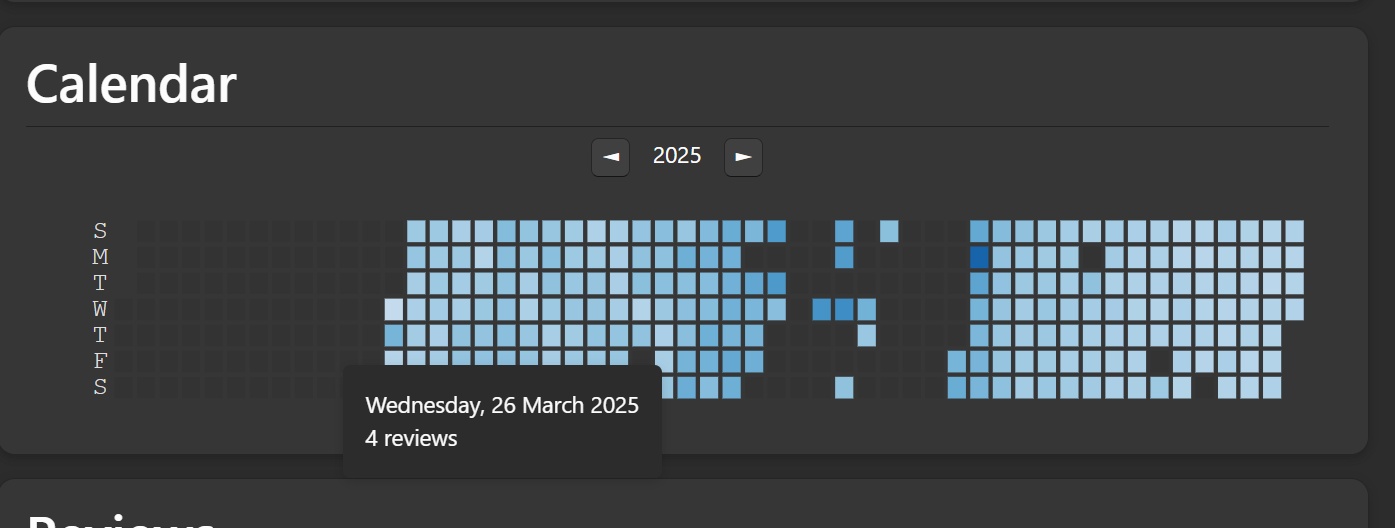
In terms of timeline. I am saying I achieved this result with an approximate time spent of just over 1 year of Japanese study. Starting at the start of April 2025 wtih a 2 month hiatus between July and September due to burn out, as touched on, as I believe the way I approached learning afterwards in reflection of this burnout can be beneficial to other learners. I will attach a screenshot of my Anki stats which coincide with these approximate dates, as I started using Anki within the first week of my learning.