
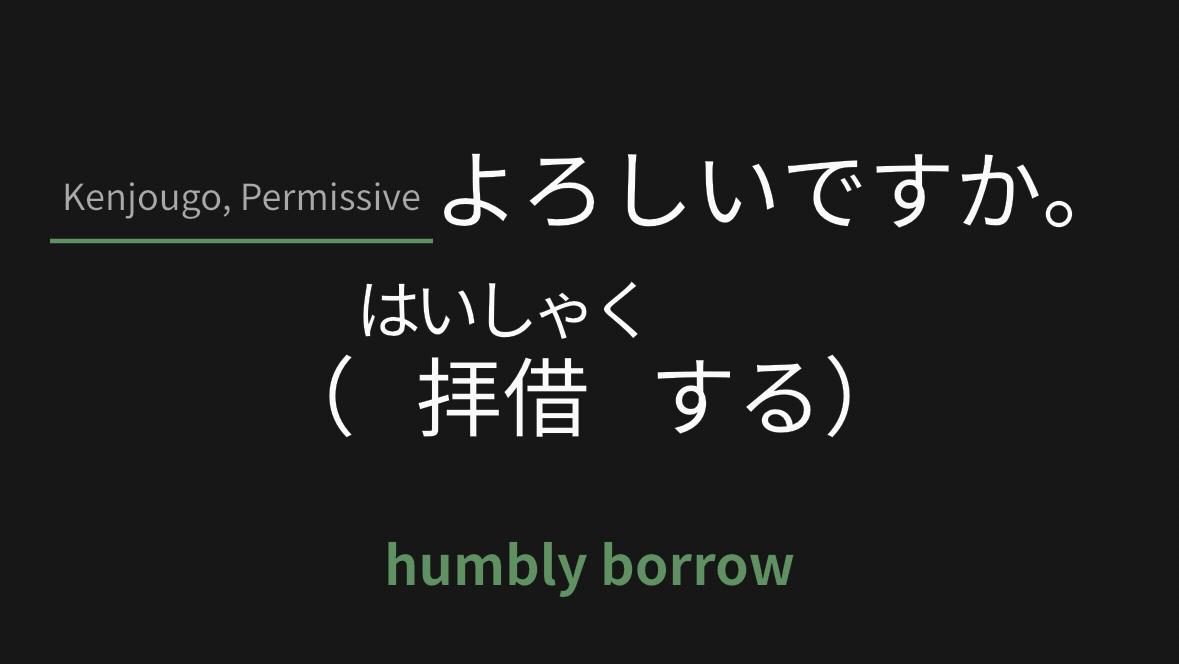
A question about the ____よろしいですか。する)

Why does the answer conjugate like this? はいしゃくしても

And why no honorific o- prefix is used?

This is not covered in the lesson and I’ve made the same mistake twice now. And the lesson itself is about itasu, which I don’t think is being used here?

Thanks.
1 Like

This one

It is, you might’ve just overlooked it:

Caution

Words that include the kanji 拝 ‘to worship’, or ‘to revere’, do not usually require お, ご, or いたす. This is due to the word itself being ‘respectful’.

Basically, it’s an example to avoid ‘double keigo’. See this past thread: A question about the いたす grammar point

1 Like

Ah, I totally missed the kanji. So when it’s there, I just use good old suru. Got it, thanks!

1 Like