
Thank you for the response, sounds like i just need to give it more time then ahah.
2 Likes
In the audio for 田中さんの車は古いです, I hear を instead of は. Does anyone else hear it that way or do I just need more listening exposure like the poster above?
3 Likes
I heard it too and bugged me. (I’m a noob, no idea why it sounds so weak here and close to を when it’s usually pretty distinct for me even in rapid speech in my very limited experience.)
1 Like
@chromakey @Kraft I just took a listen to this one (both with external speakers and with headphones) and it is definitely は. It is very weak though, and links immediately into the ふ of the next word. Kinda sounds a bit like ‘afo’.
Sometimes we get these rerecorded if they sound unnatural, but in this case I think it is pretty good listening practice, especially considering it is in a short sentence that finishes with an adjective+です, so there’s no way a を could possibly exist in the sentence in the first place.
Totally understand the frustration though. We’ve all been there 
1 Like
Greetings my friends,
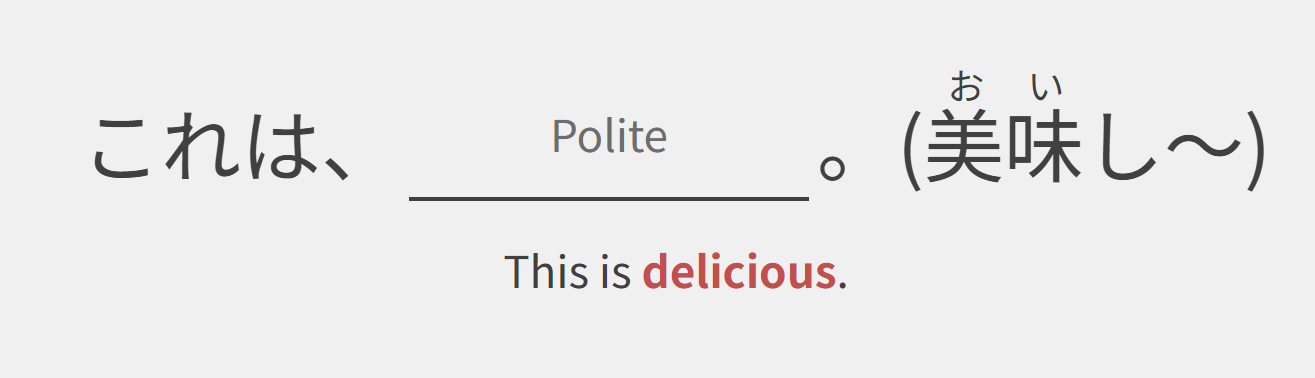
I have a question about the lesson reviews for the い-adjectives and な-adjectives. I have reviewed the grammar rules and understand them. However, when I am quizzed on them, am I expected to memorize which adjectives are い-adjectives and which are な-adjectives? For example, this card provides the adjective in parenthesis but omits the ending. I know it’s an い-adjectives based on my learning. Is that how the quiz should work?
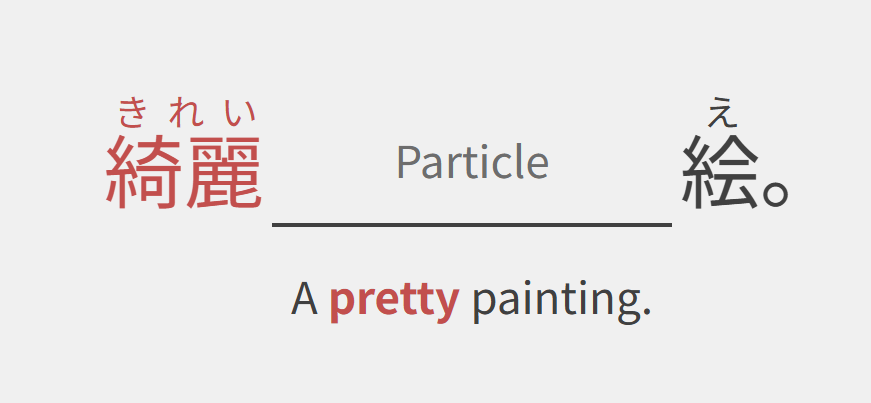
Here’s another example of a な-adjective. However, the hint indicates that the missing character should be a particle (which I don’t understand). Apologies if I’m missing something obvious. Appreciate your help!
1 Like
In cases where you aren’t sure of what is specifically wanted, if you check the hint (not just the translation) you should be able to work out the exact grammar point! As you progress, you may find many grammar points which look similar, so be sure to check the hint if you get stuck.
1 Like
That makes sense. Thanks for your help!
1 Like