Japan Trip = Books! Request for "wishlist" recommendations for learner

Okay, I’m three months out from our family vacation to Tokyo, Kyoto, and Osaka. We’re starting to get into the real granular planning, and everyone’s super-excited!

I’ve got a different reason to be excited, though. I’m finally going to be able to easily buy some books. Living in Miami, one distressing part of my Japanese journey is that there’s so small a local Japanese community that you can’t really buy Japanese-language books anywhere. Online seems pretty limited, too.

But in three months, that will change! I’ll be able to get anything! The problem is, I’m overwhelmed for choice! I’ve looked at various lists of books, and it’s too overwhelming.

So - quick question. Is there a book or two (YA novel, manga, whatever) that you wished you had read when you were just starting out? By the time of my trip, I’ll likely be just edging into N3 territory (as measured by Bunpro) - so a very beginning reader, but perhaps ready for something native. Is there one or two things that you really loved reading at that level?
7 Likes

At that level you can read a good chunk of shonen mangas, especially if they come with furigana, and especially if they cover more slice-of-life-y topics. I think you’re well past the point where recommending Yotsuba makes sense.

So here are some shop recommendations instead…

Akihabara:

I recommend walking into Shosen Book Tower and just look at the testers. Probably the best selection of current stuff. Also, not just Manga. What’s more is, they get a ton of tourists simply by being in Akihabara so they actually have a lot of things targeting learners.

Book Off if you want older stuff (second hand).

Mandarake also has a massive second-hand department with quite some interesting finds. They also have a very big and famous … uhm… naughty manga department. They know their target audience, they have some fully furigana’d doujin.

Ikebukuro:

Animate. Though it’s especially famous for their BL section. If you plan to go to the Ikebukuro animate you can probably skip the one in Akihabara.

Do it like me: just get them all and forget reading half of them

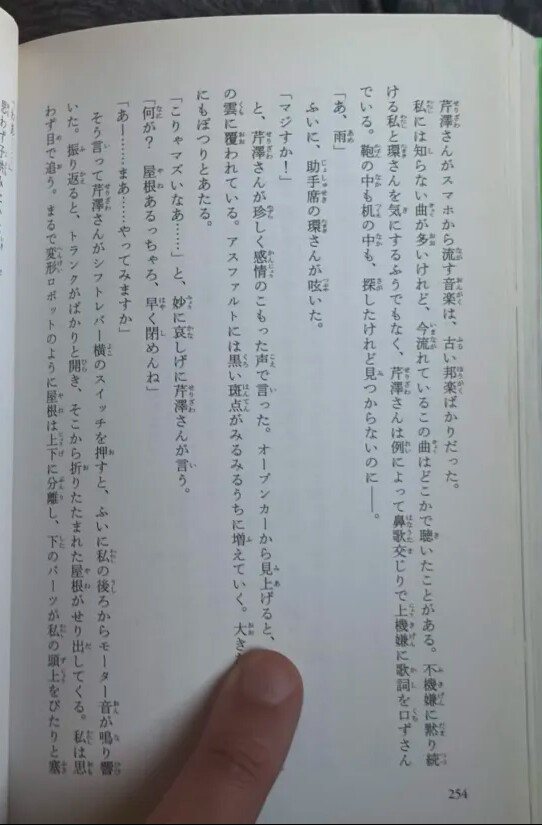
How good is your kanji recognition? WIth novels, this could be the limiting factor. Even if YA. You will occasionally find books with a thick green border on the cover though. Look out for 角川つばさ - they print novels with full furigana.

3 Likes

What age range and interests do you have?

When it comes to reading the most important thing IMO is that its fun and actually readable. For the average non-insane person not having to look up words all the time is important. And if you are truly beginning, even getting something beneath your level is well worth it for two reasons.

1: Its a good starting point and acknowledging where you stand within your own studies.
2: Having something easy to read and to return to is good for days when you are struggling/using as a good warm-up.

Thelizards comment above said you were beyond Yotsubato and he is probably right, but at the end of the day its a FUN read. Ive read through it multiple times because of how much I enjoy the characters and its simplicity. I still recommend it

However, after that its all personal interest. Do you watch anime? Well a good portion have manga, hunt down the manga.
Do you watch movies? Many movies for children, even western ones, are written and marketed towards children. I often see Japanese children books ranging from Disney 100ish page books(Zootopia, Frozen, Minions ect.) to the translation of the Harry Potter series. Finding a story you already know is useful since you will have background information to fill in where you might not perfectly understand.

AS WELL, something I dont see mention often but due to the complexity if Kanji, children also have graded readers for Japanese. Stuff they should be able to read and understand based on where they sit in elementary school. 1st year and up.

Even then, stuff for kids is still going to test you because think of what current school children are learning. LOTS of odds n ends that you would actually never see in your day to day conversations. So just going through some odds and ends in a second-hand store will do wonders for gauging what you do or do not know and you can find based off that if you truly dont care.

1 Like

Hello! Are you wanting to buy series of manga? If you don’t mind used, I would recommend Book Off, which is a used bookstore, where they are bundled and discounted. Depending on the age and interests of your kids, they also sell bundles of Japanese Pokémon cards… I bought several hundred common ones for my nephews for 500 yen, and they really liked them because they are different than anyone that you would get in Canada.

My favorite manga I’ve been reading is Gal and Dino, which is very cute. You may want to check Wanikani’s forums for their Absolute Beginner and Beginner Book Club selections, as these will be at your level (it’s how I found Gal and Dino). You can participate in the forums even if you don’t use Wanikani. Absolute Beginners Book Club // Now Reading: Gal and Dino // Reading Next: Kesaran Something and the Soup Shop - Book Clubs - WaniKani Community

If you are planning on taking the JLPT or getting language learning books, they are much cheaper in Japan. My husband is going for work in a few months, and I’m planning a list for JLPT!

2 Likes

Thanks for all the replies, everyone! To answer some of the questions:

I read widely in my native language, so I’m really open to any good piece of literature or manga. I just get overwhelmed for choice looking at the online bookstores, and not knowing from the online blurbs whether anything might actually work for me. I know that something that’s a perpetual “run to the dictionary every sentence” exercise would be more exhausting than fun. I’m open to anything that might be fun to read in a very junior level. When watching anime for immersion I’m gravitating to adventure/sci-fi/fantasy, but that might just be what Crunchyroll is serving up. I was kind of hoping there was a sort of “consensus” of what’s a standard read for beginners looking for the next level up from Yotsubato.

I really appreciated the suggestions for shops - and I think a second hand shop might be the way to go for me, since I’d like to get lots of different content without breaking the bank.

As for Kanji, I’ve got around 400-500 or so that I’m conversant with. I guess that’s kind of aligned with my vocabulary/grammar, so I probably just need to find stuff that I can understand. But I think I’ll stay in the furigana end of the pool for now.

I had considered this, but I’ve seen lots of warnings against doing this. People seem to think that translations are more likely to have unnatural Japanese, both in grammar and terminology, and advised actual native content.

I guess I was just wondering if there was a kind of consensus, “Oh, here’s what you should read as your first native manga/reader/elementary school series.” Sort of the Japanese equivalent of Magic Tree house or whatever. But I’ll poke around on the Wanikani fora and see what people recommend - thanks for the link.

3 Likes

If you go to the Bookwalker website (which is usually linked on Wanikani), you can see a few pages of the book so that you can judge the level of the text. I looked at for one book before deciding it was still too complicated for me!
Good luck, and enjoy your trip to Japan!

1 Like

I would recommend having a look at learn natively website to get a feel for what books in your preferred genres are out there.

I really enjoy so many different things so it’s hard to recommend but I would really recommend some cook books, pick a recipe each day and challenge yourself to make it whist translating it.

I also found that older manga doesn’t have furigana, which actually can be quite nice as I feel like I just read furigana even though I know the kanji.

If you are still suffering with decision fatigue then you can’t go wrong with クララとお日様 or anything by Kazuo Ishiguro. You could also grab a novel by Murakami (my preference is Ryu Murakami but that’s not for everyone) or 小川よこ - sorry can’t find the right kanji haha - I loved her book 博士の愛した数式 - I would recommend grabbing a copy of that for sure.

But best thing is to get a couple of author names, head to Jimbocho and ask the assistant for some recommendations based on your genres and preferred authors, if you go to Jimbocho, which is book heaven, be sure to go to the cat book shop too, it was my favourite!!

Oh unless the book is rare, dont buy it at the beginning of your trip, if you are travelling, you don’t need a suitcase full of stuff you aren’t going to read until you get home.

Can’t wait to hear what you get!!!

3 Likes

I’d actually wouldn’t recommend Gal and Dino, Gal slang is not that beginner friendly (and Dino doesn’t even have any lines).

From full-furigana manga side, how about Sakamoto Days, it’s an action/comedy that you can probably buy everywhere in Japan. I’ve seen it stocked in rest areas of more than one hotel.
From recent WK clubs, 骨ドラゴンのマナ娘 was nice.

On the book side, LNs I read don’t have full furigana, so unfortunately cannot recommend.

1 Like

When I was in Japan, I usually go to Bookoff and look for cheap books. The books I bought are usually used LNs (Light Novels), Novels and Manga. I would at least read the summary at the back of the book to see if it’s my thing, and if there’s time I would read the first few paragraphs. The illustration helps with giving an idea of the mood. The books are usually not that old, perhaps at least 1 years old but plenty cheap. All the books I bought were 100-150 yen range. I bought mangas in set bundles which was around 100 yen per volume in a bundle.

My last trip in fall last year was a road trip from Fukushima all the way to Aomori and back, covering all of Tohoku prefectures, and at every city, I would stop by at a Bookoff at least ones. I ended up going back with one full luggage of Japanese books. Finished all mangas but only managed to finish one full novel so far haha.

Enjoy! I had a lot of fun on my book hunt.

3 Likes

It’s funny that you mention Magic Tree House, as this was actually one of the first series I read through in Japanese! Here’s the entry for it on Natively: https://learnnatively.com/book/ce12ae910d/

The story telling is quite simple, but I actually found it pretty interesting as each book in the series focuses on a different subject matter so you get exposed to a pretty wide range of vocabulary. If you’re more into fantasy, they also have the Merlin Mysteries spin off series which is also aimed at a slightly older audience:

In terms of translation, I think the translator put in a lot of effort to make it sound natural in Japanese. Or, I compared the English to the Japanese version once and some parts are actually quite different. She also includes additional notes at the end of each volume that briefly provides more context of the subject matter.

I will admit that after awhile I got a bit bored of the books, mostly because I don’t really like the main characters too much, but I do think it was a good entry point into Japanese novels and may be a good alternative to manga. The illustrations are also much cuter than the English versions lol.

1 Like

As it stands Im currently reading a childrens book that was translated from German and it is a bit odd. My book actually has cultural notes about Germany. Harry Potter isnt that bad but I havnt sat down to read it yet, just a quick skim when a buddy gave it to me.

I would look for those graded readers then. OR something I just remembered was “5 minute stories”
5分後に意外な結末

These are in excess at second hand stores and are short bite sized reading of a large variety of stories and genres. I have two of them, and they really push me in my higher N4 Low N3 ability.

All right - this thread has been super-helpful for me, especially pointing me towards the used bookstores. I think I have a game plan now.

I’m probably going to hit Book Off - there’s one right atop the Shinjuku station, so super-easy for me to get to - or one of the big Mandarake locations. Depends if I’m going by myself or with my 13-year-old son, who I think would go nuts at a Mandarake but wouldn’t have much to do at more of a bookstore.

Sounds like getting one or two of the Magic Tree House series and one or two graded readers will be a good choice for me.

Past that, I’ll see what they have and at what price. This will be my real good opportunity to get a complete (or nearly complete) manga set at a decent price.

I’ll do some research to see what might be a good choice for me, balancing interest vs. accessibility of the text. But I think I’ll spend some time on the WaniKani fora looking at their massive lists (again, thanks for the pointer!) to get a selection of titles, and then just see what they have.

4 Likes

Hey!

A couple of places I really loved in Tokyo, and might be worth checking out:

In Ginza 6 department store Tyutaya books is very beautiful (lots of art/design books, but also tonnes of regular books, and there’s usually mini exhibitions in there too)

And secondly,

Jimbocho (A district in Tokyo famous for used books).

There’s tonnes of used book stores here, each store tends to have it’s own specialism.

Lots of these have older books which aren’t so good for learners, but there’s shops specialising in mystery, sci-fi, even just specialising in cats.

There’s also a bookstore there called Honmaru, which has an assortment of people ‘rent’ out a bookshelf and fill it with their favourite books.

Note: I think quite a few of the Jimbocho shops get annoyed at foreign tourists who have no interest in Japanese language books, but want to take photos etc. So do be careful to treat it as a place for customers rather than tourists (if that makes any sense).

1 Like

Thanks for the recommendations, samburv! That totally makes sense. Looks like Jimbocho is only a short walk from the Imperial Palace, so I might be able swing that into the visit pretty easily. Close enough that I can duck over without dragging my wife and kids along.

These are the ones I liked enough to buy and read the sequal [so far…]
YA novel: かがみの孤城
Manga:ソマリと森の神様, 鋼錬, 赤髪白雪姫, 犬夜叉, 青の祓魔師、よつばと

also, I recommend picking up a switch game while you are here. I played アトリエ アーシャ and Harvest moon [the game stardew Valley is based on]. The consoles aren’t region locked, but the cartridge only has the one language

highly recommend ソマリと森の神様 because it’s SOO PRETTY. Don’t know the words yet, look at the pictures and you are filled with DETERMINEATION やる気になる

the other ones are all manga I read in English 15 years ago and are nostalgic for me.

1 Like

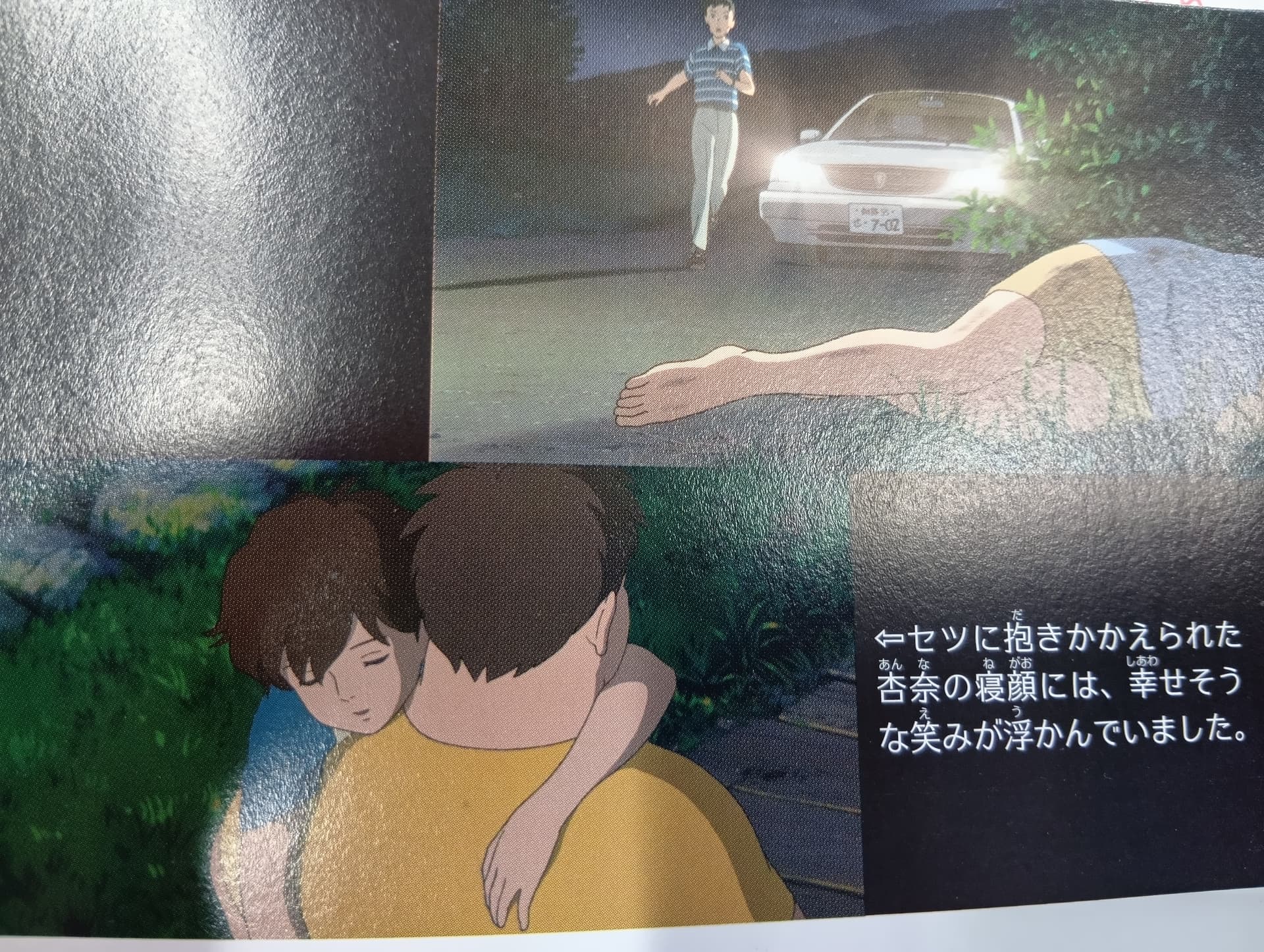
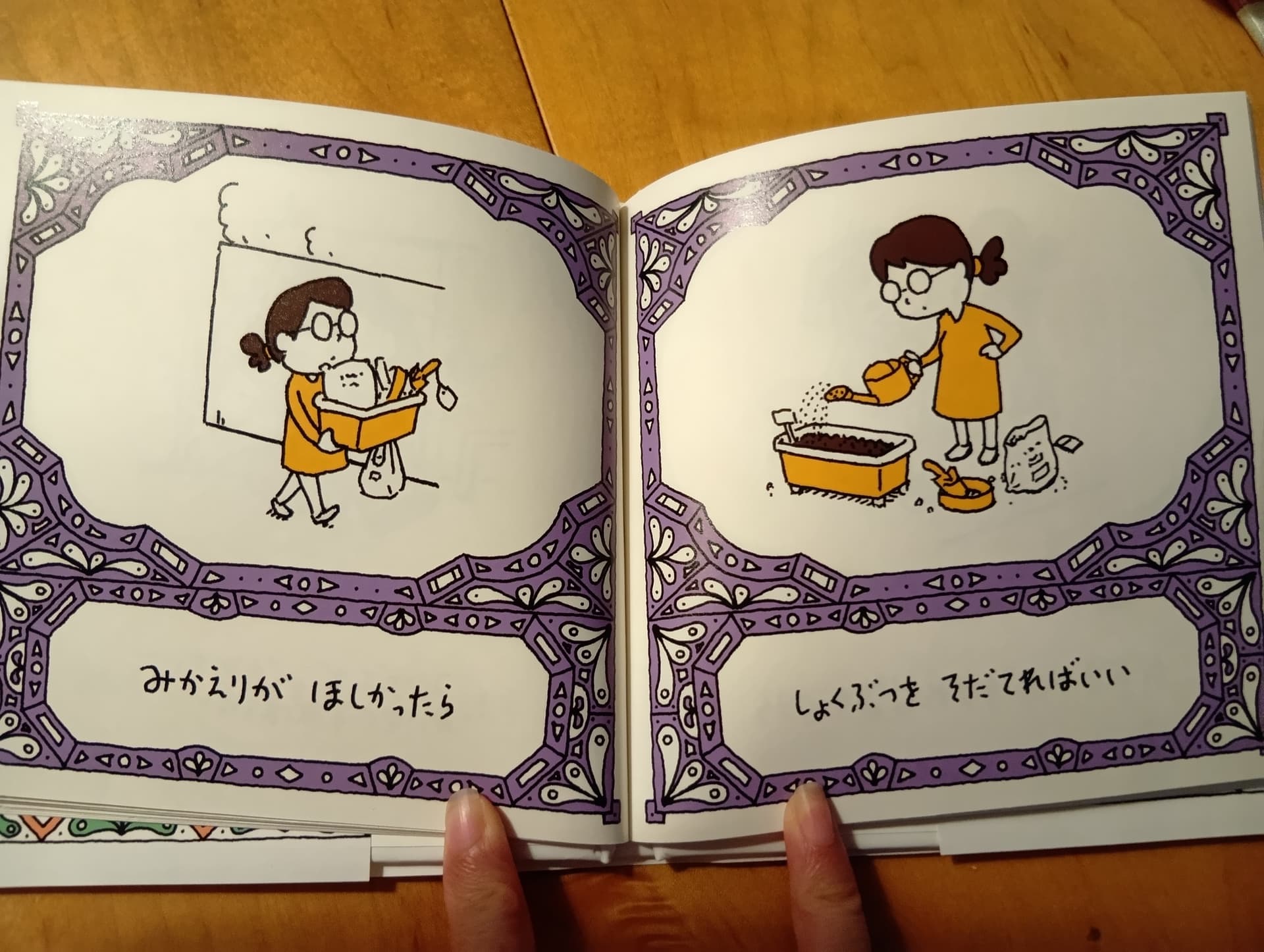
In between novel and manga, I read a Ghibli book. A reference book with lots of pictures [cook book, or a non fiction book for 8 year olds]
I find 8 years old is the sweet spot. Stuff for teens [without pictures] is too hard, and stuff for kindergarteners is too vacous and boring.
Ghibli book, and kindergarten book Below

1 Like

Btw I ordered one after writing this and received it some days ago. It’s really full-furigana

2 Likes

Noxsora - that’s a really good suggestion. I hadn’t thought about getting japanese-language games while there. That might add another vector to my immersion. My son has both a switch and a playstation - I could probably pick up some used games for cheap in addition to books (and they would take up far less space in the suitcase).

As for books, I think that the recommendations for where to go were very helpful - and if I can carve out an hour or so from the rest of the family, I think my strategy might be to browse as much as possible. Just look around the young reader sections of the used bookstores and find what books seem like a good level for me and appear interesting.

Def recommend used manga.

Unfortunately, I don’t live in Tokyo, Kyoto or Oosaka.
So I can only recommend national chains

I bought used games at book off and Bic Camera
my local book store doesn’t have any locations in Tokyo, Kyoto or Oosaka Unfortunately

I like どうわ 童話, fairy tales.

Just chiming in to triple (quadruple? many-uple?) down on the bookoff recommendation - it’s quite a big chain, so you should be able to find at least a few options to visit during your trip.

Also, since it’s secondhand, there’s a couple different perks to be had:
These are primarily applicable to the manga sections since that’s most of what I buy, I can’t really speak for other sections.

  • Different locations will have different selections, so you can look at a wider range of options. (And if you wind up buying anything serialized, a volume that’s missing at one book off may be available at another.)

  • The price to quality ratio is wonderful. I’ve been in Japan for a couple of years now, but the quality of their secondhand goods compared to what I’m used to back home still makes me wanna like, squeak in glee every time I’m there.
    A quick fyi, though - in a larger bookoff, it’s not uncommon for there to be two batches of any given series, because they’ll sort out the books in “good” condition that are sold for 250~450ish yen and the books that may have more wear on them for like, 110 yen. Personally, I still find even the condition of those 110 yen books to be incredible more often than not, but keep an eye on overhead signage if you’d prefer one quality level over another.

  • They’ll often have a “set” section! If they have the entirety of a manga available, they’ll batch it up and sell it as a set for a pretty good price compared to what it would cost if you bought everything individually. For really long series (looking at you, One Piece) they may also do partial sets, i.e. volumes 1~30.

  • If it’s a bigger location, like the Bookoff Plus branch in Namba, it’ll may also have non-book options available, too. Clothes, accessories, figures, games, character goods, etc.

…Can you tell I browse bookoff a lot, lol.

If you wind up wanting to buy any Brand New™ stuff bookoff usually has a small section, or my go-to for new volumes is Kinokuniya or sometimes Book 1st.

Also also, I’ll second natively as a way to get a sense for how hard a book is - it’s not fullproof, of course, because everyone has a different level of language ability when they approach reading, but it’s at least helpful for a broad idea of whether one story will be harder than another.