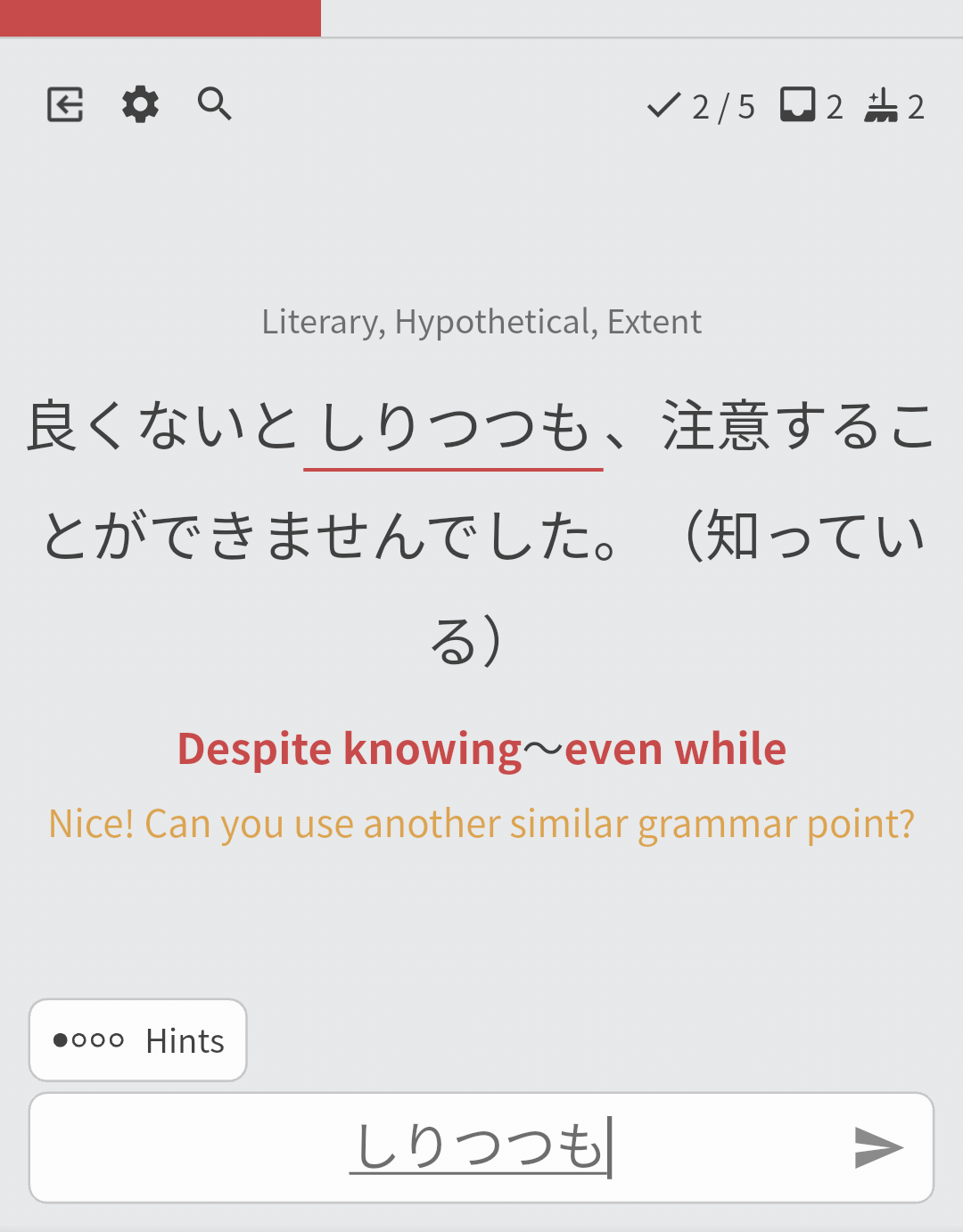
I’d like to hear what other learners think about how the English highlight works when a fill-in-the-blank expects a negated verb form.
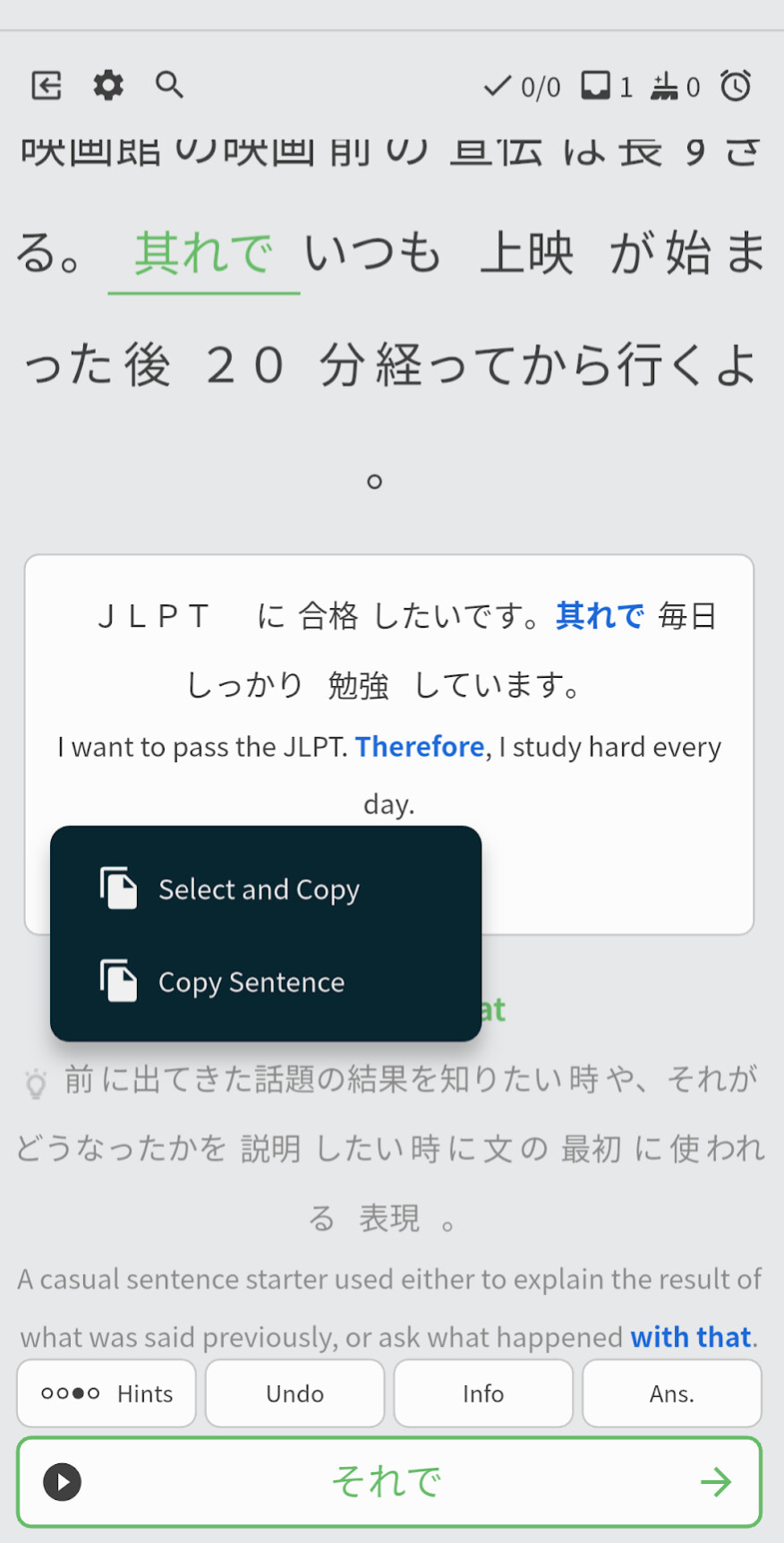
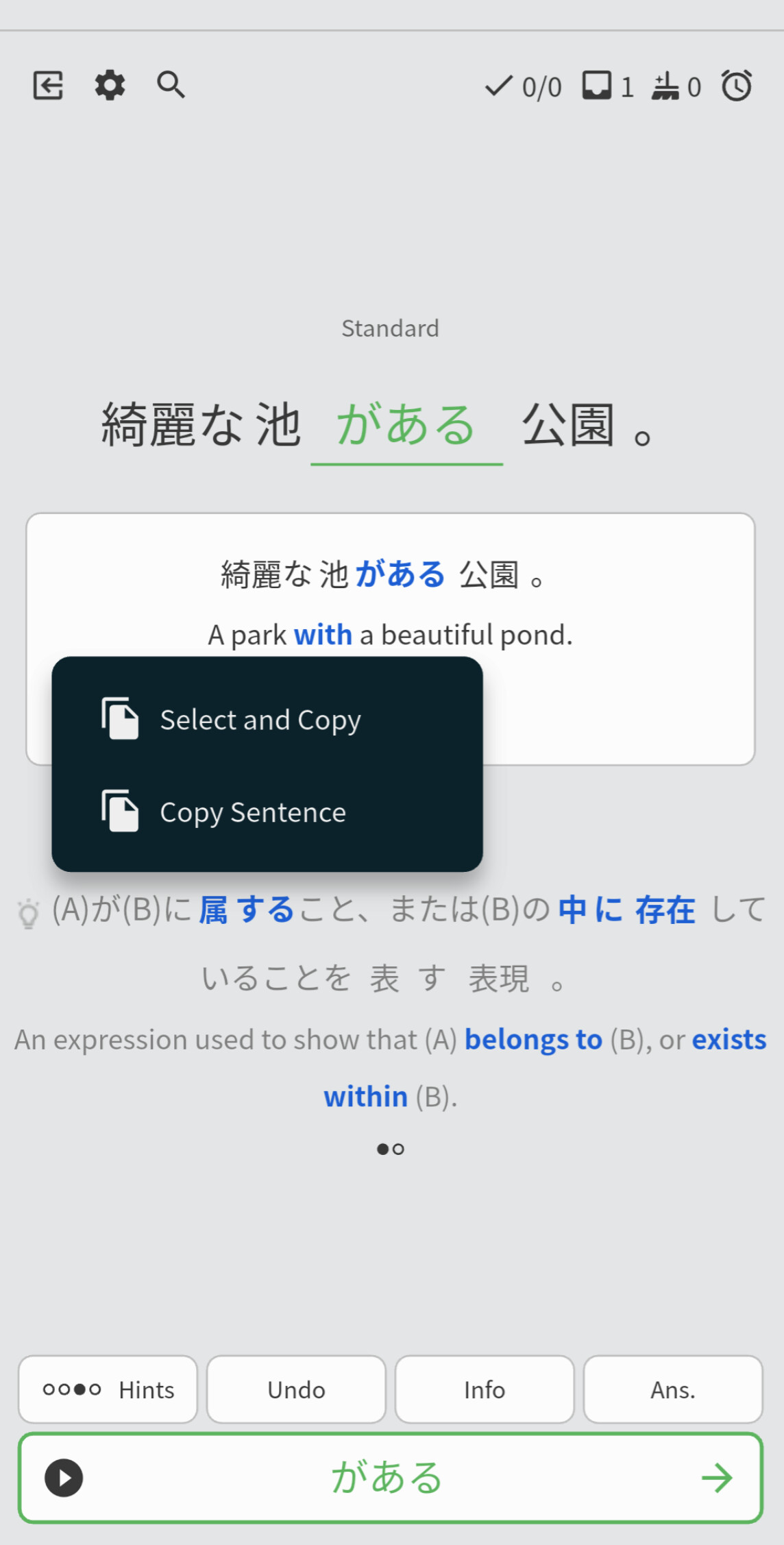
Example from a vocab review for 満たす:
条件を__限り、オーディションに参加する事は出来ません。
Unless you meet the conditions, you cannot participate in the audition.
The expected answer is 満たさない, but the highlight is only “meet”. The negation gets absorbed into “unless”, which isn’t highlighted. So the cue says “meet” while the answer key wants “not meet”.
To me this is genuinely ambiguous, not just imprecise. Since 限り on its own means “as long as”, a learner reading “unless you meet” as “as long as you fail to meet” can reasonably reach for a verb like 欠く or 下回る and produce 条件を欠(く)限り, which expresses the same idea. Nothing in the highlight signals that the intended answer is 満たす + ない rather than a lexical verb meaning “fail to meet”. For a frequency-based vocab review, that feels like it works against the goal of testing recall of the specific word.
I raised this through a ticket and got a prompt, helpful reply explaining that this is normal behavior and that the dictionary form 満たす is also accepted as an alternative. I appreciate the quick response, but I’m not sure the alternative answer solves it. If I answer 満たす and the revealed model answer is 満たさない, I still don’t know whether the negation was required, optional, or part of the grammar. The cue should be clear before I answer, not just forgiving after.