
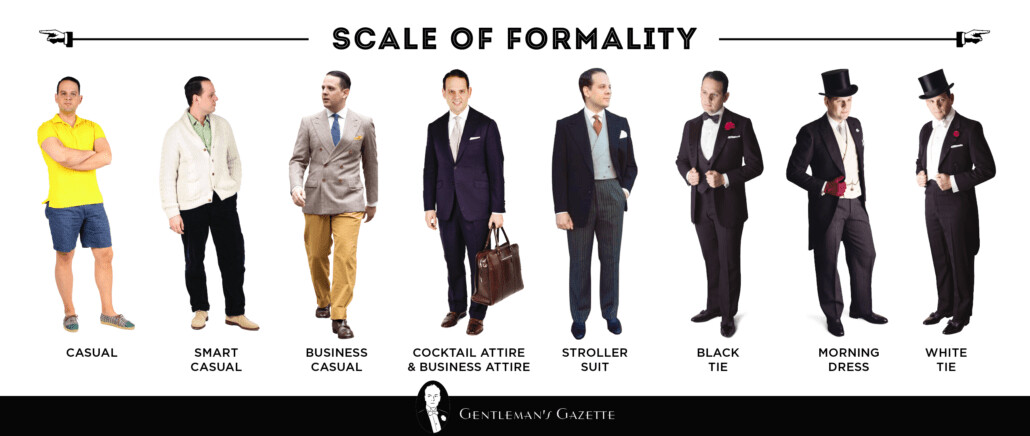
More Formal.
Less Formal.
3 Likes
I think Bunpro ultimately wants something about half-way between business casual and cocktail/business attire 
16 Likes

bro I’m actually crying, no way
1 Like
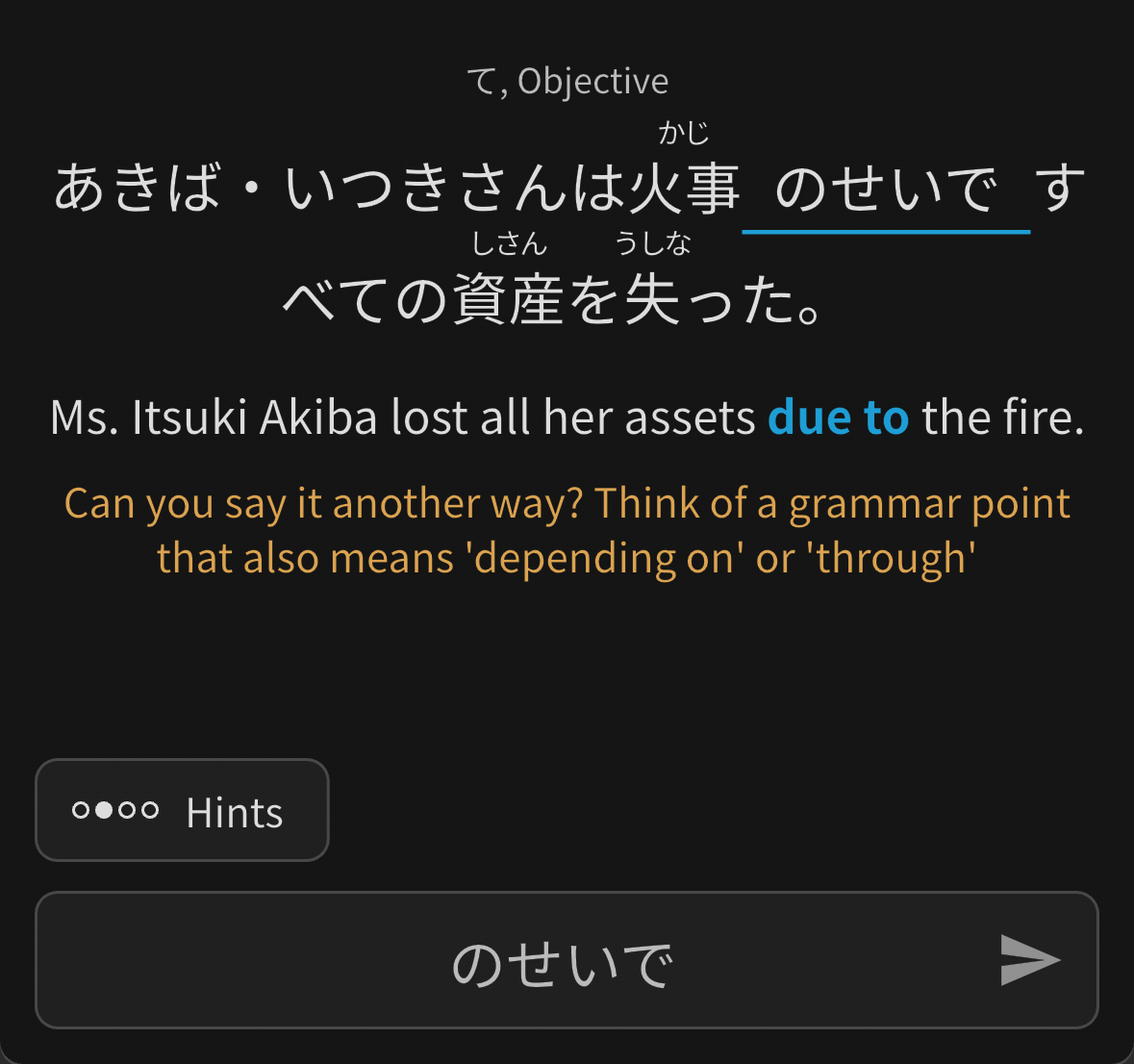
While we are talking about bad hints, lately I’m more and more seeing particularly good ones like this hint. Are you guys really going through all the “close enough” possibilities one by one to make dedicated hints?
Must be one insanely big task.
9 Likes
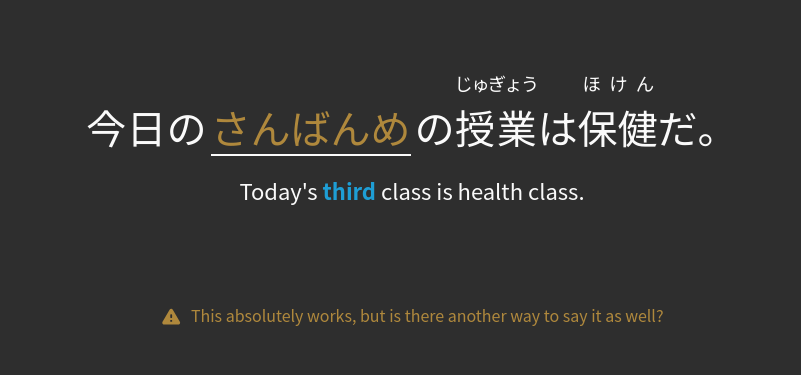
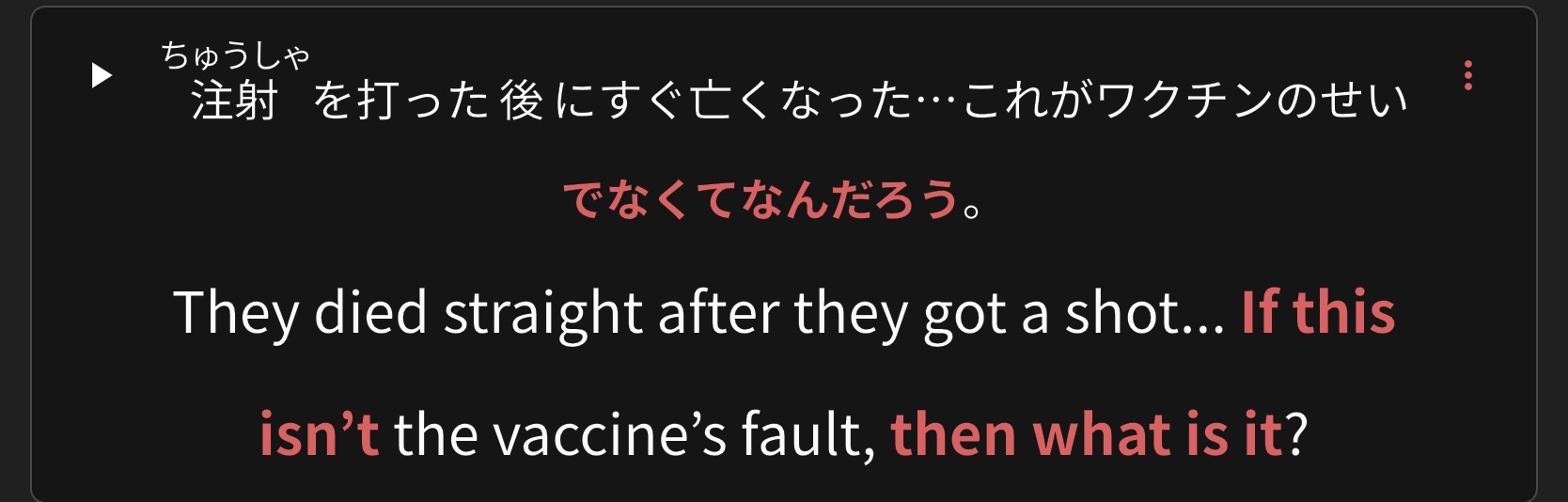
It seems like this thread is just a support group-y/commiserating kind of thing. So maybe I shouldn’t say anything, but it seems like a skewed picture forms if it goes completely uncontested - like a Youtube comment section on music, i.e. if you like it, your comments are welcome; if you don’t, it’s a “WHY ARE YOU HERE” response.
To be sure, there are a few questions/hints that still annoy me after months of seeing/practicing them, but (and I say this with absolutely no malice) this legitimately sounds like a skill issue. Many hints annoyed me at first, but as I’ve gotten a better “feel” for how certain grammar constructions work, and what their neighbors are, and how their use cases and connotations differ, I find myself more often being led directly to the answer with these kind of hints.
All that to say, I feel like past a point, this isn’t really a problem, i.e. grind enough sessions and this problem evaporates.
2 Likes
To be honest, I think nothing will ever make me get used to the different forms of saying “have to do~~” like it’s just a crapshoot. The hints will never be clear enough off the bat. I think its fair to get frustrated with that haha. It’s specifically that kind of problem that I made this thread for.
Like usually with ないと and なきゃ its clear but the difference between なくてはいけない、なくてはならない、なければいけない and なければならない are impossible to get right from the initial hint alone, at least the way I do reviews. They all count as “formal” under register iirc though there is a difference in formality level for each of them, but it’s just not immediately clear until you get the prompt that says “more formal” or “more casual,” and even then it’s not clear which part of the construction I should change, since both parts can be changed to mean the same thing…
Of course, it’s mostly not a problem, and overall I like the system of bunpro, but this one situation I dont think will ever go away for me
6 Likes
Bunpro wanted black tie rather than morning dress this time
2 Likes
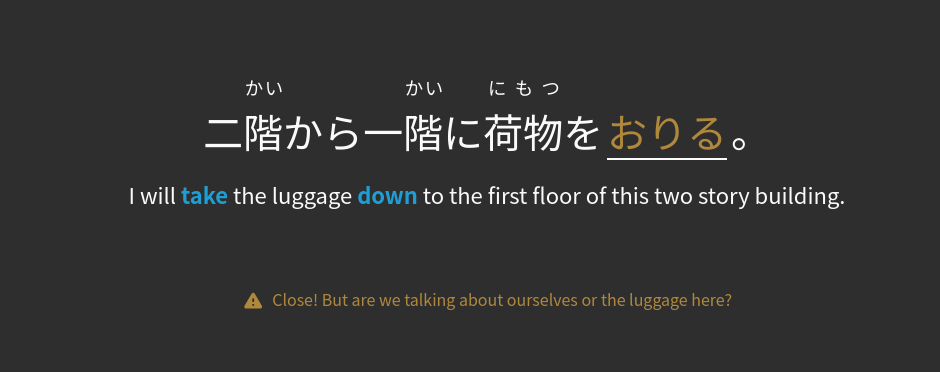
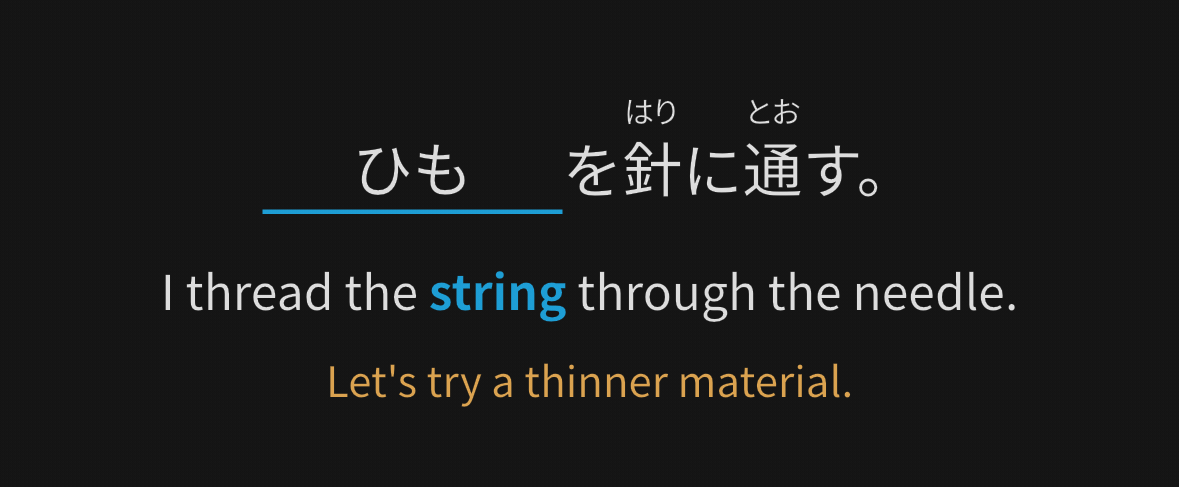
Hmm, this English translation sounds weird to me here… “String” seems inappropriate. “Thread” (as in, “I thread the needle”) or even “yarn” makes sense to my ear, but “string” sounds unnatural to me.
1 Like
Getting out of the “must” and “must not” was quite the relief… but I felt very misled with “polite speech” and 丁寧な言い方/硬い言い方. Don’t worry, I sorted it out.
1 Like
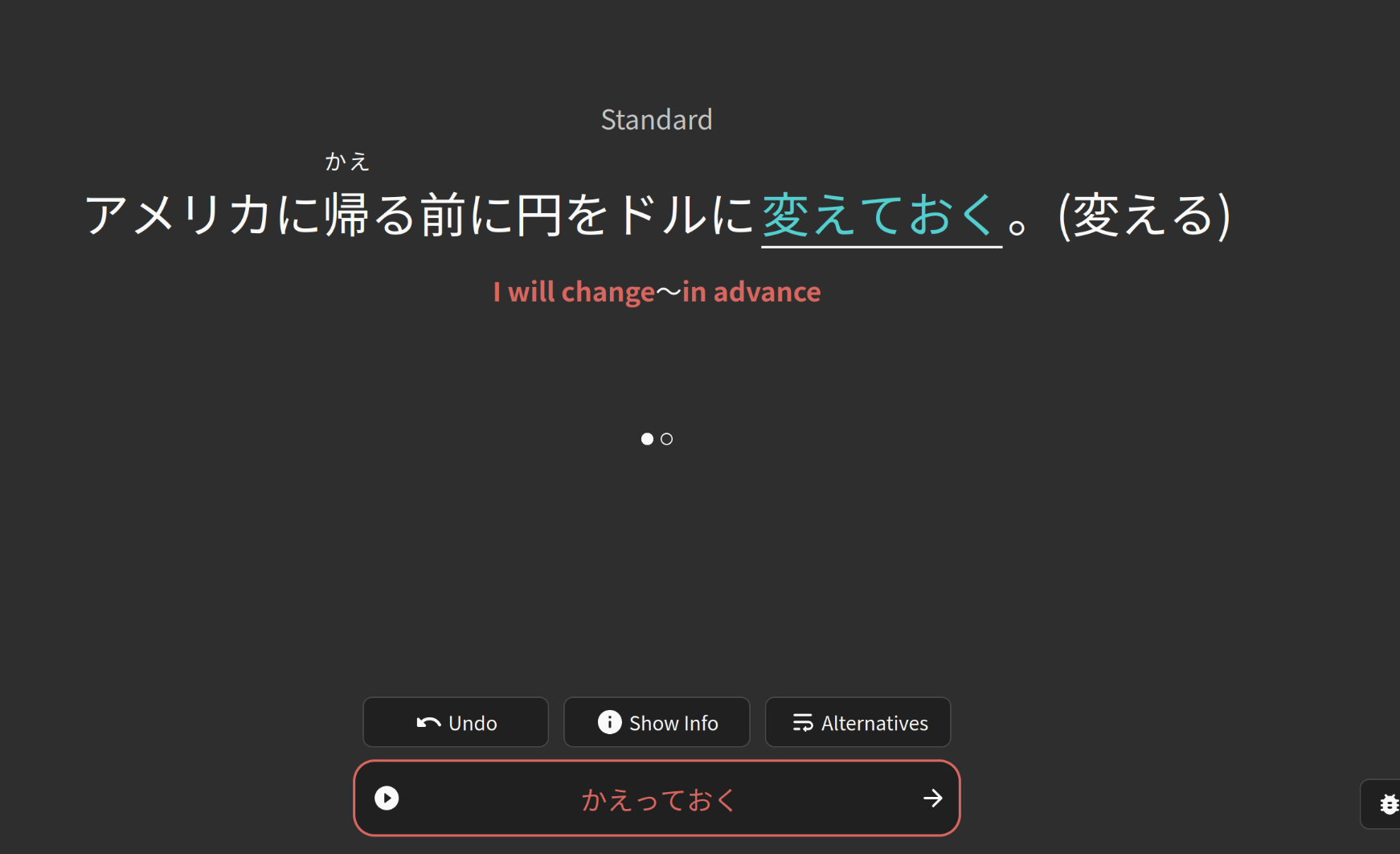
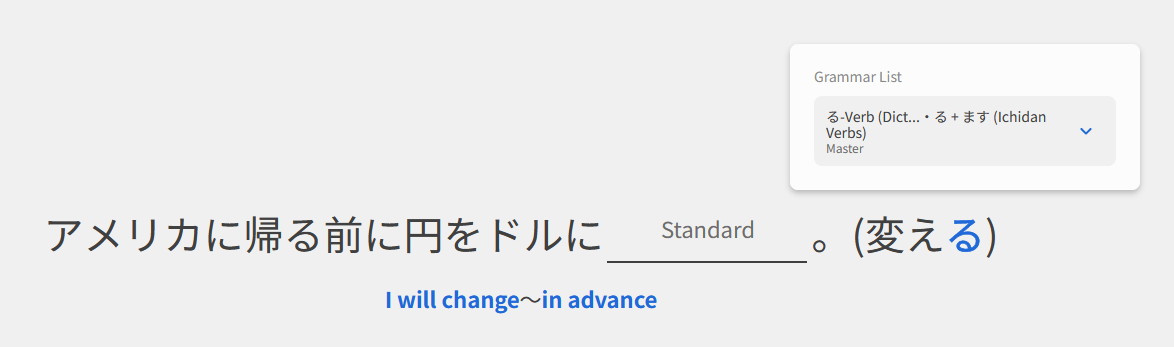
When you don’t know whether a verb is a る or う verb and it just gets marked straight wrong. This example isn’t so bad, but quite often it’s verbs I’ve never come across in my life because bunpro sentences cover a very wide variety of language levels, so N5 grammar points have N2 level vocab in the sentence
2 Likes
That is a little bit annoying indeed, but fortunately there’s a way to find out in most cases. If you click that る, it’s usually a link to the grammar article on either う-verbs or る-verbs:
7 Likes
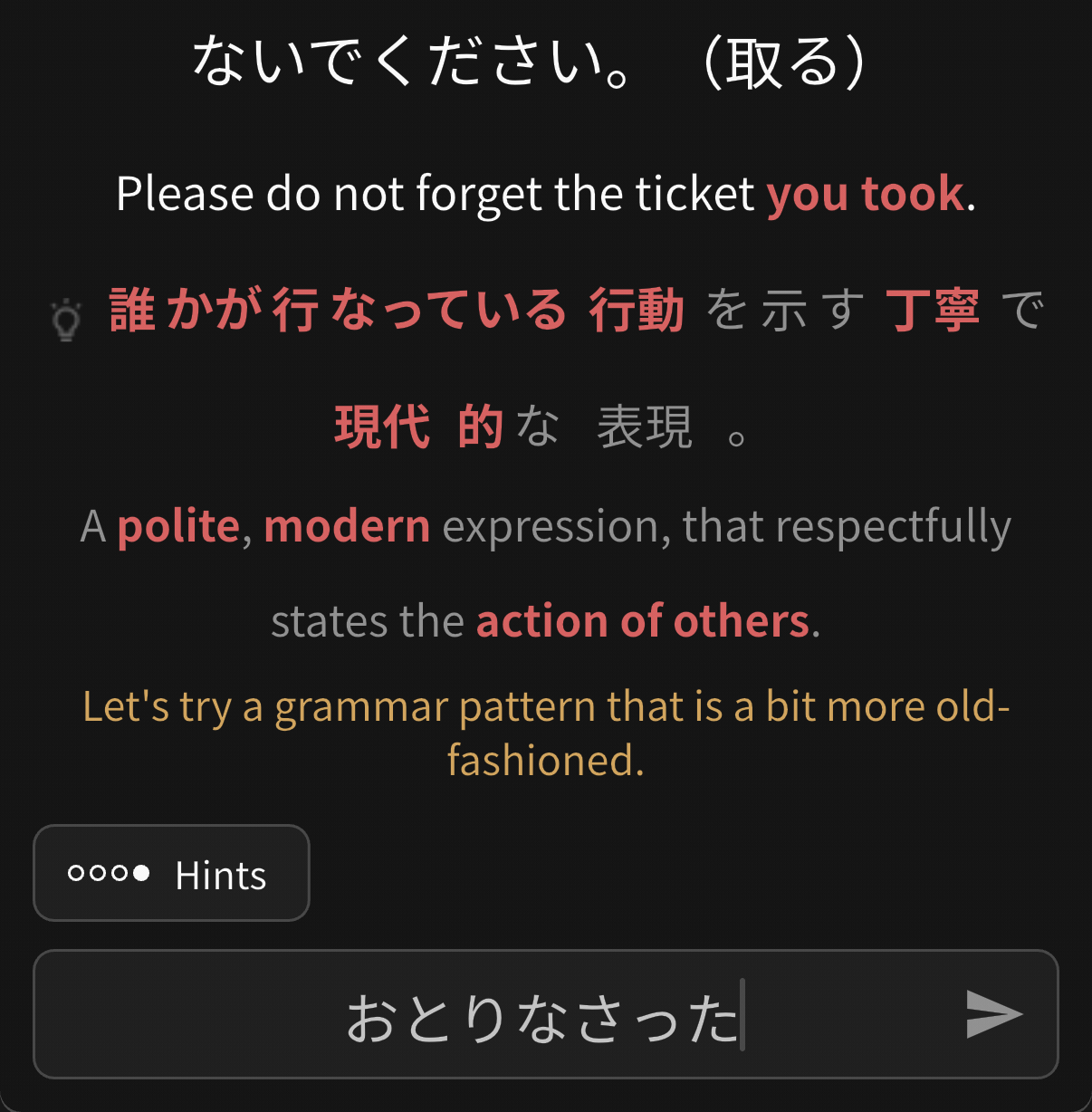
Anyone else struggling with picking the right politeness level from the sentence and hints or just me?
3 Likes
It looks like it might be a struggle to choose how modern or old-fashioned an expression to use too in this case 
1 Like
It doesn’t help that Japanese has about 100 levels of politeness and nuance that just doesn’t exist in English. Language that you use among friends, juniors, seniors, as a sales clerk, as a news reporter, as a politician, when apologizing …
2 Likes
I wouldn’t be so sure. At least in Japanese it is somewhat codified. Imagine having to learn when to use the below (especially cross-culturally where things are different in UK/AUS/US/English as lingua franca):
Could I get a coffee?
Could I get the coffee?
Can I get a coffee?
May I have a coffee?
May I get a coffee?
Please may I have the coffee?
The coffee, please.
The coffee, thanks.
I wouldn’t mind a coffee.
If at all possible I’d love a coffee.
I’ll have the coffee.
I’ll go for the coffee.
No need to go out of your way but a coffee would be lovely, thanks.
I don’t suppose you have any coffee?
A coffee wouldn’t go amiss.
A coffee would be great, thanks.
I’d be awfully grateful if you could do me the favour of grabbing me a coffee.
One coffee.
Ad infinitum 
15 Likes