
meanwhile in Japan, all you really need is コーヒーを渡せ
9 Likes
Well… that’s true.
I should use that one! It just sounds so weird and stilted to my southern US ears.
3 Likes
Certainly, sir 
18 coffees, 1 massive headache and a sleepless night coming up 
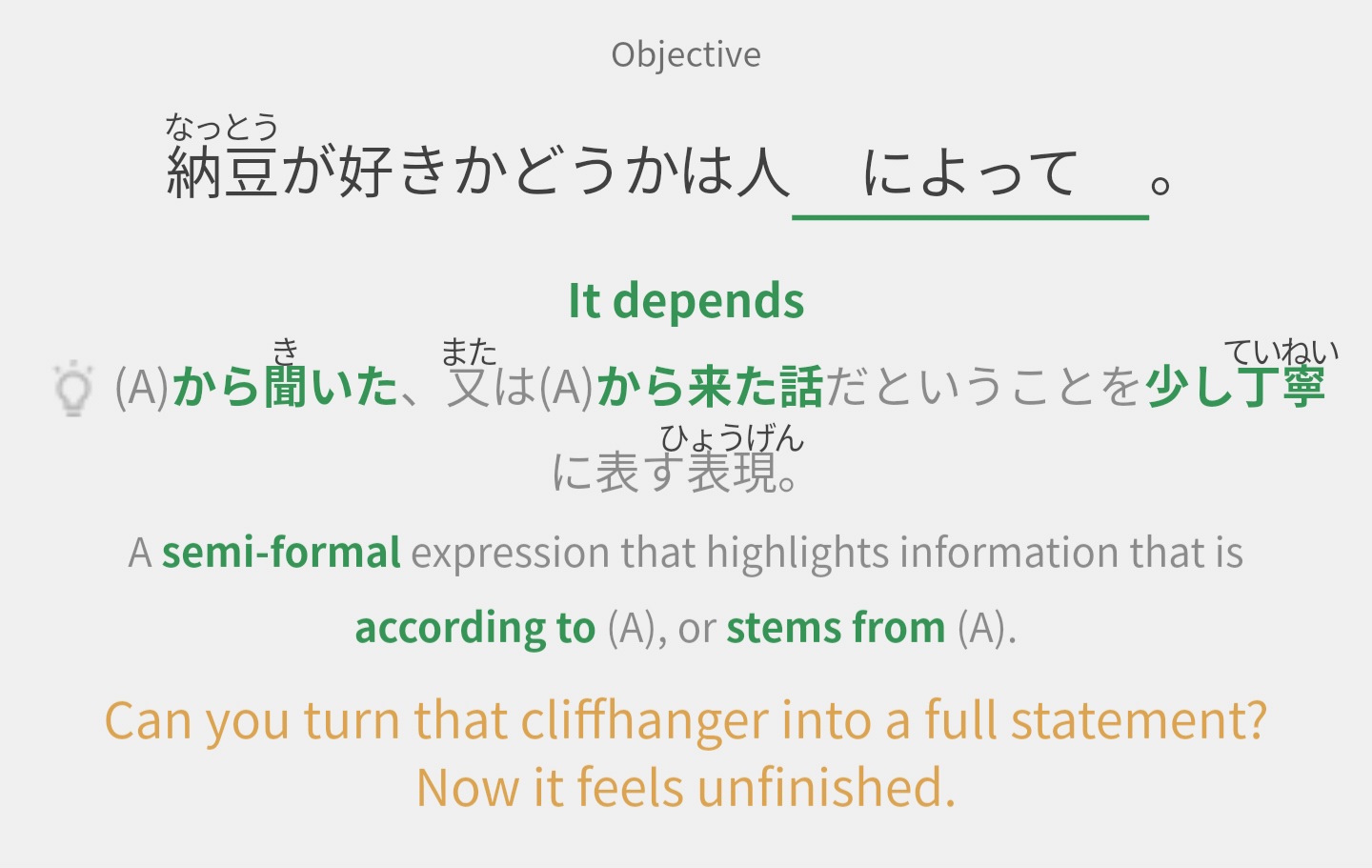
EDIT: I was really tempted to reply with, “Can you say it another way?” 
12 Likes

General rule of thumb is that if it is a い or え it is probably a る verb. There are exceptions that you have to memorize but if you aren’t sure it can help a lot.
1 Like
After finishing all the N1 grammar lessons, I really hope Bunpro has a function to show all the answers that I have already tried. There are just too many variation with the same meaning to a point that I forgot which one I have tried…
5 Likes
AFAICT, this hint is completely backwards from what the lesson says:
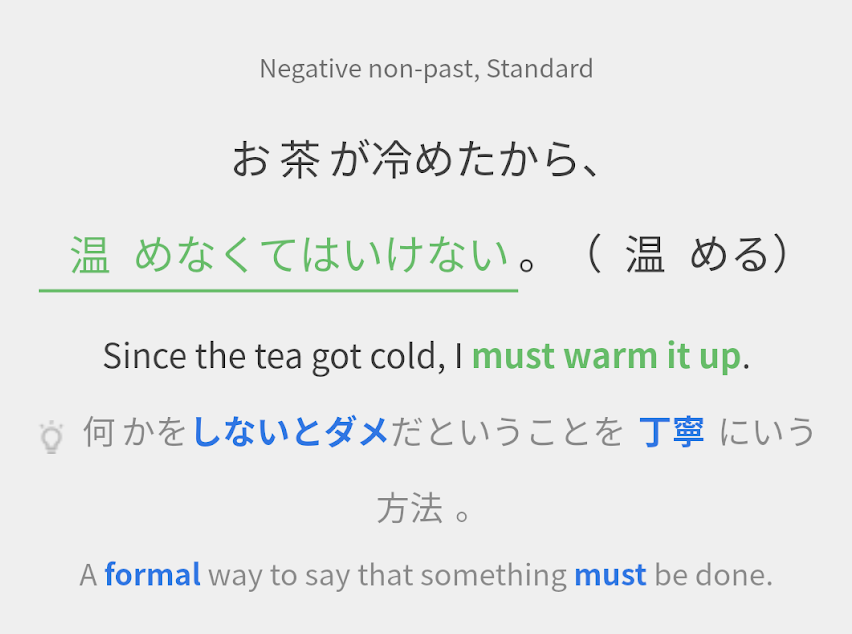
The lesson なくてはいけない (JLPT N5) | Bunpro says:
いけない is considered to be the most common structure used with the ‘must’, and ‘must not’ grammar points, and is natural in both speech, and written Japanese. Alternatively, ならない may be used in formal speech
Or more succinctly:
- いけない is for common/natural speech
- ならない is for formal speech
The hint specifically asks for formal speech, but refuses to accept that answer. AFAICT, this isn’t just annoying, it’s wrong (either the lesson or the hint, I have no idea which).
EDIT: I’ve since learned that both versions are actually formal (thanks for the PM Jake), but the latter is even more formal, so it sounds like the lesson is the issue, not the hint.
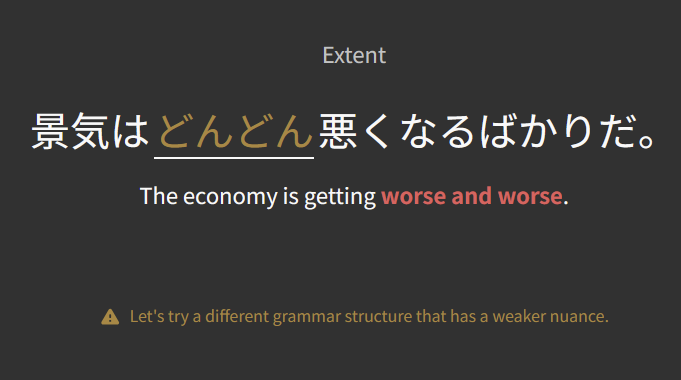
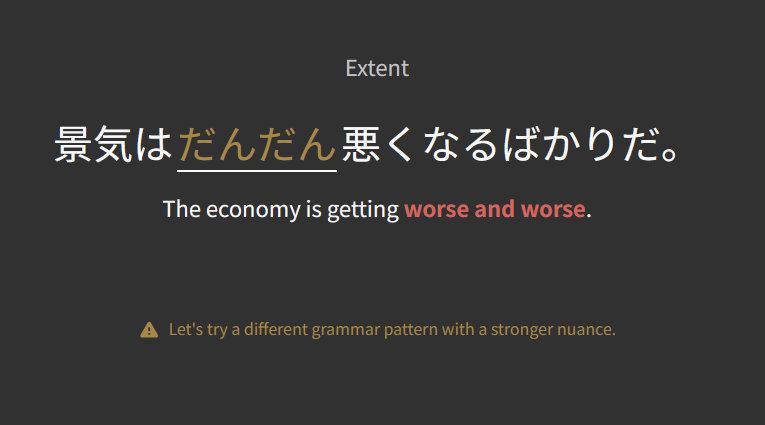
Hey @magnus1 !
Thank you for bringing this to our attention. I have just changed the hint for だんだん and どんどん to 'だんだん expresses the slight, but constant, progression of something. We are looking for a grammar point that is used to emphasize that something that is already (A) is becoming even more (A). ’ and 'どんどん expresses rapid or sudden development. We are looking for a grammar point that is used to emphasize that something that is already (A) is becoming even more (A). ’
I hope this change helps!
11 Likes

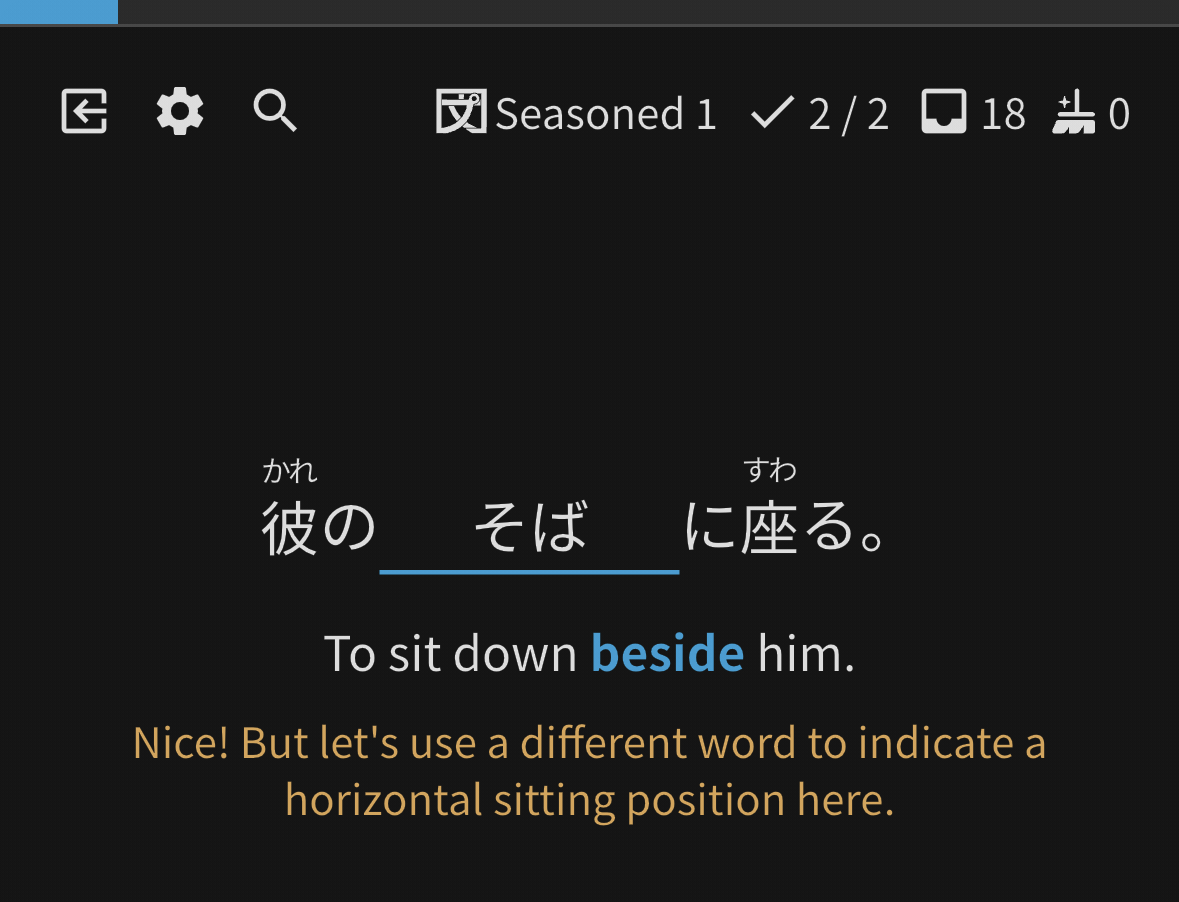
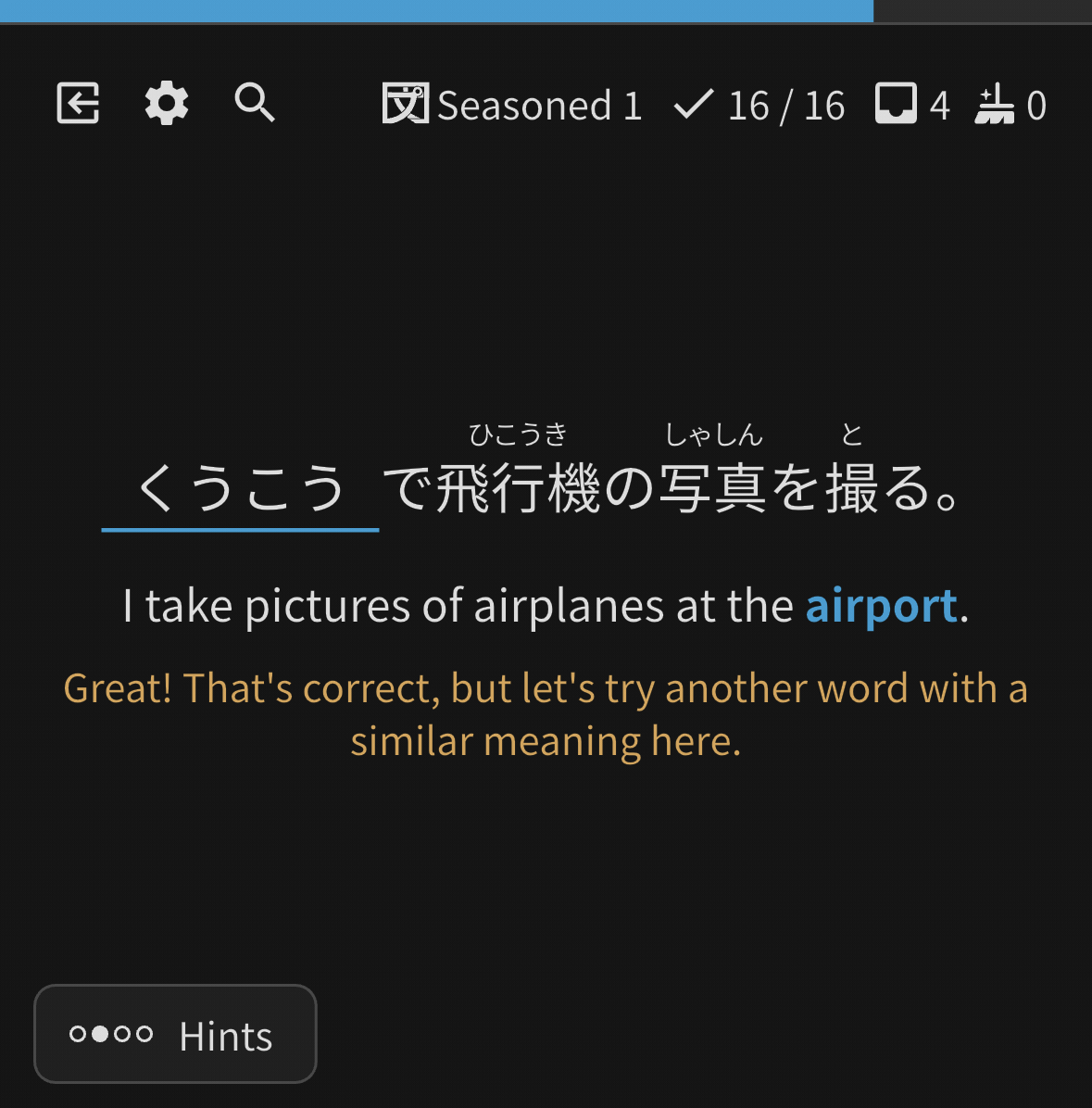
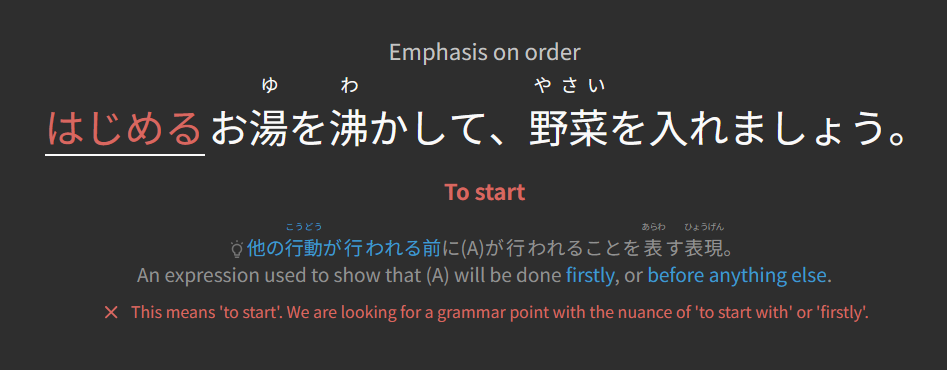
This one made me laugh, I know why it’s wrong, but I feel so silly reading the hint as “to start,” giving an answer that means “to start,” and still getting it wrong LMAO
Lesson learned, read the dang sentence and the hints more closely
4 Likes
Sometimes that makes me feel illiterate lol
1 Like
what was it looking for? まず?
2 Likes
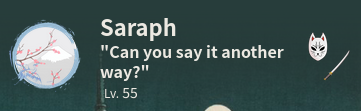
In case anyone doesn’t know yet, for the diehard fans of “can you say it another way?”, you can wear it as a badge of honor thanks to the points shop:
10 Likes
for real lol I have to do a double take every time something like this happens
1 Like
yep, it was まず 
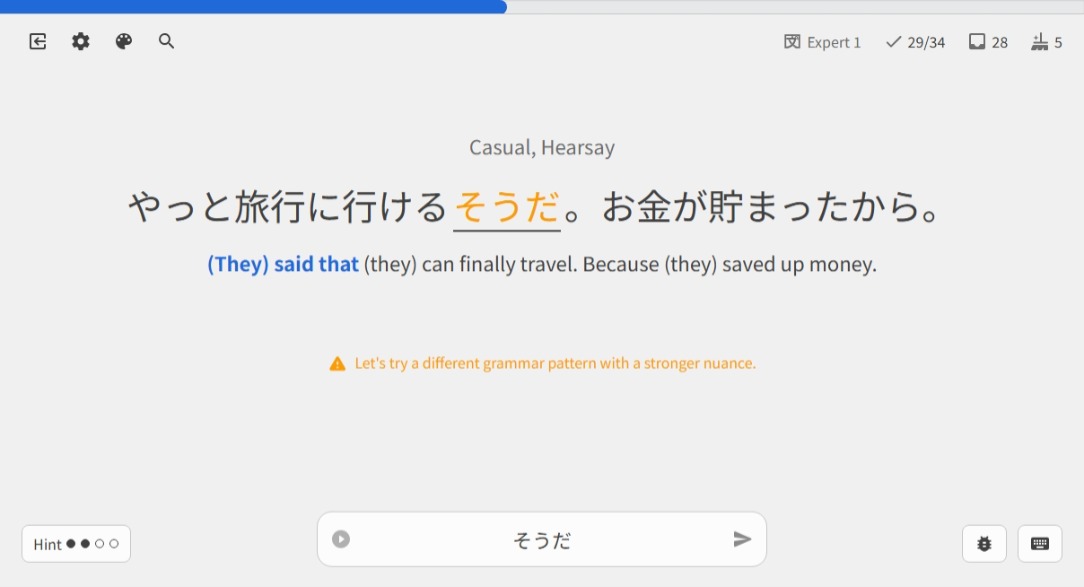
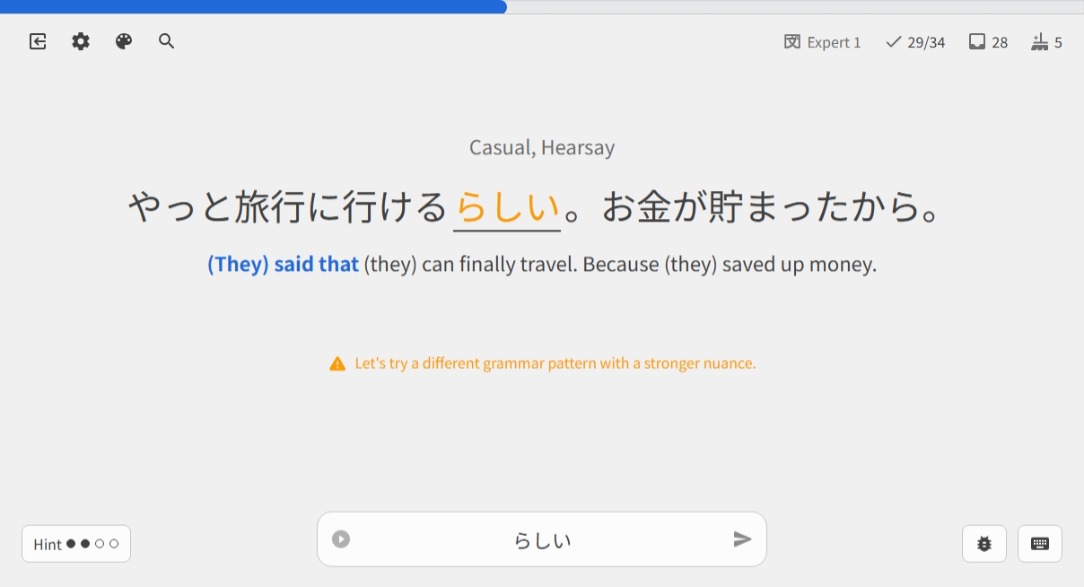
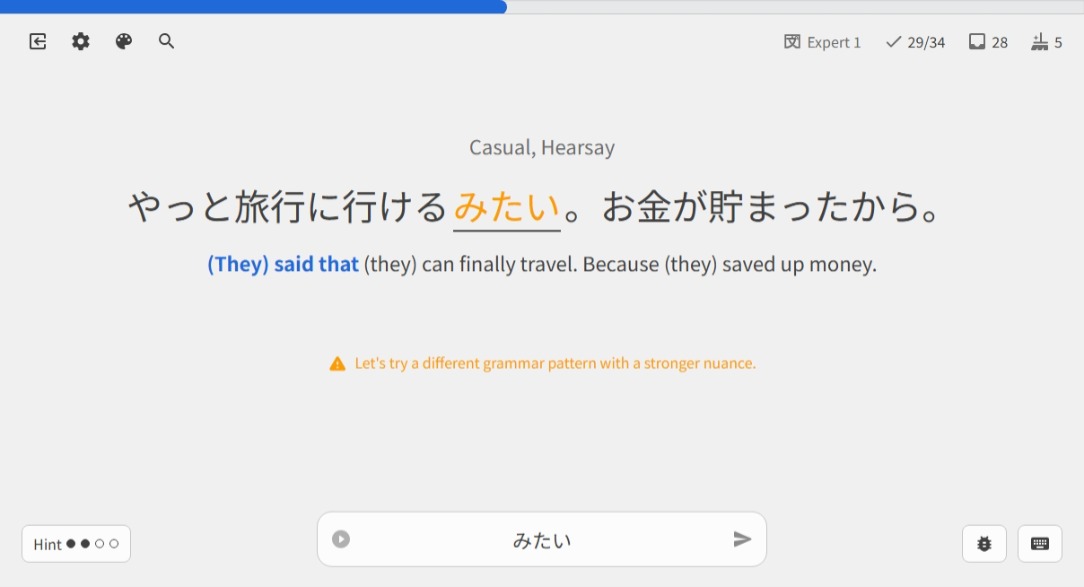
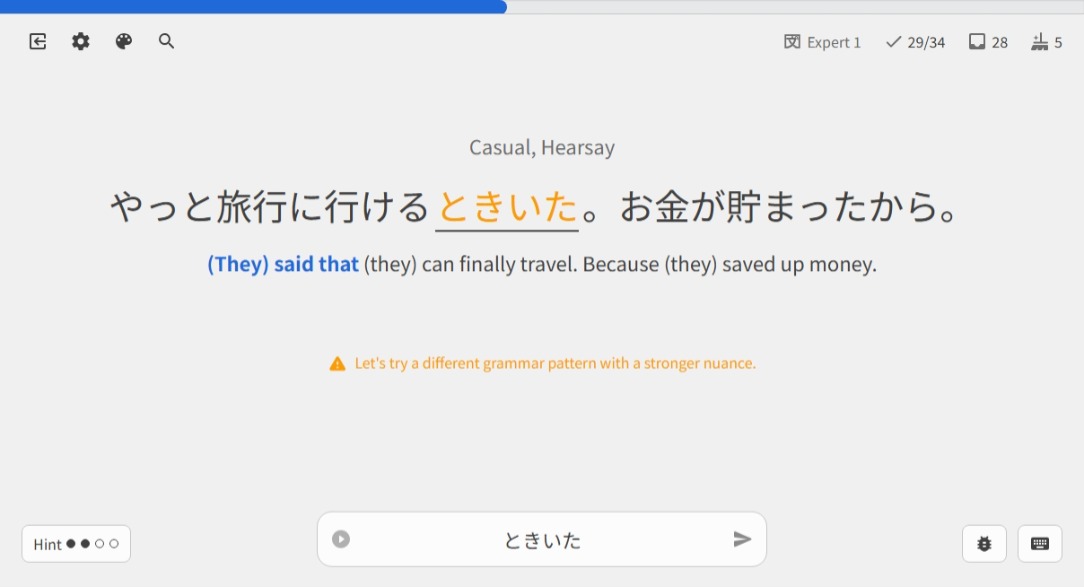
and after all that I’d probably end up getting the question wrong by answering だって instead of んだって.
5 Likes
these two are my enemy fr…
unrelated lately I’ve been getting the prompt “impossible” for ものか and it’s actually driving me crazy, cause I keep trying to type stuff like はずがない.
In my head I think of monoka as like “To think I’d ~~” in a scoffing tone. Like, “To think I’d let that girl win?? (there’s no way!)” so whenever I see this one prompt I don’t make the connection at all 
1 Like